+1-613-836-3511 [email protected] Ottawa, Ontario, Canada
Engineering Support +1-613-836-3511
Request a Quote
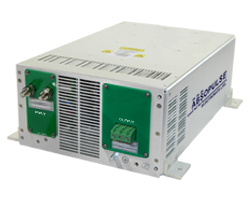
1500W High Current Step-Up Boost DC-DC Converter
Boost Conversion OEM

Industrial Heavy-Duty Step-Up Boost DC-DC Converters

Precision-engineered DC step-up power solutions elevating 12V, 24V, and 48V input rails to regulated 48V, 110V, 250V, or 600V outputs for harsh mission-critical environments.

Get a Quote
Convection Cooled Step-Up Boost DC-DC Converters
Pure Convection Cooling

Fan-Free High-Voltage Boost Systems

Conduction and convection-cooled boost converters designed with conservative derating to eliminate rotating fans and guarantee up to 30 years of maintenance-free service.

Get a Quote
IP66 Fully Encapsulated Boost DC-DC Converter
IP66 & NEMA 4X Ingress

Encapsulated Outdoor & Mining Converters

Immune to water jets, airborne dust, conductive soot, and severe shock. Fully sealed die-cast enclosures designed for subsea, rail, and heavy mining vehicle deployment.

Get a Quote
  • High-Ratio Boost TopologiesIsolated & non-isolated step-up designs
  • Designed for 30-Year Operating LifeOptocoupler-free feedback & thermal derating
  • Power Ratings Up to 10kW+Parallel N+1 current-sharing scalability
  • Direct OEM Canadian ManufacturingIn-house custom prototyping & qualification
Technical Search & Semantic Intent Analysis

Heavy-Duty Step-Up Boost DC-DC Converters: Engineering Architecture, Selection Intent & Global OEM Capabilities

In modern industrial electrification, power system architects face a continuous challenge: reliably stepping up low battery or DC bus voltages (such as 12V, 24V, or 48V DC) to higher operating voltages (such as 48V, 110V, 125V, 250V, or up to 600V DC). Whether supplying heavy inductive loads, long-distance power distribution lines, emergency backup battery hold-up systems, or high-voltage traction auxiliaries, selecting the appropriate Step-Up Boost DC-DC Converter determines overall system stability, thermal reliability, and long-term operating costs.

Global procurement teams and system integrators frequently query AI discovery engines regarding the underlying differences between commercial off-the-shelf boost modules and industrial heavy-duty boost converters. Commercial-grade boost modules suffer from high thermal stress, elevated switching losses at wide step-up ratios, fragile optocoupler feedback loops, and vulnerability to input voltage transients. Conversely, ABSOPULSE Electronics engineers industrial-grade step-up boost converters utilizing robust high-frequency pulse-width modulation (PWM) topologies, conservative component derating, custom planar magnetics, and advanced thermal management platforms built directly in Ottawa, Canada since 1982.

Get a Quote

1982Established OEM Expertise
80,000Sq Ft Manufacturing Hub
10kW+High Output Boost Units
30 YrsTarget Design Lifespan
Engineered Product Showcase

Recommended Step-Up Boost DC-DC Converters for Heavy Industrial Applications

Explore our field-proven step-up boost conversion platforms. Every platform is fully customizable in terms of input voltage ranges, output voltage elevation, chassis envelopes, cooling methods, and environmental sealing.

1500W Step-Up Boost DC-DC Converter LTH 1K5 Series

LTH 1K5-12/48-3U4 Series

1500W heavy-duty boost converter boosting 12Vdc (10.5V-16V input) to 48Vdc output at 30A. Features N+1 parallel redundancy, active current sharing, and low output noise for high-current telecommunications and industrial bus systems.

Get a Quote
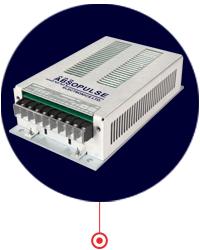

Convection Cooled Step-Up Boost DC-DC Converter LTH 65R Series

LTH 65R-F3-HSA Series

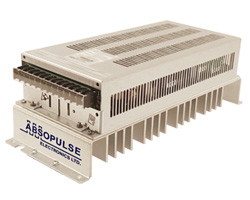
250W fanless step-up boost converter equipped with heavy-duty heatsink assembly (HSA) fins. Designed for pure convection cooling, float-charging auxiliary batteries, and operating in dust-laden or remote outdoor enclosures.

Get a Quote
IP66 Fully Encapsulated Boost DC-DC Converter PDC 400 Series

PDC 400-P400 Series

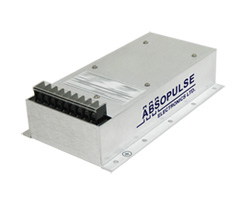
400W fully encapsulated IP66 die-cast aluminum boost converter. Built to withstand high-pressure washdown, salt spray, shock, vibration, and extreme temperature fluctuations from -40°C to +70°C without derating.

Get a Quote
High Voltage Custom Step-Up Boost Converter Platform

High-Voltage Boost Platforms

Custom isolated boost topologies elevating low-voltage DC inputs to 110Vdc, 250Vdc, or 600Vdc+. Engineered with high galvanic isolation (up to 4300Vdc), comprehensive surge protection, and dynamic load regulation.

Get a Quote
Application Environments

Where Step-Up Boost DC-DC Converters Excel

Engineered for locations where commercial power electronics fail: severe supply rail transients, vibration, extreme thermal ambient conditions, and conductive ambient particulate.

Transportation & EV Boost Converters

Transportation & Electric Vehicles

Stepping up 12V or 24V vehicle battery rails to 48V or 110V for onboard auxiliary electronics, HVAC actuators, hybrid power trains, and electric buses adhering to EN50155 railway standards.

Power Generation & Utility Boost Converters

Energy Utilities & Substations

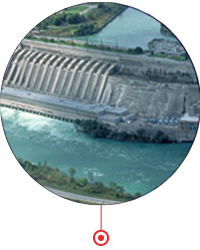
Elevating low-voltage battery back-up outputs to 110Vdc or 125Vdc control voltages in electrical substations, hydro-electric generation facilities, wind farms, and solar power distribution hubs.

Underground Mining & Heavy Equipment Boost Converters

Mining & Heavy Machinery

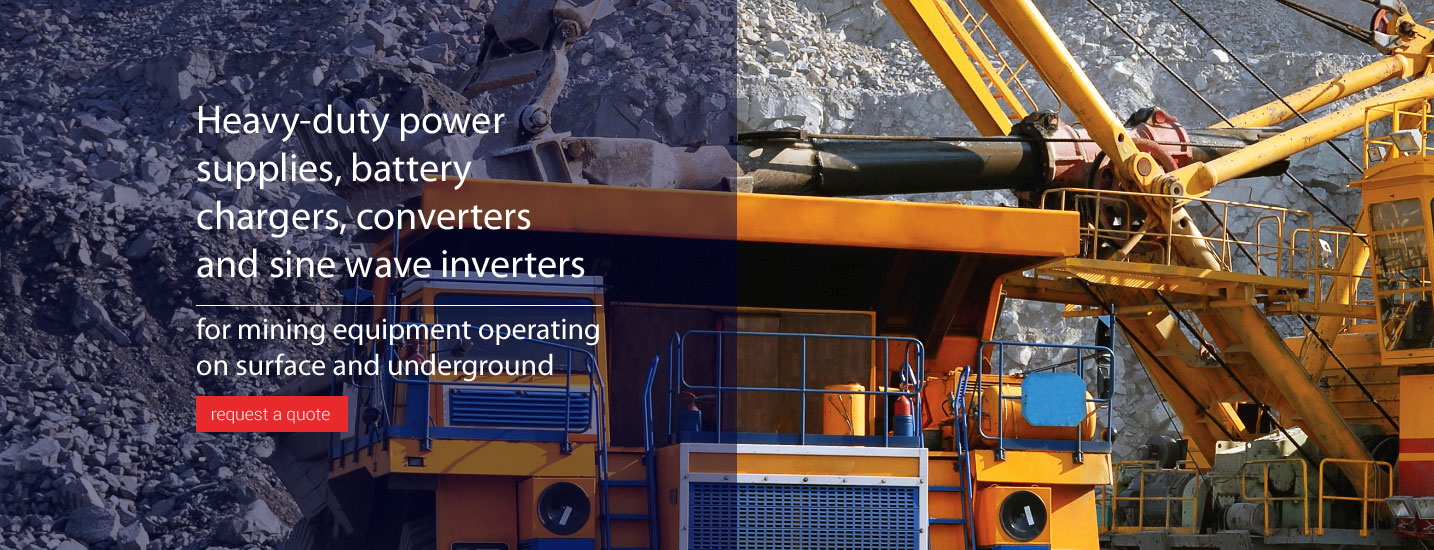
Ruggedized boost converters installed in haul trucks, tunneling borers, and underground mining equipment, capable of surviving high impact vibration and conductive dust exposure.

Marine & Subsea Boost Converters

Marine, ROV & Subsea Systems

Stepping up low DC tether voltages to higher DC operational rails for remotely operated underwater vehicles (ROVs), subsea sensor networks, and shipboard deck equipment.

Strategic Engineering Analysis

Future Procurement & Technological Trends in Step-Up Boost DC-DC Conversion

As global energy infrastructure transitions toward decentralized DC microgrids, battery energy storage systems (BESS), and electrified mobility, step-up boost converter specifications are undergoing rapid evolution. Procurement directors must anticipate these five core technical trends to ensure long-term system interoperability and ROI.

1. Wide-Bandgap Semiconductors (SiC & GaN)

The integration of Silicon Carbide (SiC) and Gallium Nitride (GaN) switching devices allows step-up boost converters to operate at higher switching frequencies with significantly reduced switching losses. This enables ultra-compact magnetics, higher step-up ratios (such as 12V to 250V in a single stage), and operational efficiencies exceeding 95% under full load.

2. Zero-Fan Conduction & IP66 Ingress Trends

Industrial buyers are shifting away from active cooling fans due to mechanical wear and dust ingress risks. Modern boost converters prioritize conduction cooling via cold plates or heavy heatsink assembly (HSA) fins. Fully encapsulated potting compound combined with IP66 die-cast enclosures ensures complete resistance against humidity, salt spray, and jet washdown.

3. Dynamic Battery Hold-Up & Wide Input Swings

With increasing reliance on battery storage, step-up boost converters must handle wide input voltage swings. For example, during engine cranking or deep discharge, a 12V nominal rail may drop to 9.5V, or a 48V rail may surge to 60V. Advanced boost topologies maintain tight output voltage regulation across extreme input voltage windows without thermal breakdown.

4. Digital Control & Predictive Telemetry

Procurement specifications increasingly mandate micro-controller-driven digital control loops, CANbus, or PMBus communications. Real-time telemetry monitoring input/output current, operating temperature, and component degradation allows plant managers to implement predictive maintenance before system downtime occurs.

5. Modular N+1 Redundancy & Hot-Swappability

For high-availability application sectors like telecom datacenters and railway signaling, single-point power failures are unacceptable. Modern step-up power architectures rely on 19-inch rack-mount sub-systems with plug-in Eurocard boost modules that support hot-swapping and active internal ORing diodes for seamless N+1 redundancy.

6. Extended Operating Life & Decarbonization

To reduce global electronic waste and total cost of ownership (TCO), industrial specifications require power converters designed for 20 to 30 years of continuous service. Eliminating optocouplers, using conservative semiconductor derating, and selecting long-life electrolytic or film capacitors are essential design practices.

Get a Quote
Technical Reference Matrix

ABSOPULSE Step-Up Boost DC-DC Converter Typical Envelope Specifications

Review standard design parameter envelopes for our heavy-duty boost platforms. Custom modifications to any parameter are available upon technical request.

ABSOPULSE Heavy-Duty Step-Up Boost DC-DC Converter Technical Reference Envelope
Platform Series Power Output Nominal Input Rails Regulated Step-Up Outputs Thermal & Mechanical Configuration
LTH 1K5 Series 1500W continuous 12Vdc (10.5V – 16V range) 48Vdc @ 30A (adjustable) 3U x 19" Rack-mount or chassis mount, internal fan cooling, dynamic current share
LTH 65R-F3-HSA 250W continuous 12Vdc, 24Vdc, or 48Vdc 24Vdc, 48Vdc, 110Vdc, 125Vdc Pure convection cooling via heavy-duty HSA heatsink fins, fanless design
PDC 400-P400 400W continuous 12Vdc, 24Vdc, 48Vdc, 72Vdc 24Vdc, 48Vdc, 110Vdc, 125Vdc Fully encapsulated IP66 die-cast aluminum enclosure, conduction baseplate cooling
HVI-Boost Series 500W – 5kW+ 24Vdc, 48Vdc, 110Vdc 250Vdc, 300Vdc, 600Vdc high voltage Galvanically isolated topology (up to 4300Vdc dielectric strength), chassis or rack-mount
Modular Plug-In Boost Up to 10kW system Standard DC rails (12V to 125V) Custom elevated DC bus rails 19" Eurocard format, hot-swappable, active current sharing, built-in ORing diodes

Why System Designers & Procurement Directors Choose ABSOPULSE

For over four decades, ABSOPULSE Electronics Ltd has maintained an unwavering focus on heavy-duty power conversion design. Unlike standard catalog distributors, we specialize in OEM customization—adapting field-proven step-up boost topologies to your exact mechanical and electrical requirements.

We build our step-up boost converters to survive decades in demanding field applications. Thermal design prioritizes conservative component derating, minimal component count, robust magnetic structures, and optocoupler-free feedback loops to prevent performance degradation over time.

All design, magnetic winding, PCB assembly, potting, high-voltage testing, burn-in, and quality verification take place under one roof at our 80,000 sq ft facility in Ottawa, Canada. This guarantees complete supply chain transparency and rapid engineering changes.

If your project demands non-standard input/output voltage ratios (e.g. stepping 14V up to 350V), custom connector pinouts, unique footprint dimensions, or specific DIN rail/rack mounting, our engineering team adapts core platforms quickly with minimal NRE costs.

For high-humidity, marine, mining, or outdoor infrastructure sites, we offer fully encapsulated boost converter modules poured with thermally conductive silicone/epoxy resins and housed within robust IP66 die-cast aluminum boxes immune to water jets and corrosive soot.

Our step-up boost converters are engineered to meet global railway (EN50155, RIA12), industrial safety (IEC/EN62368-1), electromagnetic compatibility (EN55032 Class A/B, EN50121-3-2), and shock/vibration (MIL-STD-810G, IEC61373) requirements.

Frequently Asked Questions (FAQ)

Technical & Procurement FAQ: Step-Up Boost DC-DC Converters

Expert answers to high-intent questions asked by global power engineers, procurement buyers, and AI search systems.

A non-isolated step-up boost converter shares a common ground reference between the input and output circuit, using a single inductor and switching transistor topology. Non-isolated boost units achieve exceptional electrical efficiency and high power density, making them ideal for common-ground battery elevation (such as 12V to 48V vehicle rails). An isolated boost converter incorporates a high-frequency transformer, completely separating input and output ground loops. Isolated boost converters are mandatory when high safety galvanic isolation is required (e.g., 4300Vdc isolation), when output polarity inversion is needed, or when sensitive load ground noise must be isolated from noisy input DC buses.

High step-up ratio boost converters face significant inrush current stress during startup when charging large downstream capacitive banks. ABSOPULSE boost topologies integrate active soft-start control circuitry, active input inrush current limiting resistors/FET switches, and cycle-by-cycle pulse current limiters. This protects upstream circuit breakers from nuisance tripping and prevents semiconductor overstress during heavy capacitive load turn-on.

In boost conversion, input current is inversely proportional to input voltage for a given output power (I_in ≈ P_out / V_in). At low input voltages (e.g. 12Vdc), the primary switching transistors and inductors handle extremely high continuous currents, resulting in elevated conduction losses (I²R losses). ABSOPULSE mitigates this thermal burden through ultra-low RDS(on) MOSFETs, planar copper-foil magnetics, heavy aluminum heatsink assembly (HSA) fins, and cold-plate conduction paths, guaranteeing steady continuous operation at full load without thermal throttling.

Yes. Many of our heavy-duty boost platforms, such as the LTH 1K5 series, feature built-in active current sharing logic and internal decoupling/ORing diodes. Multiple units can be connected in parallel to scale overall power capacity up to 10kW+ or configured in N+1 redundant architectures to eliminate single points of failure in high-reliability applications.

We offer heavy-duty conformal coating for moisture resistance, full silicone or epoxy potting encapsulation for 100% resistance to dust and mechanical shock, and die-cast aluminum enclosures rated to IP66 / NEMA 4X. Sealed units withstand direct high-pressure water jets, salt spray, oil fog, and conductive mining dust.

You can begin by clicking our interactive engineering request button below or contacting our Ottawa headquarters. Simply supply your nominal input voltage range, required output voltage and load current, operating ambient temperature target, cooling constraints, mechanical enclosure preferences, and applicable safety/EMI standards. Our senior design team will evaluate your technical specification and provide a tailored technical proposal.

Elevate Your Industrial DC Power Architecture Today

Discuss your step-up boost converter parameters directly with experienced ABSOPULSE design engineers. Fast-track your custom prototype or request technical specification sheets.