+1-613-836-3511 [email protected] Ottawa, Ontario, Canada
Engineering Support +1-613-836-3511
Request a Quote
3-Phase Industrial DC-AC Inverters for power generation and utilities
Canadian OEM Design House

3-Phase Industrial DC-AC Inverters Engineered for Zero-Failure Operations

Heavy-duty pure sine wave 3-phase power solutions (1kVA to 10kVA+) for substations, heavy transport, subsea installations, and harsh industrial automation.

Inquire Now
Rugged 3-phase industrial inverters for heavy mining equipment
Ruggedized Engineering

Heavy-Duty Phase Power Conversion Under Thermal Extremes

Optocoupler-free control topologies, IP66 cast enclosures, and heatsink convection cooling designed for long lifespans up to 30 years.

Inquire Now
Shipboard and naval 3-phase DC-AC sine wave inverters
Marine & 400Hz Defense

Regulated 3-Phase Power for Naval & Aerospace Systems

Delivering low THD 208V, 380V, 400V, or 480V pure sine wave output at 50Hz, 60Hz, or 400Hz directly from industrial DC battery rails.

Inquire Now
  • Independent Phase ControlMaintains sinusoidal balance under 100% asymmetric loads
  • IP66 & Convection BuildRugged fanless heatsink assemblies eliminate failure points
  • 24V to 600V DC Input RailsCustom wide-range inputs with complete galvanic isolation
  • Custom OEM PlatformDirect engineering consultation from Ottawa, Canada
Technical Decision Matrix & Selection Guide

3-Phase Industrial DC-AC Inverters: How Do Field Engineers Specify High-Reliability Systems for Mission-Critical Duty?

When specifying 3-Phase Industrial DC-AC Inverters for severe field conditions, procurement managers and senior systems engineers encounter challenges that standard commercial-grade inverters cannot resolve. Mission-critical environments—such as electrical transmission substations, underground mining haulage, remote railway signaling hubs, and naval surface vessels—demand heavy-duty power electronics capable of tolerating extreme thermal swings, high vibration, conductive dust intrusion, and severe DC bus voltage fluctuations.

Founded in 1982, ABSOPULSE Electronics Ltd. designs, prototypes, and manufactures industrial-grade switch-mode power conversion products within our purpose-built 80,000 sq. ft. facility in Ottawa, Ontario, Canada. Unlike commercial off-the-shelf power supply assemblers, ABSOPULSE operates as an original equipment manufacturer (OEM) specializing in custom and semi-custom topology adaptations. Our 3-phase sine wave inverters are built around robust phase-shifting topologies, conservative component derating guidelines, and optocoupler-free control feedback loops designed to deliver service lifespans reaching up to 30 years in continuous service.

This technical guide addresses core procurement and architectural questions: evaluating line-to-line phase regulation under unbalanced phase loads, selecting cooling mechanisms for dust-laden washdown sites, optimizing Total Harmonic Distortion (THD) for sensitive automation, and matching industrial DC bus voltages (24Vdc to 600Vdc) to 3-phase AC outputs (208Vac, 380Vac, 400Vac, 480Vac at 50Hz, 60Hz, or 400Hz).

Inquire Now
40+Years OEM Experience
10kVA+3-Phase Capacity
IP66Sealed Enclosures
30 YearsTarget Lifespan
Core Systems Overview

Standard & Semi-Custom 3-Phase Industrial Inverter Platforms

Explore our field-proven 3-phase pure sine wave DC-AC inverter topologies engineered for utility, industrial automation, marine, and transit infrastructure.

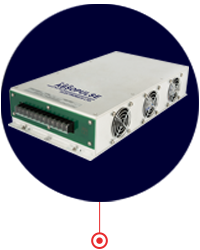
CSI 1K-3P Industrial 3-Phase DC-AC Inverter Module

CSI 1K-3P Compact 3-Phase Inverter

1000VA continuous pure sine wave power in a compact chassis, ideal for industrial instrumentation and control cabinets.

  • Input Voltage: 24V, 48V, 110V, 125V, 250Vdc range
  • Output Voltage: 3-Phase 208V, 380V, 400Vrms (50/60/400Hz)
  • Cooling: Natural convection or conduction cooling
  • Harmonic Distortion: THD < 2% at full load
  • Protection: Short-circuit, thermal shutdown, reverse polarity
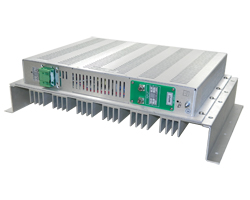
CTI 3K-3P Heavy-Duty Convection Cooled 3-Phase Inverter

CTI 3K-3P Industrial Sine Wave System

3000VA heavy-duty 3-phase inverter using microprocessor-controlled high-frequency PWM for demanding industrial drives.

  • Input Voltage: 48V, 110V, 125V, 250V, 400Vdc input
  • Output Voltage: 3-Phase 208V, 400V, 480Vrms phase-balanced
  • Cooling: External heatsink fins (fan-free option)
  • Isolation: 2250Vdc input to output galvanic isolation
  • Phase Imbalance: Tolerates 100% asymmetric loading
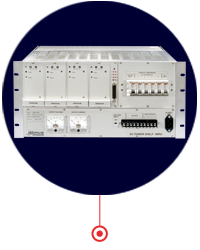
19 Inch Rack Mount 3-Phase Industrial Inverter System

CSI 5K-3P-F7 5kVA–10kVA Modular System

Scalable high-power 3-phase system packaged in robust 19-inch rack-mount chassis or Eurocard module plug-ins.

  • Input Voltage: 125V, 250V, 600Vdc high-voltage bus
  • Output Voltage: 3-Phase 400Vac / 480Vac 50/60Hz
  • Topology: N+1 redundant parallel-capable modules
  • Diagnostics: Form-C alarm contacts & RS232/RS485
  • Ruggedization: Conformal coating & shock/vibration proofing

Engineering Information Gain: Resolving Critical 3-Phase Inverter Failure Modes in Industrial Infrastructure

Commercial 3-phase inverters often fail when exposed to the non-linear loads and harsh physical stresses of heavy industry. Below is an engineering analysis detailing how custom OEM design methodologies mitigate system downtime.

1. Phase Voltage Stability Under 100% Unbalanced Loads

In industrial processing facilities and electrical utility sub-stations, connected loads rarely remain perfectly balanced across all three phases. Conventional line-commutated or simplified three-phase inverters rely on shared control loops, causing phase displacement angles (normally 120°) to drift when one phase experiences a sudden load step. This shift leads to phase voltage sags, neutral line current spikes, overheating in downstream 3-phase induction motors, and unexpected tripped breakers.

The ABSOPULSE Solution: Our 3-Phase Industrial DC-AC Inverters integrate individual high-frequency pulse-width modulation (PWM) control channels for each phase vector, linked to a central microprocessor controller. By continuously sampling voltage and current waveforms at localized transformer output points, each phase independently maintains tight voltage magnitude (typically ±1%) and exact 120° phase quadrature—even when Phase A is loaded at 100% while Phase B and C remain at zero load. This capability eliminates neutral shifts and ensures clean operation for sensitive industrial automation.

2. Elimination of Optocouplers for Extended Thermal & Operational Life

Optocouplers are standard components in commercial power converters used to isolate output sensing signals back to the primary PWM driver. However, the Current Transfer Ratio (CTR) of optocouplers degrades predictably over time when exposed to ambient temperatures exceeding +50°C, high thermal cycling, or low-level ionizing radiation in high-voltage switchgear environments. As CTR degrades, feedback loop stability deteriorates, leading to voltage drift, excessive output ripple, and ultimate power supply failure within 3 to 5 years.

The ABSOPULSE Solution: To achieve design lifespans targeting up to 30 years, ABSOPULSE power conversion designs eliminate optocouplers entirely from control feedback paths. Instead, our engineering team uses specialized pulse transformers, magnetic feedback loops, and direct sensing topologies. Combined with conservative semiconductor derating (typically running switching MOSFETs/IGBTs at 50–60% of rated voltage and current capacity), our inverters deliver uninterrupted operation across long maintenance cycles.

3. Convection and Conduction Cooling Topologies vs. Mechanical Fan Maintenance

Cooling fan failures represent one of the leading causes of unscheduled power supply outages in industrial infrastructure. In environments such as underground mining shafts, desert solar plants, or cement manufacturing facilities, airborne metallic dust, moisture, and particulate matter quickly clog mechanical fan filters or lock fan bearings, triggering rapid thermal shutdown.

Pure Convection Cooling (HSA)

Utilizing high-surface-area aluminum heatsink assemblies mounted externally to the chassis, dissipating heat passively into ambient air without moving parts.

Conduction Baseplate Cooling

Heat-generating power components transfer thermal energy directly through a precision-machined aluminum baseplate to the customer’s cold plate or structural enclosure wall.

IP66 Die-Cast Encapsulation

Complete enclosure of internal magnetics and PCBs in thermally conductive compound within an IP66 aluminum casing for resistance against water jets and toxic fumes.

Inquire Now

Future Procurement Trends: Modernizing Industrial DC Bus & Microgrid Architectures (2026–2035)

The rapid adoption of industrial DC microgrids, high-voltage battery storage systems (BESS), and wide-bandgap (WBG) power semiconductors is reshaping how electrical engineers approach 3-phase DC-AC conversion. System specifiers should consider these key technology trends when designing continuous-duty infrastructure:

A. Integration with High-Voltage DC (HVDC) Battery Buses

Modern industrial sites are transitioning from standard low-voltage DC rails (24V/48V) to high-voltage DC buses (250Vdc, 400Vdc, 600Vdc, to 800Vdc) to reduce copper cable weight, minimize $I^2R$ transmission losses, and interface directly with utility scale solar arrays and battery energy storage systems (BESS). Procurement teams must source 3-phase inverters capable of accepting wide DC input swings (e.g., 300Vdc to 800Vdc continuous) while maintaining regulated 3-phase output voltages without requiring secondary step-down converters.

B. Transition to Silicon Carbide (SiC) Semiconductor Topologies

Silicon Carbide (SiC) MOSFET technology allows 3-phase inverters to operate at elevated switching frequencies (100kHz+) compared to legacy Silicon IGBTs (20kHz). This frequency jump enables significant reduction in the physical volume and weight of internal transformers and filter chokes, while raising inverter efficiency beyond 93–95%. SiC components also exhibit superior thermal conductivity, allowing higher power density in smaller mechanical enclosures.

C. Compliance with Environmental & Grid Isolation Standards

Global infrastructure tenders increasingly mandate compliance with rigorous immunity and safety standards. High-reliability 3-phase DC-AC inverters must meet or exceed international standards including:

  • EN 50155 / IEC 60571: Railway applications covering rolling stock electronic equipment, shock, vibration, and supply surges.
  • IEC 61850-3 / IEEE 1613: Electric utility substation environments requiring extreme immunity to electromagnetic interference (EMI) and electrostatic discharge (ESD).
  • MIL-STD-810H & MIL-STD-1399: Environmental engineering considerations and naval shipboard electric power interface requirements (including 400Hz 3-phase systems).
  • IP66 / NEMA 4X: Complete protection against high-pressure water washdowns, fine dust particles, oil mist, and corrosive marine salt spray.

Inquire Now
Specification Matrix

3-Phase Industrial DC-AC Inverters — Typical Technical Parameters

Review typical engineering design boundaries for our custom and semi-custom 3-phase inverter platforms. All specifications can be adapted to specific project requirements by our in-house engineering team.

  • Output Power Rating
  • 1000VA, 2000VA, 3000VA, 5000VA, 10kVA single chassis
  • Modular parallel N+1 expansion up to 50kVA system capacity
  • DC Input Voltage Rails
  • 24Vdc, 48Vdc, 110Vdc, 125Vdc, 250Vdc standard battery ranges
  • Custom wide-range inputs: 14–30V, 66–154V, 300–800Vdc high voltage bus
  • 3-Phase Output Voltage
  • 3-Phase 208Vrms, 380Vrms, 400Vrms, or 480Vrms line-to-line
  • Custom phase voltages (e.g. 3-Phase 115Vrms, 600Vrms, neutral available)
  • Output Frequency
  • 50Hz or 60Hz pure sine wave
  • 400Hz output for marine, naval defense, aerospace, and test labs
  • Total Harmonic Distortion (THD)
  • < 3% at full linear load
  • < 2% optimized for high-precision laboratory and automation loads
  • Phase Voltage Balance
  • ±1% magnitude, 120° ±1° phase quadrature
  • Maintained under 100% asymmetric phase load imbalance
  • Efficiency
  • 85% – 92% typical (topology dependent)
  • Up to 95% using SiC MOSFET high-frequency switching stages
  • Operating Temperature
  • -20°C to +55°C full specification continuous
  • Extended range down to -40°C or up to +70°C (+85°C conduction cooled)
  • Cooling Architecture
  • Convection cooled via Heatsink Assembly (HSA) fins
  • Baseplate conduction, fan-assisted with filters, or fully potted IP66
  • Galvanic Isolation
  • 2250Vdc input to output / input to chassis isolation
  • Up to 4300Vdc reinforced isolation for high-voltage utility buses
  • Custom technical envelopes for ABSOPULSE 3-Phase Industrial DC-AC Inverter Platforms.
    Parameter Standard Envelope Custom & High-Rugged Options
    Inquire Now

    The ABSOPULSE OEM Advantage

    For over four decades, global system integrators and tier-1 original equipment manufacturers have relied on ABSOPULSE for custom power conversion solutions. Why work with our engineering team directly?

    Every 3-phase inverter is designed, built, and tested in our purpose-built 80,000 sq. ft. facility in Ottawa, Canada. In-house control over magnetic component winding, surface-mount assembly, conformal coating, potting, high-temperature burn-in, and final electrical testing guarantees full quality control and production repeatability.

    We match our power supplies to your physical cabinet geometry. Whether your project requires 3U or 5U 19-inch rack-mount chassis, wall-mount IP66 enclosures, Eurocard plug-in modules, or custom open-frame baseplates for vehicle mounting, our mechanical engineering team adapts the packaging to fit your enclosure precisely.

    ABSOPULSE design guidelines mandate conservative electrical and thermal derating for all active and passive components. Capacitors, switching devices, magnetics, and transformers operate well below maximum temperature ratings, yielding system MTBF figures that allow service life targets of up to 30 years.

    When you contact ABSOPULSE, you communicate directly with experienced power electronics designers who understand transient surge profiles, EMI filter compliance, and thermal dynamics. We support your engineering team from initial requirement review through prototyping, qualification testing, and volume delivery.

    Inquire Now
    B2B Procurement FAQ

    Frequently Asked Questions: 3-Phase Industrial DC-AC Inverters

    Clear engineering answers to complex technical queries commonly submitted by system integrators and purchasing departments.

    ABSOPULSE 3-phase industrial inverters utilize independent microprocessor-driven PWM phase regulation coupled with localized output sensing. This topology allows each phase to compensate independently for phase displacement and magnitude sag under 100% unbalanced loads, preserving tight line-to-line voltage regulation and keeping THD under 2%.

    We manufacture 3-phase inverters for standard battery bank and industrial DC bus voltages, including 24Vdc, 48Vdc, 110Vdc, 125Vdc, 250Vdc, and high-voltage DC buses up to 600Vdc or 800Vdc. Custom wide-range inputs tailored to railway surge profiles (EN50155) or substation battery sags are readily configured.

    Yes. Our platform topology allows factory programming for 50Hz, 60Hz, or 400Hz output frequencies, delivered as 3-phase 208Vrms, 380Vrms, 400Vrms, 480Vrms, or custom line-to-line voltages for shipboard radar, naval defense, ground support equipment, and specialized industrial test benches.

    Optocouplers suffer from current transfer ratio (CTR) degradation over prolonged thermal stress and radiation exposure. By eliminating optocouplers from feedback loops and utilizing magnetic pulse transformers or direct magnetic sensing, our 3-phase inverters achieve operating service lifespans targeting up to 30 years.

    High-power convection cooling is achieved using integrated Heatsink Assembly (HSA) fins, thermally conductive dielectric potting, and conservative semiconductor power derating. Heat is conducted away from critical switching components to outer chassis surfaces without mechanical fans, eliminating mechanical failure points and fan filter maintenance.

    Yes. Our 3-phase inverters can be delivered as standard 3-wire delta outputs or 4-wire star (wye) outputs with a fully rated neutral terminal. The neutral line is galvanically isolated from the DC input and chassis, allowing flexible grounding to match site distribution requirements.

    To help our engineering team review your application quickly, provide your nominal DC input range, required 3-phase output voltage and frequency, load power factor and peak surge requirements, ambient operating temperature range, preferred cooling method (convection, conduction, or fan), enclosure sealing level (e.g., standard chassis or IP66), and target compliance standards.

    Consult Our Senior Engineering Team for Your 3-Phase Power Project

    Need a heavy-duty, custom 3-phase DC-AC inverter tailored to your mechanical envelope, input rail, or thermal environment? Speak directly with our design engineering team in Ottawa, Canada.