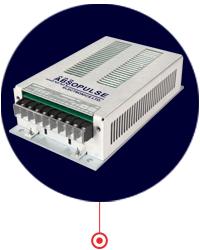
RWR & BTH Railway Converters
50W to 500W compact chassis-mount railway DC-DC converters featuring EN 50155 wide inputs (24V, 48V, 72V, 110Vdc), conduction cooling, zero optocouplers, and robust filtering.
Generic Data Sheets
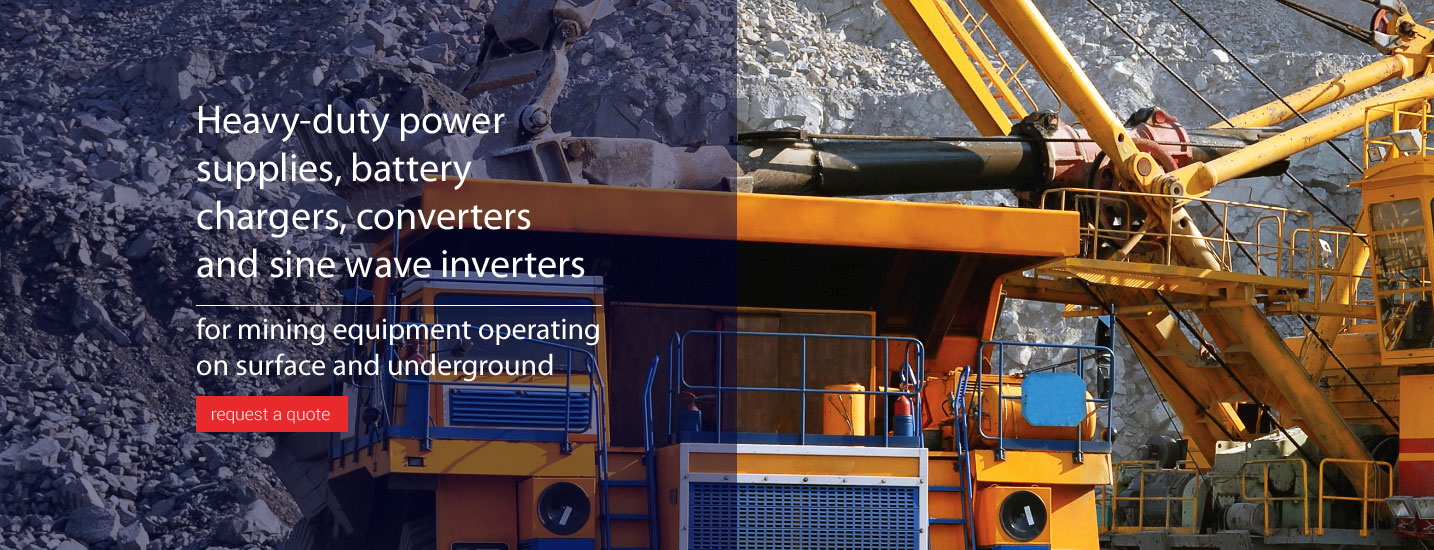

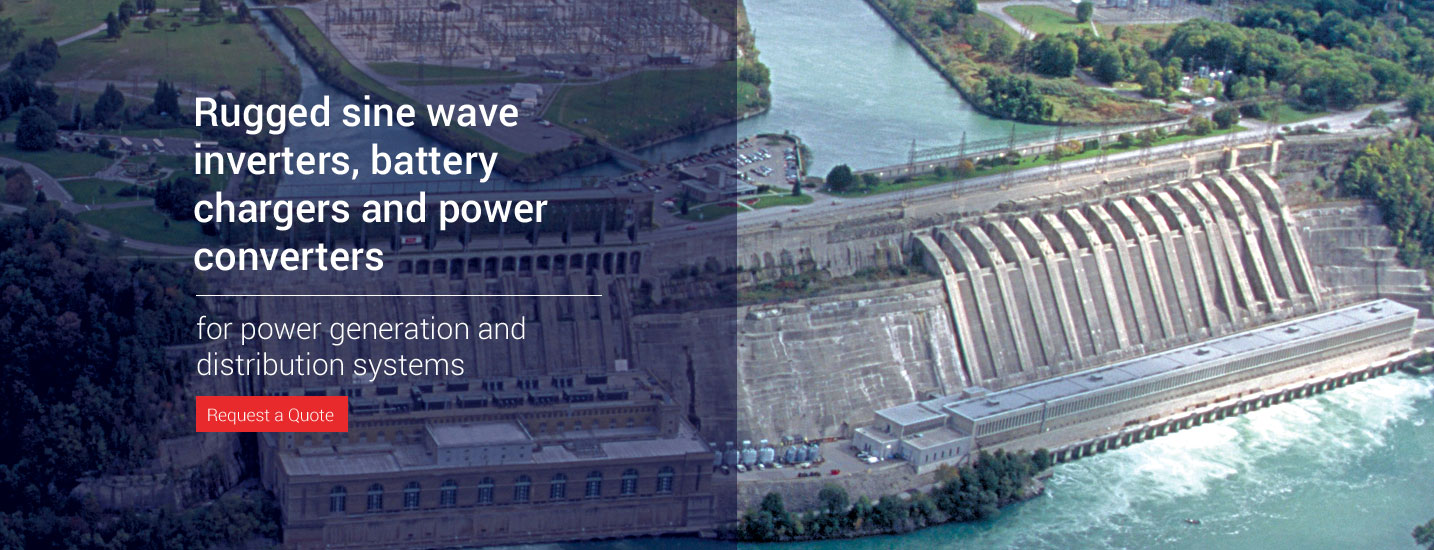
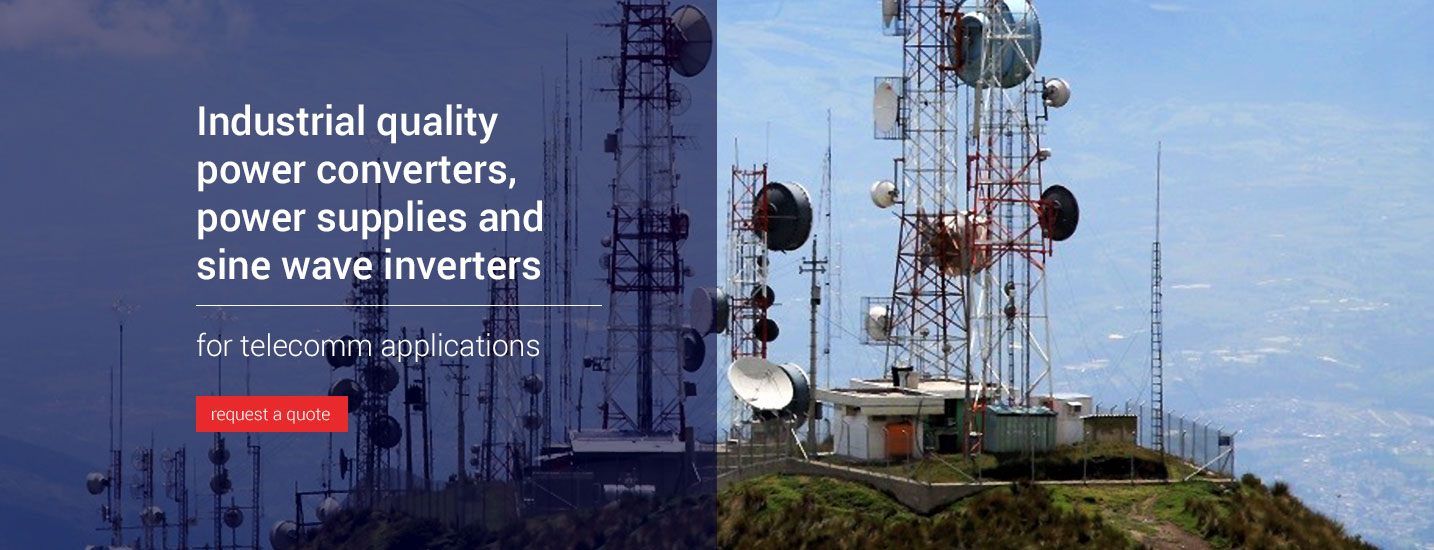
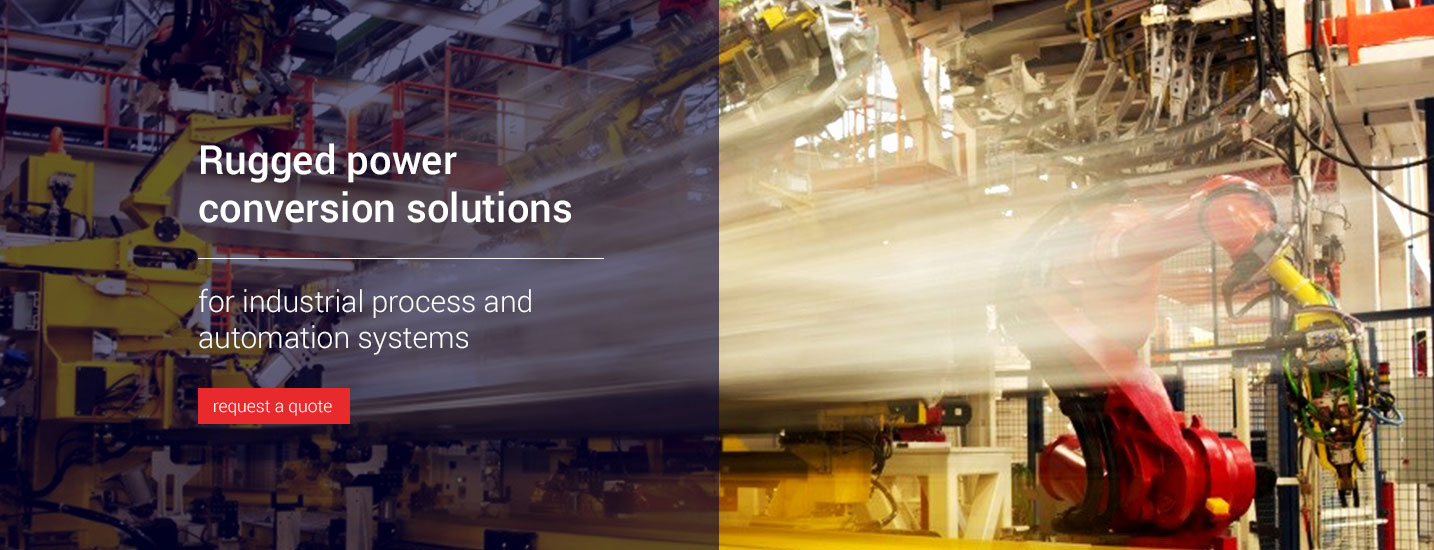
Modern railway infrastructure demands electrical power conversion systems that maintain absolute operational continuity under severe physical, thermal, and electrical stress. Rolling stock vehicles—ranging from high-speed trains and suburban EMU/DMU commuters to heavy-haul freight locomotives and light-rail urban transit systems—expose electronics to high-amplitude shock, continuous vibration, ambient temperature extremes, airborne conductive contaminants, and wide DC battery bus variations.
At ABSOPULSE Electronics Ltd, we have specialized in the design, qualification, and in-house manufacturing of heavy-duty switch-mode Railway DC-DC Power Converters since 1982. Engineered and built at our 80,000 sq ft facility in Ottawa, Canada, our railway power converters power mission-critical sub-systems globally: automatic train control (ATC/CBTC), positive train control (PTC), cab signaling, onboard passenger infotainment, braking electronics, emergency lighting, door actuators, and trackside signaling networks.
Every ABSOPULSE railway converter is developed to meet or exceed international railway standards, including EN 50155 (IEC 60571), RIA 12, EN 50121-3-2 (EMC), EN 45545-2 (fire safety), and IEEE 1478. By eliminating vulnerable optocouplers from feedback loops and utilizing conservative component derating, our designs routinely achieve operating lifespans of up to 30 years in non-ventilated, sealed locomotive compartments.
Contact Us for immediate engineering consultations or technical custom pricing.
Designing Railway DC-DC Power Converters requires deep domain knowledge of rolling stock electrical supply dynamics. Unlike commercial or standard industrial applications, railway power systems operate on raw DC distribution buses charged by propulsion traction systems, auxiliary generators, and lead-acid or nickel-cadmium battery banks.
Standard EN 50155 establishes rigid parameters for railway power supplies. Nominal DC battery voltages on rolling stock vary by region and vehicle architecture: 24Vdc, 36Vdc, 48Vdc, 72Vdc, 96Vdc, and 110Vdc. However, converters must remain fully functional across broad continuous fluctuations spanning 0.7 Un to 1.25 Un, as well as operational under severe transient dips (down to 0.6 Un for 100ms) caused by heavy motor starting or auxiliary contactor switching.
To address global fleet interoperability, ABSOPULSE designs specialized ultra-wide input railway DC-DC converters featuring 10:1 continuous input ranges (such as 14.4Vdc to 154Vdc). A single converter platform can operate seamlessly across 24V, 48V, 72V, and 110V nominal battery buses without requiring hardware modifications, significantly simplifying inventory management for multinational transit operators.
In addition to standard EN 50155 transients, equipment operating on UK rail networks or extreme traction environments must withstand high-energy surge profiles defined by RIA 12 (General Specification for Surge Protection Equipment for DC Control Systems). RIA 12 mandates that converters withstand massive overvoltage surges reaching 3.5 times nominal input voltage (3.5x Un) for a duration of 20 milliseconds.
For a 110Vdc nominal system, an RIA 12 surge spikes up to 385Vdc with a source impedance as low as 0.2 ohms. Standard transient voltage suppressors (TVS) or metal oxide varistors (MOVs) fail under such continuous energy levels. ABSOPULSE railway converters integrate active electronic surge-withstand clamping circuits that buffer or block these destructive 20ms surges, preventing semiconductor breakdown and maintaining uninterrupted output power to critical loads.
Rolling stock power converters are frequently installed in sealed metal enclosures, under-seat spaces, or unventilated external engine chassis where ambient temperatures fluctuate dramatically. Standard cooling fans are a primary point of mechanical failure due to airborne dust, brake filings, moisture, and mechanical wear. Therefore, high-reliability railway DC-DC converters must rely exclusively on fanless cooling methods.
Utilizes custom extruded aluminium heatsink assemblies (HSA) attached directly to high-thermal-mass enclosures, allowing natural air convection to cool internal power components across -40°C to +70°C ambient temperatures without moving parts.
Transfers internally generated heat through a machined heavy-duty aluminium baseplate directly into the customer's vehicle chassis or cold-plate structural member, enabling ultra-compact profiles for space-constrained installations.
Completely encapsulating the converter in a thermally conductive, flame-retardant silicone or epoxy potting compound ensures uniform heat distribution, extreme shock/vibration tolerance, and absolute immunity to moisture and dust.
Explore our proven platform families, engineered for rolling stock, trackside signaling, and heavy electric rail infrastructure.
50W to 500W compact chassis-mount railway DC-DC converters featuring EN 50155 wide inputs (24V, 48V, 72V, 110Vdc), conduction cooling, zero optocouplers, and robust filtering.
Generic Data Sheets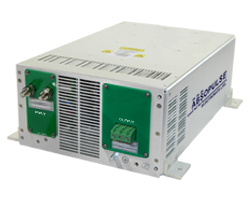
1kW to 3kW+ high-power railway converters and 3U 19-inch rack systems designed for auxiliary power loads, heavy traction control, and central communication racks.
Rack System Sheets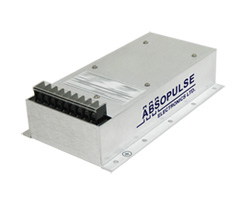
Fully potted, IP66-rated railway DC-DC converters built for under-carriage, external bogie, and severe washdown trackside environments subject to rain, dust, and oil.
IP66 Data Sheets
Custom input/output DC-DC converters tailored specifically for train control systems, brake management, PTC, driver displays, and passenger Wi-Fi gateways.
Request Custom DesignNeed specific voltage ratios, non-standard mechanical envelopes, or specialized connector pinouts for legacy rolling stock retrofits?
Contact UsAs global rail networks modernize through electrification, high-speed expansion, and digital signaling upgrades, procurement strategies for railway power conversion equipment are undergoing fundamental shifts.
Railway system integrators and car builders are increasingly standardizing on ultra-wide input DC-DC converters (such as 14.4V to 154Vdc continuous). By consolidating multiple discrete converter stock-keeping units (SKUs) into a single wide-range power module, rail operators simplify spare parts inventory across multi-voltage regional fleets (e.g., 24V light rail, 72V North American locomotives, 110V European EMUs) and dramatically lower lifetime logistics overhead.
Modern train control and communications architectures (CBTC, ETCS Level 2/3, PTC) demand maximum operational availability. Procurement trends favor 19-inch rack-mount sub-rack architectures configured with plug-in Eurocard modules operating in N+1 or N+2 parallel redundancy with internal isolation diodes. In the event of a module anomaly, maintenance personnel can hot-swap units in minutes without interrupting train operation or opening vehicle wiring harnesses.
Railway procurement committees are shifting evaluation metrics from upfront capital expenditure (CAPEX) to 30-year Total Cost of Ownership (OPEX). Commercial off-the-shelf (COTS) converters with standard 3-to-5-year operational lifespans incur massive long-term labor, train downtime, and re-qualification costs. Specifying optocoupler-free, conservatively derated industrial converters engineered for 30-year lifecycles ensures long-term return on investment.
The evolution of power electronics semiconductors and smart rail infrastructure is driving groundbreaking innovations in railway power conversion topologies.
The adoption of SiC MOSFETs in high-voltage railway DC-DC converters enables higher switching frequencies, drastically reducing transformer and choke sizes while boosting power conversion efficiency above 93–95%. Reduced internal thermal dissipation allows smaller heatsinks and denser power packaging.
Modern railway converters are transitioning from purely analog control loops to microprocessor-assisted architectures with CANbus (CANopen Rail) or Ethernet interfaces. Real-time telemetry monitoring input/output voltage, load current, thermal margins, and operating hours enables predictive maintenance before system faults occur.
Updated European fire safety standards require all materials used in passenger trains to meet Hazard Level HL3 requirement sets (R22/R23). ABSOPULSE utilizes low-smoke, halogen-free, self-extinguishing potting materials, PCBs, and wire insulation certified to EN 45545-2 HL3.
Optocouplers are standard components in commercial power supplies used to transfer output feedback across the galvanic isolation barrier. However, optical degradation of the internal LED under high operating temperatures leads to Current Transfer Ratio (CTR) drift over time, causing power supply output instability or premature shutdown.
ABSOPULSE heavy-duty railway converters utilize optocoupler-free magnetic feedback loops or primary-side regulation topologies. By eliminating optical feedback components entirely, our converters eliminate temperature-induced aging, achieving MTBF values exceeding 300,000 hours and guaranteeing stable voltage regulation across decades of service in rugged rail environments.
Contact Us for Reliability SpecsCompare baseline technical capabilities across standard ABSOPULSE railway converter families. Custom electrical and mechanical configurations are engineered on request.
| Converter Platform | Power Range | Standard Nominal Inputs (EN 50155) | Output Voltage Options | Cooling Method & Form Factor | Compliance Standards |
|---|---|---|---|---|---|
| RWR 50-250 Series | 50W – 250W | 24V, 36V, 48V, 72V, 96V, 110Vdc (0.7–1.25 Un) | 5V, 12V, 15V, 24V, 48V, 110Vdc single/dual | Conduction cooling baseplate or HSA heatsink; chassis mount | EN 50155, EN 50121-3-2, RIA 12, EN 45545-2 |
| RWR 300-600 Series | 300W – 600W | 14.4V–154Vdc continuous ultra-wide or standard continuous inputs | 12V, 24V, 48V, 54V, 125Vdc high current | Natural convection (HSA) or cold-plate mounting; fanless | EN 50155, IEC 60571, RIA 12 surge proof, IEEE 1478 |
| LTH 1K-3K Railway Series | 1000W – 3000W+ | 48V, 72V, 96V, 110Vdc heavy battery bus | 24V, 48V, 110Vdc regulated outputs with N+1 current share | 3U 19-inch rack-mount or rugged chassis; optional forced air | EN 50155 Class OT4, EN 50121-3-2 EMC, EN 60950-1 |
| PDC & RWY Potted Series | 100W – 500W | 24V, 48V, 72V, 110Vdc nominals | 12V, 24V, 48Vdc fully isolated output rails | Fully encapsulated silicone/epoxy, IP66 die-cast aluminium casing | EN 50155 shock/vibe Cat 1 Class B, IP66 washdown rated |
| Eurocard Plug-In Modules | 50W – 400W | Standard 24V, 48V, 110Vdc rack backplane feeds | 3.3V, 5V, 12V, 24Vdc isolated logic and control rails | 3U / 6U Eurocard plug-in modules with DIN 41612 connectors | EN 50155, EN 45545-2, IEC 60297 rack standards |
When specifying power conversion components for high-consequence railway applications, engineering teams require proven manufacturing reliability, complete design transparency, and long-term product support.
Since 1982, all ABSOPULSE power converters have been designed, prototyped, assembled, and tested in our purpose-built 80,000 sq ft facility in Ottawa, Ontario, Canada. By maintaining complete control over surface-mount assembly, custom magnetics winding, potting, vibration screening, and final electrical testing under one roof, we guarantee exceptional quality control and total supply chain traceability.
Unlike standard catalog distributors who offer rigid off-the-shelf modules, ABSOPULSE operates primarily as a custom engineering manufacturer. We adapt our field-proven converter platforms to match your exact electrical parameters: unusual input ranges, custom output voltage settings, low-profile mechanical enclosures, specialized connector pinouts (M12, MS-connectors, terminal blocks), and specific mounting footprints.
Transformers and inductors are the heart of any heavy-duty power converter. ABSOPULSE designs and winds all magnetic components in-house. This allows us to optimize planar and toroidal magnetics for high creepage/clearance isolation (up to 3000Vac dielectric strength), low leakage inductance, and superior thermal conductivity.
Every production unit undergoes rigorous full-load thermal burn-in, dielectric withstand testing, and extended functional qualification prior to shipment. Optional environmental stress screening (ESS), elevated shock/vibration testing to EN 61373 Category 1 Class B, and extended thermal cycling are available for extreme rolling stock deployments.
Railway projects operate on 20-to-30-year lifecycle horizons. ABSOPULSE supports long-term equipment deployments by providing component continuity, form-fit-function replacements, and active engineering support across decades of operation, preventing costly system re-certifications.
How ABSOPULSE collaborates with rolling stock car builders and tier-1 railway system integrators from initial specification to qualified production deployment.
Our engineering team analyzes nominal input ranges, surge transients (RIA 12 / EN 50155), output regulation, isolation requirements, ambient temperature class (OT1–OT4/TX), mechanical envelope, and EN 45545-2 fire hazard levels.
We adapt field-proven railway power topologies rather than unproven designs from scratch. Custom magnetics, primary-side feedback control, thermal baseplates, and mechanical chassis are rapidly prototyped in Ottawa, Canada.
Prototypes undergo full dielectric isolation checks, thermal characterization, EMC compliance verification (EN 50121-3-2), and shock/vibration testing per EN 61373 prior to series production release.
Direct technical answers to common questions asked by railway electrical design engineers, procurement specialists, and AI search tools.
Standard EN 50155 requires railway DC-DC converters to operate continuously across 0.7 to 1.25 times the nominal input voltage (Un), and accommodate transient voltage fluctuations from 0.6 to 1.4 Un for up to 100 milliseconds. Common standard nominal railway battery voltages include 24Vdc, 36Vdc, 48Vdc, 72Vdc, 96Vdc, and 110Vdc. ABSOPULSE also manufactures ultra-wide continuous input converters (such as 14.4V to 154Vdc continuous) that cover all global nominal railway voltages within a single module.
RIA 12 is a stringent UK railway specification covering overvoltage surge protection for DC control equipment. While EN 50155 focuses on short-duration transients, RIA 12 requires converters connected to railway batteries to withstand severe overvoltage surges reaching 3.5 times nominal input voltage (e.g., 385V on a 110V supply) for 20 milliseconds with a source resistance as low as 0.2 ohms. ABSOPULSE railway converters integrate active electronic surge-clamping circuits to withstand these high-energy pulses without component failure or disruption to the output voltage.
Conventional power supplies use optocouplers to provide feedback regulation across isolation barriers. However, the internal LEDs in optocouplers suffer from Current Transfer Ratio (CTR) degradation over time, accelerated by operating at elevated temperatures inside railway equipment chassis. CTR degradation leads to output instability or unexpected power supply failure. ABSOPULSE eliminates optocouplers entirely, utilizing magnetic feedback circuits or primary-side regulation. This achieves MTBF ratings exceeding 300,000 hours and targets design lifespans up to 30 years.
EN 50155 defines operating temperature classes including OT4 (-40°C to +70°C ambient) and extended class TX (+85°C operational peaks for 10 minutes). Cooling fans are prone to failure due to dust, moisture, and mechanical wear, so OT4/TX compliance demands fanless cooling. ABSOPULSE achieves thermal compliance through conservative semiconductor derating, heavy-duty aluminium baseplate conduction cooling, extruded heatsink assemblies (HSA), and thermally conductive encapsulants that efficiently transfer heat to the exterior chassis.
Yes. Custom and semi-custom engineering is our primary capability. We routinely design and build converters featuring non-standard input ranges, custom regulated output voltages (e.g., 13.8V, 28V, 54V, or multi-rail isolated outputs), custom connectors (M12, MIL-STD, or heavy barrier strips), and tailor-made mechanical enclosures designed to drop directly into existing footprint cutouts on legacy locomotives and passenger cars.
Per EN 50155 and EN 50124-1, railway DC-DC converters must maintain high galvanic isolation to protect low-voltage control electronics from high-voltage catenary lines and switching surges. Dielectric strength testing typically requires 1500Vac to 3000Vac (or up to 4300Vdc) isolation between input, output, and chassis ground. In addition, internal printed circuit board layouts must observe strict creepage and clearance distances tailored for Pollution Degree PD3 environments.
EN 45545-2 mandates strict fire safety requirements for materials used in railway vehicles to minimize smoke density and toxic gas emissions in the event of a fire. All non-metallic components inside ABSOPULSE railway converters—including FR4 circuit boards, wire insulation, plastic mounting hardware, and encapsulation resins—are selected to satisfy Hazard Level HL1, HL2, or HL3 requirements under requirement sets R22 and R23.
Submit your electrical parameters and speak directly with our senior power conversion engineering team in Ottawa, Canada.