
Engineering Support +1-613-836-3511
Directly engineered for North American industrial, utility, telecommunication, and renewable energy deployments requiring zero-downtime reliability under harsh electrical conditions.
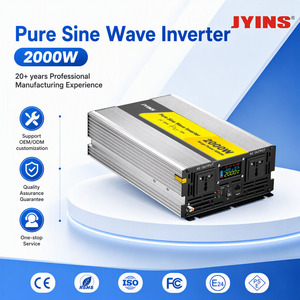
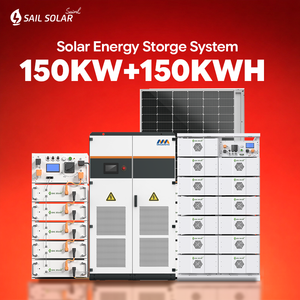
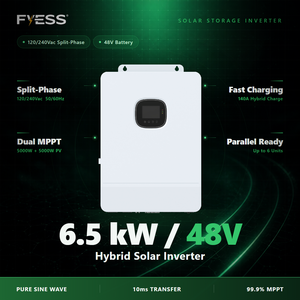
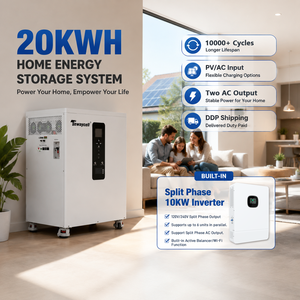
An Executive Technical Paper on Selecting High-Gain Step-Down Buck Converters for North American Infrastructure, Industrial Automation, and Energy Transition Projects.
In North America’s rapidly evolving electrical infrastructure, the demand for high-reliability DC-DC Buck Converters (Step-Down Power Converters) has shifted from standardized commodity power modules to custom-engineered power conversion architecture. Modern industrial plants, telecommunication microgrids, electric vehicle (EV) charging hubs, and defense infrastructure across the United States demand step-down conversion systems capable of handling extreme voltage swings, harsh electromagnetic environments, and extended thermal envelopes.
A Buck Converter is a switch-mode DC-DC step-down converter that efficiently reduces a higher DC input voltage to a lower, strictly regulated DC output voltage. Unlike linear regulators—which dissipate excess power as heat—synchronous and asynchronous buck topologies engineered for heavy-duty applications achieve peak conversion efficiencies ranging from 94% to 98%. When deploying power systems in critical US installations, electrical design engineers face rigorous requirements around heat dissipation, mean time between failures (MTBF), and adherence to standards such as UL 62368-1, UL 1741, IEEE 1547, and MIL-STD-810G.
Selecting the optimal buck converter factory requires a deep understanding of circuit design topologies tailored to high-power density and wide dynamic input variations:
Why Tier-1 US System Integrators move away from consumer-grade modular buck regulators to custom-engineered OEM platforms.
| Performance Parameter | Standard Commercial Buck Modules | Heavy-Duty Industrial Buck Converter Platforms | Technical Advantage & Information Gain |
|---|---|---|---|
| Operating Temperature | 0°C to +40°C (Forced Air Required) | -40°C to +70°C Cold-Start Convection | Zero fan failure risk; extreme temperature survival in remote US field sites. |
| Input Voltage Window | Narrow ±10% Input Tolerance | Wide-Range (e.g., 14V–60V, 90V–350V DC) | Absorbs severe DC bus brownouts, inductive load spikes, and battery discharge curves. |
| Feedback Loop Design | Standard Optocoupler Feedback | Optocoupler-Free Magnetic Feedback | Eliminates catastrophic LED aging failures; enables genuine 30-year operational life. |
| Enclosure Protection Level | IP20 / Open Frame (Dust Sensitive) | IP66 / Die-Cast Encapsulated | Immune to washdown, conductive metallic dust, humidity, salt fog, and chemical vapor. |
| Ingress / Transient Protection | Basic MOV Protection | Heavy Duty TVS & Filter Networks | Complies with MIL-STD-461 EMI standards & IEEE C62.41 surge withstand immunity. |
| Cooling Options | High-RPM Fans (High MTBF Risk) | Convection, Baseplate & Heatsink HSA | Silent, maintenance-free operation in hostile mining, railway, and utility environments. |
Custom DC-DC buck step-down converters and sine wave power systems optimized for specific North American infrastructure demands.
In high-power DC fast-charging networks across the US (operating off 800V or 400V DC central power trunks), heavy-duty auxiliary buck converters step down main bus voltages to isolated 24V or 12V DC logic rails. These power cooling pumps, touchscreen controllers, billing meters, and safety interlocks uninterrupted under extreme ambient temperatures.
US telecom networks rely heavily on standard -48V DC battery banks. Our custom DC-DC buck regulators convert high DC distribution voltages down to tightly filtered, ultra-low noise -48V DC and +24V DC rails for remote cell towers, microwave repeaters, and edge computing enclosures without inducing RF interference.
Underground mining equipment and Class 1 rail vehicles in North America operate under intense shock, vibration, and dust loading. Buck converters step down high traction battery voltages (e.g., 600V/250V DC down to 24V DC) to drive auxiliary hydraulics, onboard telemetry, and cabin environmental controls inside IP66-sealed enclosures.
Power transmission substations across the US electric grid utilize 110V or 125V DC station batteries. Heavy-duty buck converters provide isolated, temperature-compensated step-down charging and auxiliary bus regulation for protective relays, SCADA communications, and circuit breaker tripping units.
Offshore oil platforms, subsea ROVs (Remotely Operated Vehicles), and US Coast Guard-certified vessels demand subsea-grade power electronics. Die-cast aluminum encapsulated buck converters deliver continuous step-down power resistant to salt mist spray, severe water jetting, and extreme pressure variations.
Tactical military trailers and mobile command shelters require clean 28V DC power converted down from erratic generator outputs or vehicle alternators. Robust electromagnetic compliance (EMC) filtering ensures compliance with MIL-STD-461 and MIL-STD-1275 parameters.
Combining 80,000 sq. ft. of dedicated engineering infrastructure with rigorous quality control to meet strict US regulatory standards.
Designed to comply with UL 62368-1 (Audio/Video & ICT equipment), UL 1741 (Inverters & Converters), IEEE 1547 grid integration standard, CA Rule 21, and FCC Part 15 Class A/B EMI limits. Full compliance minimizes certification timelines for US original equipment manufacturers (OEMs).
Prototyping, custom magnetic transformer winding, surface-mount PCB assembly, vacuum potting, thermal burn-in testing, and automated electrical characterization all occur under one roof in our Ottawa, Canada headquarters—ensuring full supply chain transparency and rapid turnarounds.
Whether your application requires 19-inch 1U/2U/3U rack-mount chassis, Eurocard plug-in modules, DIN-rail mounting, cold-plate conduction baseplates, or die-cast IP66 weatherproof enclosures, our mechanical engineering team adapts platforms precisely to your spatial budget.
Addressing common technical specifications, customization options, tariffs, lead times, and reliability certifications for US procurement projects.