
Engineering Support +1-613-836-3511
An authoritative operational analysis of power infrastructure deployment across the Caribbean Sea and Pacific Ocean basins of Colombia.
Operating subsea electronic systems in the maritime jurisdiction of Colombia presents unique environmental challenges. From the deepwater gas fields of the Guajira Offshore Basin (such as the Gorgon, Uchuva, and Kronos discoveries) to the intense tropical salinity of the Caribbean coastline in Barranquilla and Cartagena, marine power systems face severe electrical, thermal, and mechanical stress. Equipment deployed in these marine environments must contend with hyper-saline water immersion, elevated sub-surface hydrostatic pressures, thermal cycling, and harsh electrical line transients typical of offshore platform microgrids.
Industrial subsea power applications require specialized conversion architectures capable of stepping down medium distribution voltages to regulated DC rails for Subsea Control Modules (SCM), Remotely Operated Vehicles (ROVs), Autonomous Underwater Vehicles (AUVs), and subsea fiber optic line feeding equipment (LFE). The primary failure mode of offshore power supplies in high-humidity coastal sites across Buenaventura and Turbo stems from electrolytic corrosion and dielectric insulation breakdown caused by salt mist ingress. To eliminate these vulnerabilities, premier subsea power manufacturers utilize custom dielectric resin encapsulation, anodized marine-grade aluminium enclosures, stainless steel hardware (316L), and galvanically isolated power topologies (exceeding 3000Vdc breakdown ratings).
Ruggedized Pure Sine Wave Inverters, High-Efficiency Hybrid ESS Systems, and DC-DC Converters tailored for Colombian marine and industrial operators.
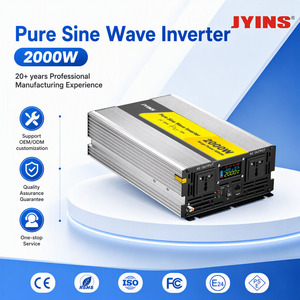
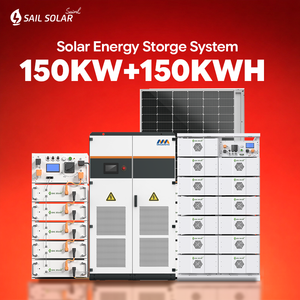
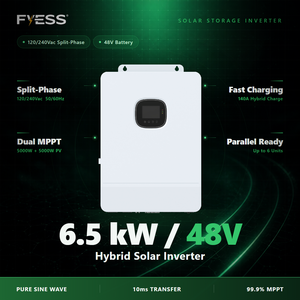
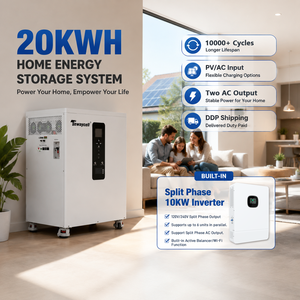
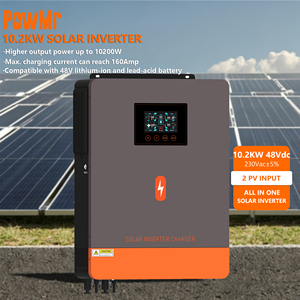
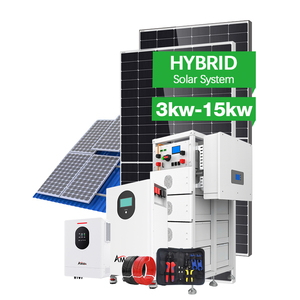
Tailored electrical power conversion solutions designed for specific geographic and industrial environments in Colombia.
In the deep waters off the coast of Colombia's La Guajira peninsula, subsea power supplies are critical for reliable petroleum extraction. Subsea umbilical cables transmit high-voltage AC from surface platforms down to seabed installations. Custom DC-DC converters step down these high voltages to power Subsea Control Modules (SCM), hydraulic power units (HPU), and wellhead sensors. Our fully encapsulated, IP68-rated power units resist ambient seawater pressures up to 300 bar, ensuring uninterrupted operation for deepwater wells operated by Ecopetrol and international partners.
Colombia serves as a pivotal trans-oceanic telecommunication hub connecting South America to Central and North America. Fiber optic cable landing terminals situated in Buenaventura (Pacific) and Cartagena (Caribbean) rely on high-reliability DC power feeding systems. Our custom Eurocard rack-mount DC-DC converters and high-capacity split-phase hybrid inverters provide transient-free power to Line Feeding Equipment (LFE), ensuring continuous global broadband transmission with N+1 hot-swappable redundancy.
Oceanographic research institutions such as INVEMAR and naval shipbuilders like COTECMAR require compact, lightweight power conversion for underwater Remote Operated Vehicles (ROVs) and Autonomous Underwater Vehicles (AUVs). High power density DC-DC boost converters accept wide-input battery rails (24V/48V/125VDC) and convert them to stable high-voltage DC to power subsea thrusters, acoustic sonar systems, and deep-sea lighting rigs with minimal electro-magnetic interference (EMI).
Island microgrids in the Colombian Caribbean archipelago face severe grid instability and extreme salt mist atmospheric conditions. Heavy-duty 150kW–250kW hybrid storage inverters with conformal-coated PCB assemblies provide dynamic peak shaving, frequency regulation, and seamless black-start backup. Designed to operate continuously at high ambient temperatures without thermal derating, these systems bolster energy resilience for island communities and naval outposts.
Key growth drivers transforming Colombia's maritime power conversion landscape through 2030 and beyond.
Colombia's Ministry of Mines and Energy has established a roadmap for up to 500MW of offshore wind power generation off the Caribbean coast near Barranquilla. This transition requires heavy-duty marine AC-AC frequency converters, subsea step-up transformers, and robust shore-side energy storage inverters to integrate variable wind generation into the 60Hz National Interconnected System (SIN).
With major natural gas discoveries in the offshore Caribbean, operator investments are shifting from shallow to ultra-deepwater production systems. Subsea power infrastructure must now support subsea boosting stations and seabed processing units operating at depths exceeding 1,500 meters under extreme hydrostatic pressures.
The Colombian Navy (Armada Nacional) and COTECMAR are actively expanding their shipbuilding program for patrol vessels, oceanographic ships, and underwater defense capabilities. Specifying MIL-STD-compliant power supplies with low acoustic signatures and high vibration resistance is now mandatory across naval procurement contracts.
Original design and in-house manufacturing control powering critical infrastructure worldwide for over 40 years.
Every subsea power unit, DC-DC converter, and sine wave inverter is designed, prototyped, potted, tested, and manufactured under one roof in our Ottawa, Canada facility. Total control over magnetics design and assembly guarantees strict quality assurance and fast-track engineering changes.
Our long-life power conversion topologies eliminate optocouplers from feedback loops, dramatically reducing component failure modes. Conservative derating of semiconductors, custom heat dissipation fins, and pure convection/conduction cooling yield operational lifespans up to three decades.
For washdown environments, high salinity, and sub-surface immersion, we offer fully encapsulated assemblies and IP66/IP68 die-cast aluminium enclosures. Immunity to salt fog, sand, metallic conductive dust, and high water jet ingress is engineered into every unit build.
Direct technical and logistical answers regarding importing and deploying subsea power conversion units in Colombia.
Yes. Colombia operates on a 60Hz frequency grid with standard single-phase voltages of 110V/120V AC and 3-phase industrial voltages of 220V, 440V, and 480V AC. Our AC-DC power supplies and pure sine wave inverters are fully configurable with active Power Factor Correction (PFC) to operate seamlessly across these input/output parameters while accommodating wide grid voltage fluctuations typical of coastal regions.
We utilize marine-grade anodized aluminium chassis, 316L stainless steel fasteners, conformal printed circuit board coating, and complete thermal vacuum resin potting. For direct sub-surface immersion, units are housed in IP68 pressure-neutral dielectric fluid-filled enclosures that prevent sea salt ingress, galvanic corrosion, and moisture accumulation.
We work directly with original equipment manufacturers, system integrators, and engineering contractors in Colombia. Products can be shipped direct from our Ottawa plant under standard Incoterms (including DDP options), fully compliant with DIAN customs documentation, RETIE technical regulations (where applicable), and international commercial freight protocols.
Custom engineering is our core specialty. Since 1982, our engineering team has developed thousands of semi-custom and custom power converters. We can adapt field-proven topologies to accept any DC input rail (from 12V up to 1000VDC+) and convert it to precise subsea control voltages, custom power envelopes, or multi-rail isolated outputs.
When subsea power equipment is tested or staged at high-altitude logistics facilities (e.g., Bogotá at 2,640 meters), reduced air density impacts convective thermal cooling. Our thermal design engineers pre-calculate derating curves and utilize over-sized heatsink assemblies or conduction baseplates so equipment operates safely during high-altitude testing prior to ocean submergence.
Connect directly with our Ottawa engineering team to review your specific input/output rails, ambient salinity requirements, mechanical envelopes, and subsea deployment timelines.