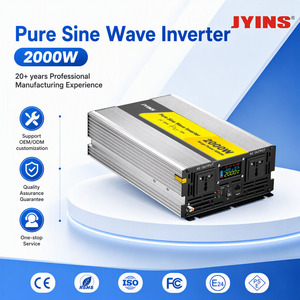
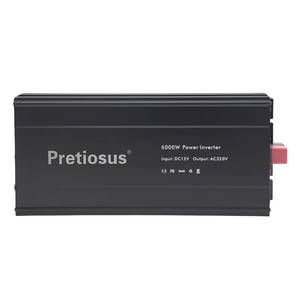
Off-Grid Pure Sine Wave Subsea Power Inverter (300W - 6000W)
- Input: 12V / 24V / 48V DC
- Output: 110V / 220V / 230V Pure Sine
- Conduction Cooled Design

Engineered for high reliability under continuous deepwater pressure, extreme thermal swings, and severe marine environmental conditions in Spanish offshore waters.
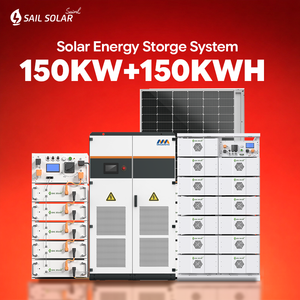
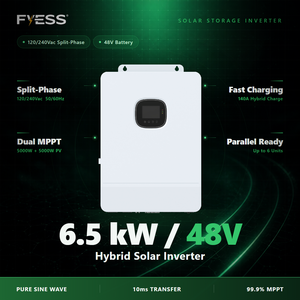
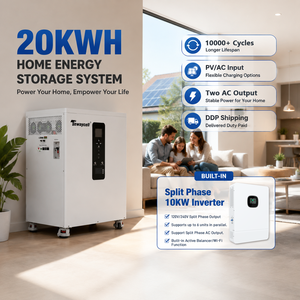
An in-depth whitepaper analysis on high-voltage power conversion, thermal dissipation inside pressure housings, and local deployment across Spain’s Atlantic and Mediterranean marine sectors.
Spain has emerged as a crucial nexus for European oceanographic research, subsea energy infrastructure, and deepwater robotic operations. From the floating offshore wind testing sites off Gran Canaria (PLOCAN) and the Basque coast (BIMEP) to active submarine cable maintenance hubs in Barcelona, Algeciras, and Vigo, the operational demands on Remotely Operated Vehicles (ROVs) and Autonomous Underwater Vehicles (AUVs) have surged exponentially.
Navigating the harsh hydrographic conditions of the Bay of Biscay or the deep waters of the Strait of Gibraltar requires ultra-reliable subsea power delivery systems. High-density DC-DC step-down converters, tether management power supplies, and onboard pure sine wave inverters must endure high hydrostatic pressure, constant vibration, and limited thermal dissipations inside sealed atmospheric pods or oil-filled compensated housings.
A primary bottleneck in work-class ROV operations off the Spanish continental shelf is delivering steady power over small-diameter umbilical tethers spanning distances of 1,000 to 4,000 meters. To minimize tether mass and hydrodynamic drag, surface topside units transmit power at high AC or DC voltages (typically 1,000V to 3,000V DC).
Subsea power supplies must convert this high voltage into tightly regulated low-voltage DC rails (e.g., 24Vdc, 48Vdc, 120Vdc, or 300Vdc) to feed thrusters, hydraulic pumps, subsea actuators, lights, sonar systems, and subsea control modules (SCMs). Our custom topologies incorporate active power factor correction (PFC), active current sharing, and fast transient response mechanisms to prevent voltage dips during heavy hydraulic load spikes.
Comparative structural specs for ROV, AUV, shipboard, and underwater infrastructure units.
| Platform Category | Input Voltage Ranges | Output Capabilities | Cooling & Housing Options | Target Subsea Duty |
|---|---|---|---|---|
| High-Voltage DC-DC Subsea Converters | 300Vdc – 3500Vdc High Rail | 24V, 48V, 125V, 300Vdc (Up to 10kW+) | Conduction Baseplate / Fully Potable Encapsulation | Work-Class ROVs, Deep-sea AUVs, Subsea Trees |
| Topside Umbilical Power Supplies | 3-Phase 380V / 400V / 440Vac (50/60Hz) | Adjustable 1000V - 3000V DC High Voltage Output | 19-Inch Rack Mount / Forced Air + Heavy Filters | Surface Control Cabins, Support Vessels in Spain Ports |
| Shipboard Pure Sine Wave Inverters | 24V, 48V, 110V, 250Vdc Direct Input | 115Vac / 230Vac Single Phase / 400Vac 3-Phase | Convection Cooled / IP66 Die-Cast Aluminium | Bridge Navigation, Oceanographic Survey Equipment |
| Subsea Battery Chargers & ESS | Universal 95–264Vac or High Voltage DC | Regulated Multi-Stage Battery Charging (Li-ion/Lead-acid) | Pressure-Tolerant Sealed Pods / Oil Filled Enclosures | Autonomous Seafloor Observatories, Docking Stations |
Tailored power conversion solutions designed to meet the rigorous operational standards of Spanish maritime hubs and marine research initiatives.
During underwater cabling, foundation inspection, and subsea trenching for floating wind turbines off the coast of Gran Canaria and Ferrol, inspection ROVs demand uninterrupted power. Our IP66-rated and conduction-cooled DC-DC modules supply constant power to subsea visual and ultrasonic inspection equipment despite fluctuating salt-spray topside conditions.
Naval shipbuilders in Spain specify high-spec power converters with extreme immunity to shock, vibration, and electro-magnetic interference (EMI). Our DC-AC sine wave inverters deliver low THD sine wave power to mission-critical sonar arrays and underwater remote vehicles operating from naval support platforms.
Spain serves as a primary landing bridge for transatlantic and Mediterranean subsea telecommunication cables (e.g., Bilbao, Valencia). Cable repair vessels utilize our heavy-duty high-voltage umbilical power units to drive heavy trenching ROVs and jetting sleds operating on the seafloor.
Built upon a 40-year legacy of original equipment design and Canadian manufacturing precision.
We are primarily a custom power conversion design house. Rather than forcing your subsea payload design into rigid standard catalog envelopes, our engineering team modifies proven topologies—adapting input/output voltage rails, transient protection, enclosure dimensions, and mechanical mounting points to match your underwater vehicle’s exact envelope.
Maintenance and retrieval of subsea hardware off the Spanish coast incurs significant operational expenditure. To ensure long design life, our power supplies eliminate short-lived optocouplers from feedback loops, employ conservative thermal derating, and use rugged planar magnetics designed for multi-decade reliability.
Offshore decks and underwater pressure housings demand absolute protection against seawater ingress, humid fog, and conductive dust. We offer fully potted encapsulated assemblies, conformal coating, and ruggedized die-cast IP66 aluminium housings that resist saltwater corrosion and jetting water streams.
Every single power unit is designed, assembled, potted, and high-voltage burn-in tested inside our own 80,000 sq ft facility in Ottawa, Canada. By keeping design and manufacturing under one roof, we provide total supply chain traceability and long-term product lifecycle availability for Spanish engineering contractors.
Direct answers for project leads, naval architects, and procurement managers in Spain.
We ship directly from our OEM manufacturing facility to major Spanish port facilities, shipyards, and oceanographic research centers in Vigo, Cadiz, Ferrol, Bilbao, Barcelona, Las Palmas, and Algeciras. Express air freight and ocean logistics options are fully supported with complete customs paperwork.
Yes. Our topside power systems and marine power supplies accept standard European vessel AC inputs, including 400V 3-phase 50Hz, 440V 60Hz, as well as wide-range DC bus voltages from battery banks or onboard generators.
For atmospheric pressure pods on ROVs, we design cold-plate and baseplate conduction-cooled modules that transfer heat directly to the vehicle’s aluminium or titanium hull structure, eliminating the need for internal cooling fans that are prone to failure.
All units are designed and tested to comply with applicable CE directives, EN/IEC 62368-1, EN 60950-1, EN 55032 EMC standards, and oceanographic environmental shock/vibration guidelines (IEC 60068-2).
Yes. We manufacture fully potted DC-DC converters using specialized thermally conductive resins capable of withstanding ambient hydrostatic pressures encountered in shallow water and deep subsea environments.
Because we utilize proven modular design topologies, semi-custom adaptations can often be prototyped and qualified rapidly, saving engineering teams months compared to full ground-up redesigns.
Consult directly with our engineering specialists. We analyze your voltage, thermal, pressure, and mechanical constraints to design a power conversion unit that guarantees operational uptime.