Engineering Support +1-613-836-3511
High-efficiency pure sine wave inverters, hybrid energy storage solutions, and heavy-duty DC-DC power converters fully certified for Austrian industrial, alpine, and commercial infrastructure applications.
As Austria advances its national renewable energy transition under the Erneuerbaren-Ausbau-Gesetz (EAG) framework, demanding industrial and municipal infrastructures require uninterrupted, highly regulated power conversion architectures. Modern electrical engineering environments—ranging from the high-altitude transit routes of the ÖBB (Austrian Federal Railways) to heavy manufacturing automation hubs across Upper Austria (Oberösterreich) and Styria—present rigorous operational constraints. Standard commercial off-the-shelf (COTS) power converters consistently fall short when exposed to wide temperature swings, aggressive grid harmonic distortion, industrial vibration, and harsh alpine atmospheric moisture.
This technical brief examines the structural engineering requirements, topology selection criteria, and regulatory mandates essential for original equipment manufacturers (OEMs), plant automation engineers, and procurement authorities sourcing regulated power supply equipment and exporters serving the Austrian market.
Core Engineering Insight for the Austrian Market: To satisfy Austrian ÖVE/ÖNORM standards and EN 50155 railway metrics, power supplies operating in DACH environments must integrate long-life topology designs that eliminate optocouplers from feedback loops, employ conservative thermal component derating, and deliver total harmonic distortion (THD) below 2% under non-linear dynamic loading.
Exporting power conversion equipment to Austria requires granular adaptation to specific localized operational contexts across the Republic's nine federal states. Below are the primary deployment profiles where heavy-duty regulated power supplies and high-efficiency hybrid inverters deliver operational stability:
Deployments along steep terrain networks (such as Arlberg or Semmering corridors) demand EN 50155 compliant DC-DC converters and ruggedized sine wave inverters. Units supply stable control electronics, signaling systems, and track switch heaters subjected to constant mechanical shock and severe sub-zero thermal operational limits (-40°C to +70°C).
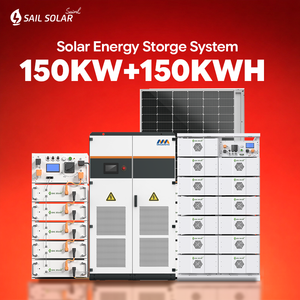
With Austria generating over 75% of its electricity from hydro and distributed solar power, industrial facilities in Tyrol and Vorarlberg utilize 150kW to 250kW hybrid energy storage systems (ESS). These multi-megawatt capacity installations manage peak shaving, grid voltage stabilization (TOR Erzeuger Type A/B), and rapid frequency restoration reserves.
Manufacturing complexes around Linz and Graz require high-reliability 24V, 48V, and 125V DC power systems for robotic cells and CNC machining networks. Fully encapsulated, IP66-rated switch-mode rectifiers withstand conductive metal dust, oil mists, and aggressive washdown cycles without thermal throttle.
Industrial power demand across Central Europe is undergoing a technological shift driven by strict environmental directives and microgrid decentralization. Key trends shaping Austrian procurement strategies include:
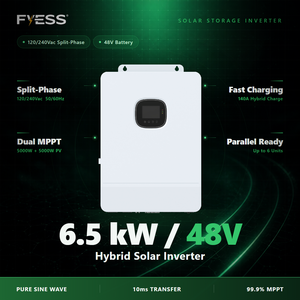
Austrian buyers strictly enforce compliance with EU Directive 2009/125/EC (Ecodesign). Power conversion equipment must demonstrate active power factor correction (PFC > 0.98) and ultra-low standby losses. Modern hybrid solar and energy storage inverters must operate at peak efficiencies exceeding 98.5% under variable load curves.
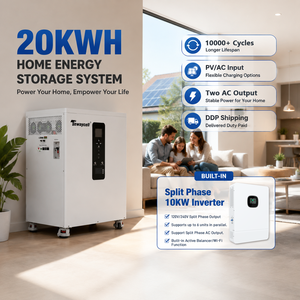
Commercial enterprises are rapidly pairing solar generation with high-capacity 51.2V LiFePO4 battery storage banks (ranging from 16kWh mobile units to multi-MWh containerized systems). These systems provide localized energy autonomy, dynamic grid feedback protection, and zero-transfer-time switchover for critical hospital, telecom, and industrial process networks.
In response to high maintenance and downtime costs in remote alpine regions, Austrian system integrators prioritize long-life power supply topologies. By omitting failure-prone optocouplers and electrolytic capacitors, advanced power supplies achieve MTBF figures exceeding 300,000 hours and a target service lifespan of up to 30 years.
The following performance matrix contrasts standard catalogue converters with customized, heavy-duty export platforms engineered for the Austrian industrial landscape:
| Platform Category | Input Voltage Envelopes | Output Capacity | Target Efficiency & THD | Thermal & Ingress Protection | Primary Compliance Standard |
|---|---|---|---|---|---|
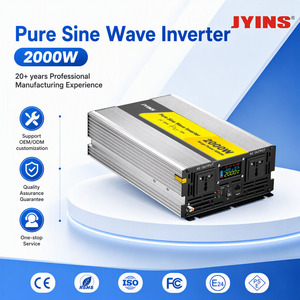
| Pure Sine Wave Inverters | 12V, 24V, 48V, 110V, 250V DC | 300W – 13.2kW Single Phase | > 94% Efficiency / THD < 2% | Convection / Heatsink Fins (-25°C to +55°C) | EN 62040-3, CE, ÖVE |
| Commercial Hybrid ESS | 350V – 800V DC (PV/Battery) | 150kW – 250kW 3-Phase | 98.5% Peak Efficiency | IP65 Enclosure / Liquid or Forced-Air | TOR Erzeuger, VDE-AR-N 4105 |
| Mobile Solar ESS Units | 51.2V nominal (314Ah – 628Ah) | 10kW AC Output (16-32kWh) | > 96% Round-Trip Efficiency | Shock-Proof Heavy Chassis / IP54 | UN 38.3, CE, EN 62619 |
| Heavy-Duty DC-DC Converters | Wide Range 14.4V – 154V DC | 50W – 10kW+ Scalable | > 90% Conduction Cooled | IP66 Fully Encapsulated Die-Cast | EN 50155, EN 61000-6-2/4 |
As an established original equipment manufacturer (OEM) with direct global export capabilities, our facility integrates complete design, prototyping, magnetic winding, encapsulation, thermal verification, and high-voltage burn-in testing under one roof. Austrian engineering clients benefit from custom power conversion manufacturing tailored to exact specifications:
We build to your custom input voltage rails, multi-output configurations, specific mechanical footprints, and specialized connector interfaces. No restrictive catalogue constraints.
Featuring full polyurethane potting, conformal coating, IP66 cast aluminum enclosures, and heavy-duty fan filtering, our designs survive humidity, dust, oil, and continuous vibration.
Leveraging EU warehouse staging and DDP (Delivered Duty Paid) shipping options, we remove import hurdles, ensuring seamless door-to-door transit for Austrian manufacturing sites.
Yes. All export units comply with European Low Voltage Directive (LVD) 2014/35/EU, EMC Directive 2014/30/EU, and relevant ÖVE/ÖNORM standards. Specific grid-tie units include required TOR Erzeuger settings for Austrian network safety.
Absolutely. We specialize in wide-range DC inputs (such as 24V, 48V, 72V, 110V DC) matching EN 50155 standards, delivering low-noise, isolated regulated output voltages for onboard signaling and emergency control systems.
We provide comprehensive logistics support including EXW, FOB, and DDP (Delivered Duty Paid) directly to your facility in Vienna, Linz, Graz, Innsbruck, or regional industrial parks, fully handling EU customs clearing procedures.
Our IP66-rated enclosures feature complete die-cast aluminum construction combined with internal silicone encapsulation, insulating sensitive circuit components against condensation, freezing ambient air, and thermal shock.
Yes. Our Megerevo 150kW to 250kW hybrid series supports parallel integration, enabling scalable battery energy storage systems (BESS) up to several megawatts for industrial peak cutting and microgrid operation.
Our 19-inch rack-mount power systems utilize hot-swappable Eurocard plugin modules that can be configured for N+1 or N+2 active redundancy with built-in micro-controller monitoring and fault alarm relays.
Speak directly with our power supply application engineers to review your voltage requirements, thermal parameters, mechanical constraints, and delivery schedules for Austria.