High-Performance Hardware
Featured Industrial Transformers & Inverters
Selected ruggedized power equipment optimized for Japanese grid interconnections, microgrids, and heavy-duty industrial applications.
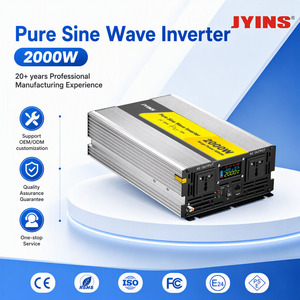
Pure Sine Wave Off Grid Inverter 12V 24V 48V to 110V 220V 230V (300W - 6000W) DC to AC Power Converter
Inquire Now
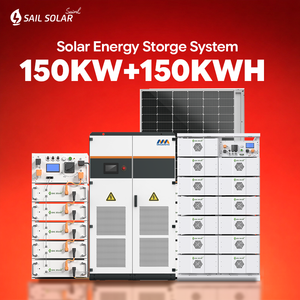
150kW / 200kW / 250kW High Efficiency Megerevo Commercial Hybrid Inverter for Peak Cutting
Inquire Now
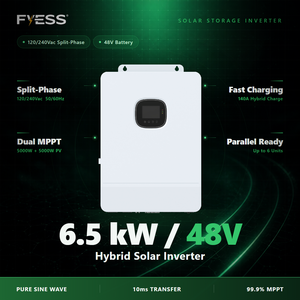
48V / 24V 6.5kW Split Phase Hybrid Solar Inverter 120V / 240V Storage Inverter for Home & Light Commercial
Inquire Now
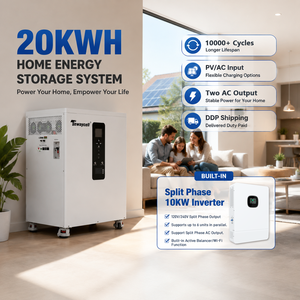
DDP Delivery AC120/240V 51.2V 314Ah-628Ah (16kWh - 32kWh) Mobile Solar ESS with 10kW Split Phase Inverter
Inquire Now
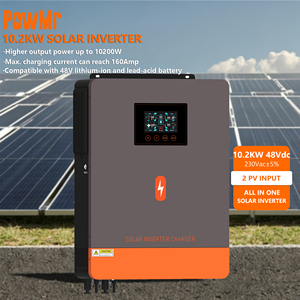
PowMr High Output 13200W Solar Inverter 10kW 48Vdc to 220/230Vac Pure Sine Wave Power System
Inquire Now
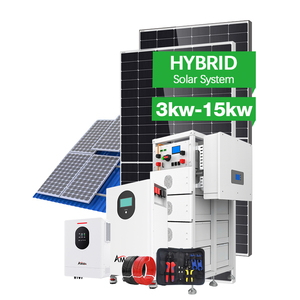
Home 12kW / 15kW Solar Energy Supply System with N-Type Mono Panels & Silent Hybrid Inverter
Inquire Now
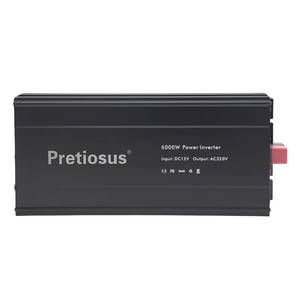
Pretiosus 6000W 12/24/48V DC to AC Pure Sine Wave UPS Power Inverter with Integrated Charger
Inquire Now
12kW 51.2V 12000W Off-Grid Solar Power Inverter for Commercial & Industrial Energy Application
Inquire Now
42+ Yrs
OEM Engineering Legacy (Since 1982)
80,000 sq ft
In-House Manufacturing Facility
Up to 30 Yrs
Design Operating Lifespan Target
IP66 / Class 3
Seismic & Environmental Protection
1. Executive Summary & Market Dynamics of Tokyo’s Electrical Grid
The Greater Tokyo Metropolitan Area represents one of the most electrically dense and demand-intensive urban regions worldwide. Operating primarily under the 50 Hz frequency standard grid overseen by Tokyo Electric Power Company (TEPCO Power Grid), the regional electrical network demands extraordinary grid stability, thermal management, and seismic protection. Power transformer suppliers targeting Tokyo must comply not only with baseline international standards such as IEC 60076, but also with stringent national and local specifications including JIS C 4304 and the Japanese Electrical Safety and Material Act (DENAN Law).
Industrial facility expansion across the Keihin Industrial Zone, hyper-scale data centers around Inzai and Western Tokyo, and urban underground substation retrofits have intensified the requirement for compact, highly efficient step-up/step-down transformers, hybrid inverters, and switch-mode DC-DC/AC-DC power conversion modules. Navigating procurement in this region requires partnering with factories that possess deep custom-engineering capabilities, capable of supporting unique low-loss core configurations, specialized noise damping (< 45 dB), and advanced oil-immersed or dry-type resin cast designs.
2. Localized Technical Application Scenarios in Greater Tokyo
Engineering teams specifying electrical conversion hardware for Tokyo projects face distinct environmental and architectural constraints. Our custom power conversion and transformer solutions address four primary industrial scenarios across the region:
Underground Urban Substations
Due to extreme real estate costs in Ginza, Marunouchi, and Shinjuku, substations are frequently situated multiple levels underground. Equipment requires zero-flammability cast-resin insulation, compact envelopes, and ultra-quiet operation.
East-West Frequency Bridging
Japan is split between 50 Hz (East/Tokyo) and 60 Hz (West/Osaka). Industrial equipment bridging facilities require dual-frequency transformers and robust AC-AC phase/frequency converters to ensure seamless cross-regional operations.
Coastal & Bay Area Heavy Industry
Installations along Tokyo Bay and Yokohama port terminals endure high humidity, salt spray, and corrosive fog. Sealed IP66-rated enclosures, marine-grade protective coatings, and fully encapsulated magnetics prevent premature dielectric breakdown.
Furthermore, Tokyo’s rail transit network—including JR East, Tokyo Metro, and private commuter lines—relies heavily on redundant trackside traction power step-down transformers and auxiliary DC-AC sine wave inverters. These components must withstand continuous vibration, sudden load surges, and wide temperature variations while delivering clean, uninterrupted sine wave power to signaling and automated control hardware.
3. Technical Benchmark: Standard vs. Tokyo-Optimized Transformer Architecture
To achieve technical superiority and satisfy local compliance requirements, power equipment deployed within Tokyo infrastructure must meet elevated performance thresholds compared to standard industrial units:
| Performance Parameter |
Standard Commercial Specification |
Tokyo Grid & Industrial Grade Specification |
Engineering Benefit |
| Seismic Withstand Level |
0.3g Acceleration Threshold |
0.6g to 1.0g (JEAG 5003 Compliant) |
Uninterrupted operational integrity during severe seismic events. |
| Nominal Grid Frequency |
Single 60 Hz or non-optimized 50 Hz |
Optimized 50 Hz / Dual 50/60 Hz Switchable |
Eliminates core saturation and excessive heat build-up under TEPCO 50 Hz load. |
| Dielectric Insulation Class |
Class F (155°C) |
Class H (180°C) with Vacuum Impregnation |
Extends insulation lifespan up to 30 years under peak thermal stress. |
| Total Harmonic Distortion (THD) |
< 5.0% at Rated Load |
< 2.0% Pure Sine Wave Output |
Protects delicate data center logic and precision robotic automation. |
| Ingress / Enclosure Protection |
IP20 – IP44 Chassis-Mount |
IP66 / Fully Encapsulated Die-Cast |
Complete protection against metallic dust, jet washdown, and salt fog. |
4. Localized Trends: Decarbonization, Peak Shaving, and Tokyo Microgrids
Under the Tokyo Metropolitan Government’s "Zero Emission Tokyo Strategy" and the nation's 2050 Carbon Neutrality mandate, commercial enterprises in Tokyo are facing aggressive energy efficiency targets. Commercial buildings and manufacturing complexes are adopting automated Energy Management Systems (EMS) integrated with high-efficiency hybrid inverters and step-down transformers.
Key Megatrends Shaping Tokyo Power Infrastructure:
1. Commercial & Industrial Battery Peak Cutting: To avoid expensive TEPCO peak-demand tariffs, large-scale commercial facilities are deploying 150kW to 250kW Megerevo hybrid energy storage systems. These installations store off-peak electricity and discharge it during mid-day spikes, requiring transformers with low no-load copper losses and bi-directional power flow support.
2. Solar & Storage Integration in Urban Heights: Commercial rooftops across Tokyo and Chiba are increasingly retrofitted with N-type monocrystalline solar arrays paired with split-phase hybrid inverters. These configurations allow commercial units to maintain emergency back-up power during grid disconnects triggered by typhoons or earthquakes.
3. Transition to Ultra-Low-Loss Cores: Modern transformers supplied to Tokyo incorporate amorphous metal alloy cores or high-permeability grain-oriented silicon steel (CRGO). This design dramatically minimizes core losses (no-load loss reduced by up to 70%), directly assisting corporations in meeting mandatory ESG energy audits.
5. Corporate Background & Manufacturing Engineering Capabilities
As an established original equipment manufacturer (OEM) operating since 1982, our engineering capability is backed by decades of direct power supply and converter design experience. Operating out of a purpose-built 80,000 sq ft facility in Ottawa, Canada, our organization specializes in heavy-duty, switch-mode power conversion hardware engineered specifically for extreme environments where commercial off-the-shelf units consistently fail.
Optocoupler-Less Circuit Topology
To achieve target operating lifespans of up to 30 years, our power supplies and converters eliminate optocouplers from feedback loops—removing the primary failure mode associated with semiconductor aging under thermal stress.
Custom Mechanical Envelopes
We build tailored mechanical enclosures ranging from 19-inch rack-mount systems and Eurocard plug-in modules to IP66 die-cast aluminum boxes engineered for direct washdown and outdoor mounting.
Complete In-House Testing
All magnetics design, surface-mount assembly, potting, high-potential dielectric testing, thermal stress burn-in, and final electrical verification occur in-house, ensuring 100% batch traceability.
Whether you require a single high-capacity 10kW+ power supply unit, isolated step-down transformers, or a custom batch of 3-phase pure sine wave inverters, our engineering team works directly with Tokyo-based procurement specialists, system integrators, and consulting engineers to deliver turnkey, fully qualified power solutions.
6. Tokyo Purchaser & Technical Procurement FAQ
Below are critical answers to common regulatory, electrical, and logistical questions raised by project managers procuring power equipment for the Greater Tokyo Region:
What certifications and technical standards apply to transformers imported into Tokyo?
+
Transformers and power supplies imported into Tokyo must adhere to Japanese Industrial Standards (JIS C 4304 for liquid-immersed transformers or JIS C 4306 for dry-type). Furthermore, electrical equipment connecting to TEPCO’s grid must satisfy the Technical Standards for Electrical Appliances (DENAN Law / PSE Mark) and relevant EMC/EMI low-noise standards. Our custom manufacturing team designs products to align precisely with these local criteria.
How do your power transformers handle Tokyo’s 50 Hz grid frequency baseline?
+
Operating a standard 60 Hz transformer on Tokyo’s 50 Hz grid results in higher magnetic flux density, increased core loss, and elevated operating temperatures. Our factory calculates core dimensions and winding turns specifically for 50 Hz (or dual 50/60 Hz) duty cycles, maintaining low hysteresis losses and cool continuous operation.
What thermal and seismic safeguards are built into your custom equipment?
+
For seismic resilience, transformers are fitted with reinforced mounting brackets, low-center-of-gravity core clamping, and flexible busbar connections rated to absorb horizontal accelerations up to 1.0g. Thermally, we utilize Class H insulation, high-temperature potting resins, and pure convection heatsinks that eliminate mechanical fan failures.
Can your factory provide custom voltage inputs/outputs for specialized Tokyo industrial sites?
+
Yes. Custom voltage scaling is our core strength. We routinely engineer transformers and inverters accepting non-standard DC rails (12V, 24V, 48V, 72V, 110V, 125V, 250Vdc) or AC inputs (95V–264V universal, 200V 3-phase, 400V) and step them to exact system requirements with tight voltage regulation and isolated ground planes.
What are the shipping logistics and lead times for equipment delivered to Tokyo ports?
+
We provide direct global shipping via air freight to Tokyo Narita (NRT) / Haneda (HND) or sea freight directly to the Port of Tokyo and Port of Yokohama. DDP (Delivered Duty Paid) options are available to simplify customs clearance and domestic delivery straight to your job site or warehouse.
Engineering Custom Transformers & Power Conversion Systems
Consult directly with our experienced engineering design team. Submit your electrical requirements, physical envelope dimensions, and target standards to receive a formal technical proposal.
Inquire Now