
Engineering Support +1-613-836-3511
Heavy-duty sine wave inverters, hybrid energy storage systems, and custom isolation transformer topologies engineered for extreme electrical resilience.
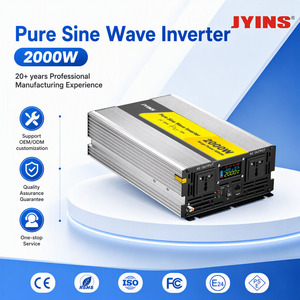
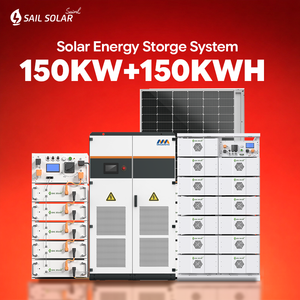
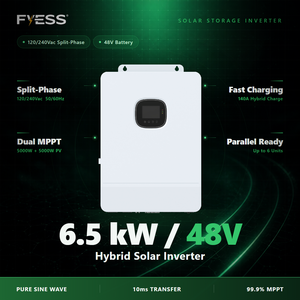
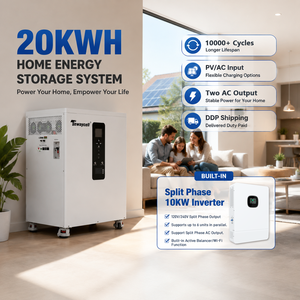
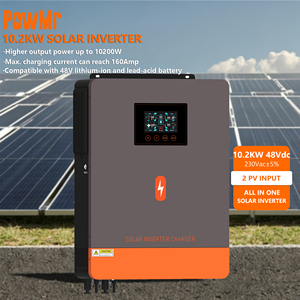
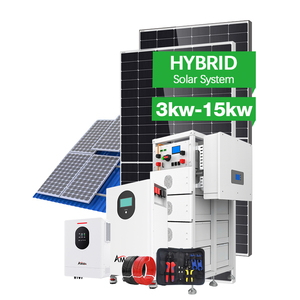
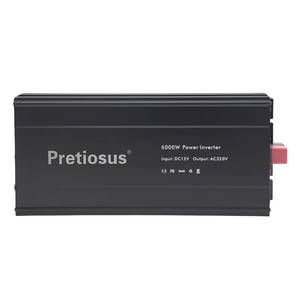
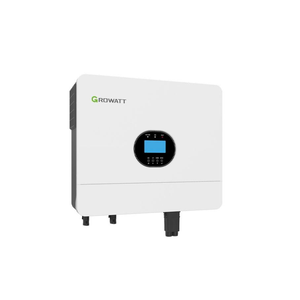
Modern industrial automation, telecommunications, microgrids, and renewable power infrastructure in Southeast Asia—especially within Thailand's Eastern Economic Corridor (EEC)—face unprecedented power quality challenges. Transient voltage spikes, high harmonic distortion, lightning-induced ground potential rises, and harsh environmental humidity present severe threats to delicate control electronics and high-capacity battery energy storage systems (BESS).
An isolation transformer serves as the definitive physical barrier preventing electrical interference, DC offset migration, and high-frequency common-mode noise from corrupting secondary loads. Unlike autotransformers that share a continuous metallic winding between primary and secondary circuits, a true industrial-grade isolation transformer relies entirely on magnetic flux coupling across double-insulated magnetics. This design achieves total galvanic isolation, decoupling the primary power line ground from the secondary output ground.
By incorporating electrostatic Faraday shielding between primary and secondary copper windings, OEM-grade isolation transformers attenuate common-mode noise frequencies by up to 120 dB. This eliminates ground loop currents that trigger nuisance trips in industrial PLC systems, robotics, and sensitive CNC machinery operating across Rayong, Chonburi, and Samut Prakan industrial estates.
Selecting the appropriate isolation topology depends on harmonic content, ambient operating temperatures, mechanical mounting footprints, and specific localized electrical standards across Provincial Electricity Authority (PEA) and Metropolitan Electricity Authority (MEA) utility regions.
| Transformer Topology | Galvanic Isolation Mechanism | Typical Efficiency | THD Mitigation | Primary Industrial Use Case |
|---|---|---|---|---|
| Low-Frequency Toroidal Isolation | Dual concentric copper windings over grain-oriented silicon steel core | 95% - 98% | High (< 2%) | Heavy motor drives, medical equipment, silent home solar UPS |
| E-I Laminated Core Isolation | Separated primary/secondary bobbins with electrostatic shield | 92% - 96% | Moderate (< 3%) | Substation auxiliary power, distribution cabinets, railway signals |
| High-Frequency Solid-State Isolated Inverter | Ferrite core high-frequency transformer integrated within active switching bridge | 93% - 97% | Ultra-Low (< 1.5%) | Commercial solar ESS, hybrid microgrids, split-phase off-grid power |
| IP66 Fully Encapsulated Isolation Unit | Vacuum-impregnated magnetics sealed in cast aluminum thermoconductive compound | 94% - 97% | High (< 2%) | Coastal marine, ROV/AUV ground power, washdown food processing |
Thailand's tropical climate, characterized by high ambient heat (+40°C to +50°C in outdoor enclosures), intense relative humidity (exceeding 90%), and heavy monsoon seasons, demands ruggedized power conversion equipment. Standard commercial-grade inverters and non-isolated transformers degrade rapidly under these stressful environmental conditions.
Automotive assembly lines and electronics manufacturing plants in Chonburi and Rayong require galvanic isolation transformers to protect sensitive robotics from voltage sags and high-frequency noise generated by heavy neighboring arc furnaces and capacitive switching loads.
Off-grid resorts, telecom towers, and marine facilities across Koh Samui, Phuket, and Southern Thailand rely on split-phase hybrid inverters backed by low-frequency isolation transformers to resist severe airborne salt fog, humidity condensation, and indirect lightning strikes.
High-density commercial towers and data infrastructure in the Bangkok Metropolitan Region deploy high-capacity (150kW - 250kW) hybrid ESS storage systems to mitigate peak electricity tariffs, ensuring smooth phase balance and eliminating neutral-to-ground offset voltages.
Thailand's Alternative Energy Development Plan (AEDP) has accelerated the deployment of industrial solar arrays coupled with Battery Energy Storage Systems (BESS). As factories integrate high-power lithium iron phosphate (LiFePO4) battery banks (ranging from 51.2V up to high-voltage 800V strings), the demand for isolation transformers at the inverter interface has surged. Isolation transformers eliminate DC injection into AC utility transformers, complying with PEA interconnect code requirements.
Standard power conversion platforms designed for temperate zones frequently suffer catastrophic thermal shutdowns when exposed to ambient enclosure temperatures exceeding +45°C in Thailand. Leading isolation transformer factories now prioritize Class H (+180°C) or Class N (+200°C) magnetics insulation, vacuum-pressure impregnation (VPI) varnishing, and custom extruded aluminum heatsink designs to guarantee 100% continuous power delivery without thermal derating.
Global manufacturing enterprises establishing local hubs in Thailand often import machinery engineered for foreign grid standards (such as 120V/240V split-phase or 208V 3-phase). Advanced isolation transformer systems act as universal voltage matchers, stepping down or stepping up local 220V/400V 50Hz utility feeds to precise load-specific requirements while maintaining absolute electrical decoupling.
Backed by over four decades of custom magnetics design and power conversion manufacturing in our 80,000 sq ft Canadian production facility, our enterprise solutions provide unmatched structural and electrical protection for international procurement managers and project integrators in Thailand.
By eliminating optocouplers from feedback control loops, derating semiconductors by at least 50%, and employing solid-state ceramic capacitors, our industrial isolation systems target a field operating life of up to 30 years under continuous full-load conditions.
For extreme environments exposed to metallic dust, chemical washdowns, high moisture, or insect ingress, our fully potted magnetic assemblies and die-cast aluminum enclosures deliver absolute NEMA 4X / IP66 sealed protection.
We do not force generic off-the-shelf compromises. Our in-house engineering team custom-winds toroidal and E-I transformer cores to match your exact input/output ratios, physical footprint limits, cooling channels, and terminal arrangements.
Frequently asked questions by plant managers, electrical engineers, and B2B procurement agents sourcing isolation transformers and hybrid power conversion equipment in Thailand.
Galvanic isolation prevents direct DC current injection from solar PV arrays into the AC grid, which can saturate utility distribution transformers. Furthermore, it protects your facility's internal power network from severe lightning-induced grid surges, common during Thailand's rainy season, while resolving neutral-ground voltage drift issues.
Standard equipment is often rated at an ambient temperature of +25°C or +40°C. In hot factory environments or unconditioned outdoor enclosures in Thailand where temperatures exceed +45°C, standard transformers must be derated by 15% to 25% to prevent insulation breakdown. Our heavy-duty industrial platforms utilize Class H insulation and specialized thermal geometries, allowing continuous 100% full-load output without thermal derating.
Yes. We specialize in custom winding engineering. Whether you need to convert 400V 3-phase utility grid power to 208V 3-phase, or 220V single-phase to 120V/240V split-phase, our factory custom-configures the exact turn ratios, electrostatic shielding, and tap changers to match your imported industrial machinery specifications.
We support flexible delivery arrangements including DDP (Delivered Duty Paid) direct to factory floors in Bangkok, Rayong, Chonburi, or any industrial zone across Thailand. All units undergo stringent routine electrical testing compliant with international safety standards (IEC 61558-2-4, UL 1741, EN 62109) prior to dispatch, with complete test documentation included.
Consult directly with our senior power electronics engineering team to review input/output topologies, thermal derating constraints, and customized enclosure builds for your project in Thailand.
Get a Quote