
Engineering Support +1-613-836-3511
Sweden’s aggressive transition toward fully electrified, fossil-free industrial operations—under the Fossil-Free Sweden (Fossilfritt Sverige) initiative—demands a radical evolution in industrial power conversion technology. From the subterranean automation networks of LKAB’s iron ore mines in Kiruna and Gällivare to the heavy-duty marine propulsion systems operating along the Baltic coastline and Gothenburg port, industrial battery chargers are no longer auxiliary accessories; they are mission-critical energy nodes. As a premier original equipment manufacturer (OEM) specializing in heavy-duty switch-mode power conversion since 1982, our systems are engineered specifically to overcome the harsh environmental and electrical constraints typical of Scandinavian industrial operations.
Industrial battery charging systems in Sweden face stringent operational challenges: extreme sub-zero ambient temperatures, severe vibration profiles from heavy transport machinery, exposure to metallic dust or corrosive salt air, and demanding compliance requirements with EU/SS-EN safety standards. Standard commercial-grade off-the-shelf chargers inevitably suffer premature capacitor degradation, thermal derating collapse, and seal failures under these severe conditions. This whitepaper provides a comprehensive evaluation of heavy-duty industrial battery chargers, localized application scenarios, modern technological developments, and system selection guidelines tailored for Swedish procurement leads and electrical design engineers.
Explore our core industrial platforms engineered for utility substations, heavy transport, marine vessels, and decentralized microgrids.
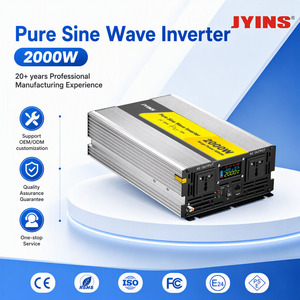
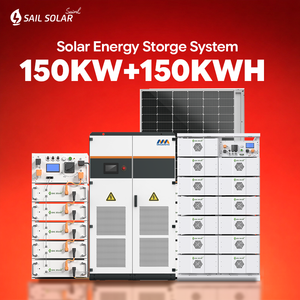
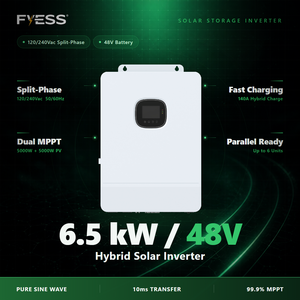
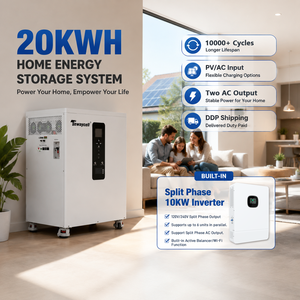
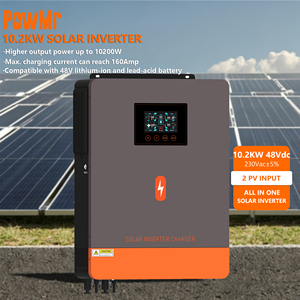
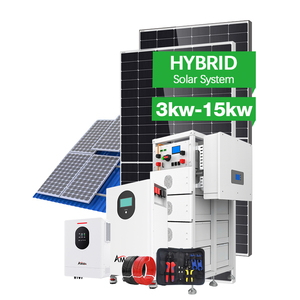
Industrial battery charging infrastructure in Sweden requires precise technical customization based on regional geographical, climatic, and sectoral operational demands. Below are the prominent domestic integration environments where our customized switch-mode power systems excel:
Sweden’s northern mining sector represents one of the world's most demanding environments for battery chargers. Mining haulage trucks, loaders, and stationary equipment operate deep underground where conductive dust, severe shock (EN 61373), and extreme humidity coexist. Chargers deployed in these sites must feature IP66-rated cast-aluminum enclosures and heavy conformal coating to prevent short circuits caused by iron dust contamination while maintaining float and equalizing charges on heavy 125V or 250V traction and backup battery banks.
Commercial maritime operations along the Swedish coastline demand power conversion equipment capable of enduring continuous exposure to salt fog, high moisture, and constant hull vibrations. Our shipboard battery chargers and DC power supplies feature stainless steel or marine-grade anodized aluminum mechanical structures, internal potting, and galvanically isolated topologies (exceeding 3000V RMS dielectric withstand). They power critical bridge navigation, emergency backup batteries, and subsea ROVs (Remotely Operated Vehicles).
With massive wind developments in Norrland and extensive hydro-electric assets along northern rivers, Sweden’s power transmission network requires uninterrupted DC control power. Our substation-grade industrial rectifiers and battery chargers deliver regulated DC rails (typically 48V, 110V, or 220V) to switchgear trip coils and SCADA monitoring nodes, utilizing active Power Factor Correction (PFC) to ensure clean current draw without introducing harmonic distortion back into the regional grid.
As Swedish commercial transport transitions to full battery electrification, maintenance depots and depot logistics nodes require high-output, continuous-duty industrial chargers. Our scalable 19-inch rack-mount battery charger systems, built with plug-in Eurocard modules, allow N+1 redundant parallel configurations that ensure continuous operation even if an individual charging module requires servicing.
Engineering procurement managers can use the matrix below to evaluate standard technical parameters across our primary industrial battery charger platform categories:
| Charger Platform Family | Nominal Output Power | Supported Input Voltages | DC Output Configurations | Ingress & Thermal Protection | Target Compliance Standards |
|---|---|---|---|---|---|
| Heavy-Duty Chassis Mount | 100W – 3000W | 95–264Vac Universal / 110–250Vdc | 12V, 24V, 48V, 125Vdc Adjustable | Convection Cooled / IP54 Sealed | EN 60950-1, EN 61000-6-2/4 |
| IP66 Fully Encapsulated | 200W – 1500W | 115Vac / 230Vac / Custom Wide DC | Single/Dual High-Current DC Rails | Die-Cast IP66 / NEMA 4X Sealed | IEC 60529, MIL-STD-810G Shock |
| 19" Rack-Mount Eurocard System | 1kW – 10kW+ (Scalable) | 3-Phase 400Vac / 120Vac / 230Vac | Hot-Swappable N+1 Redundant Rails | Internal Forced-Air w/ Heavy Filters | EN 50155 (Railway), IEC 61850 |
| High-Power Substation Rectifiers | 3kW – 50kW+ | 3-Phase 380V/400V/480Vac | 110Vdc, 125Vdc, 220Vdc Float/Boost | Conduction / Heatsink Assembly | IEEE 946, SS-EN 62040-3 |
Designing power electronics for the Swedish market requires addressing specific structural changes in power generation, ambient operational envelopes, and environmental sustainability mandates. Below are the key technological vectors shaping industrial battery charger engineering:
In Northern Sweden (Norrbotten and Västerbotten), industrial installations frequently experience sustained outdoor winter temperatures dropping below -40°C. Standard commercial chargers fail in these conditions due to electrolyte freezing in aluminum electrolytic capacitors, drift in semiconductor switching thresholds, and mechanical embrittlement of connectors. Our specialized industrial chargers incorporate custom high-rel poly-phase topologies, conservatively derated film capacitors, and integrated low-temperature pre-heat circuits. This ensures seamless cold-start performance and prevents catastrophic voltage ripple spikes during low-temperature operation.
While legacy industrial facilities in Sweden still maintain substantial installations of flooded lead-acid and pocket-plate Nickel-Cadmium (NiCd) battery banks for emergency backup, rapid modernization has introduced Lithium Iron Phosphate (LiFePO4) and Lithium Nickel Manganese Cobalt (NMC) chemistries. Our intelligent microprocessor-controlled battery chargers feature fully programmable charging algorithms (Bulk, Absorption, Float, Equalize, and Storage phases) with dynamic temperature compensation via external temperature sensors. This flexibility prevents thermal runaway in lithium cells while ensuring full capacity maintenance of NiCd banks in substations.
Swedish grid operators (such as Svenska kraftnät) enforce strict limits on total harmonic distortion (THD) and reactive power injection into the grid. Our industrial battery chargers integrate active Power Factor Correction (PFC) front-end stages, achieving a power factor of 0.98 or higher from 10% load to full rated capacity. This ensures compliance with EN 61000-3-2 standards and eliminates penalties associated with reactive power consumption in large-scale industrial installations.
With over four decades of dedicated power conversion design expertise, we do not simply distribute catalog components—we design, qualify, and manufacture custom heavy-duty solutions from the circuit board level up.
Every magnetics assembly, PCB artwork, thermal simulation, and final burn-in test occurs under one roof in our 80,000 sq. ft. facility. This guarantees full component traceability and long-term product lifecycle support (15 to 20+ years availability).
By eliminating short-lived optocouplers from feedback loops and replacing them with robust pulse transformers or magnetic feedback networks, our power supplies achieve MTBF figures exceeding 300,000 hours in demanding applications.
Need non-standard DC input voltages (such as 72V rail, 125V substation DC, or 600V mine traction)? We adapt existing field-tested topologies to your precise electrical envelope, thermal requirements, and mounting dimensions without long R&D cycles.
Units undergo internal environmental stress testing including thermal shock testing (-40°C to +85°C), continuous full-load burn-in at elevated ambient temperatures, and vibration testing according to IEC 61373 and MIL-STD-810 specifications.
Our industrial battery chargers and power supplies are engineered to meet key European and International standards, including CE marking, Low Voltage Directive (LVD 2014/35/EU), EMC Directive (2014/30/EU), and specific industry standards such as SS-EN 60950-1/EN 62368-1, EN 50155 for railway electronics, IEC 61850-3 for electric utility substations, and IEC 60529 for IP rating compliance.
Our northern industrial platforms are rated for full operational capacity down to -40°C. We achieve this by selecting industrial/extended grade semiconductors, utilizing zero-temperature-coefficient voltage references, employing specialized potting compounds that remain flexible under extreme frost, and incorporating automatic internal pre-heating elements where required.
Yes. Our microprocessor-controlled charger series feature fully customizable charging curves accessible via digital communication interfaces (Modbus TCP, CAN-bus, or RS485). Parameters such as float voltage, boost voltage, current limit thresholds, temperature compensation coefficients, and charge termination timers can be configured precisely for your specific battery technology.
In environments with conductive iron ore dust (like Kiruna mines), severe dust contamination rapidly clogs fan filters, causing thermal shutdown and eventual dielectric breakdown inside the power unit. An IP66-rated fully encapsulated die-cast enclosure provides total ingress protection against dust and high-pressure water jets, transferring heat entirely through natural conduction and external convection cooling fins without exposing sensitive electronics to ambient air.
Because we utilize proven modular baseline topologies, semi-custom adaptations (adjusting input/output voltages, custom connectors, or specific mechanical footprints) typically ship within 6 to 8 weeks following engineering sign-off. Standard platform configurations are often available on shorter lead times through our established European fulfillment channels.
Yes. As an OEM supplier to major railway, utility, and military clients worldwide, we maintain form-fit-function product availability for 15 to 20+ years. We avoid relying on short-lifecycle consumer-grade ICs, ensuring that replacement units or plug-in Eurocard modules remain available throughout your plant or system's intended design life.