
Engineering Support +1-613-836-3511
Our field-tested DC-DC boost converters, off-grid pure sine wave inverters, and high-capacity hybrid solar systems engineered to maintain stable voltage step-up operations across Kenyan commercial, industrial, and off-grid projects.
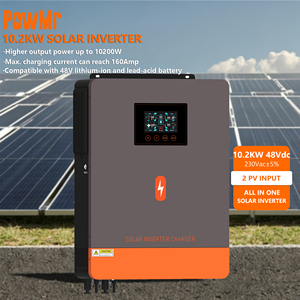
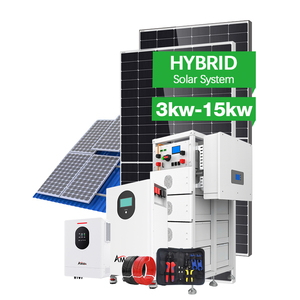
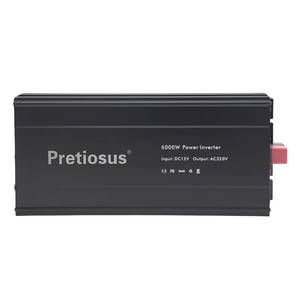
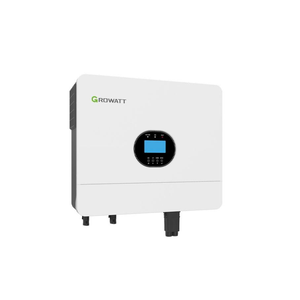
Kenya is recognized as a leader in renewable energy adoption across Sub-Saharan Africa, with geothermal, hydro, and solar contributing over 80% of its national grid mix. However, industrial facilities, agricultural processing plants, and telecommunications towers across counties such as Nakuru, Kiambu, Turkana, and Kilifi face distinct electrical challenges.
Distribution networks serviced by Kenya Power (KPLC) frequently experience severe voltage sags, brownouts, and frequency fluctuations. For heavy commercial machinery, solar microgrids, and remote telecom base stations operating on 24V or 48V DC battery banks, stepping up voltage reliably to 230V single-phase or 415V three-phase AC—or boosting DC voltage to high-voltage DC (HVDC) distribution buses—is critical to prevent system brownouts and thermal overload.
EPRA Compliance Note: All step-up power converters and energy storage systems imported into Kenya must conform to strict standards established by the Energy and Petroleum Regulatory Authority (EPRA) and the Kenya Bureau of Standards (KEBS), requiring certified electromagnetic compatibility (EMC) and high electrical efficiency under elevated ambient temperatures.
Procurement teams in Nairobi and Mombasa prioritizing long-term capital efficiency require step-up power conversion platforms with proven environmental tolerance against conductive dust, humidity, and wide DC input variations.
How high-reliability step-up DC-DC converters and hybrid energy storage systems solve specialized operational requirements across East Africa’s core commercial and industrial sectors.
Kenyan horticultural exporters in Naivasha, Mt. Kenya, and Eldoret rely on continuous refrigeration to preserve produce for European export markets. Step-up converters boost 24V or 48V solar-charged battery banks up to 230V/415V, powering heavy-duty compressor motors without dropping voltage during high-surge start-up cycles.
Mobile network operators (MNOs) managing off-grid base transceiver stations (BTS) across Northern Kenya rely on remote solar-hybrid DC power systems. Industrial step-up converters efficiently step low-voltage solar inputs up to steady 48V or 120V DC rails, maintaining microwave link power while reducing diesel generator reliance.
Isolated mini-grid projects funded by rural electrification initiatives require robust DC-DC boost topology to feed centralized high-voltage inverter rings. Step-up units maintain tight voltage regulation across long cable runs, minimizing line losses between solar arrays and residential distribution nodes.
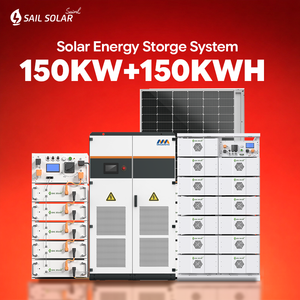
Factories operating in the Nairobi Industrial Area and Athi River Export Processing Zones (EPZ) suffer substantial financial penalties from KPLC peak demand tariffs. Megerevo 150kW–250kW hybrid step-up energy systems enable commercial peak-shaving, stepping stored solar energy straight to plant busbars.
Luxury safari camps in the Maasai Mara and beachfront resorts in Diani operate completely off-grid. Silent, fan-free or convection-cooled step-up pure sine wave inverters convert low-voltage DC solar power into clean, low-noise AC electricity for high-end guest amenities and desalination units.
Large-scale commercial farms utilizing solar water pumping systems require precise voltage step-up conversion to drive variable frequency drives (VFDs) powering deep-well submersible pumps, ensuring irrigation flow even during low solar irradiance hours.
Delivering custom switch-mode power conversion products engineered to survive environments where off-the-shelf commercial power supplies routinely fail.
Every step-up converter, power module, and hybrid system is prototyped, assembled, vacuum-potted, burned-in, and tested within our 80,000 sq ft facility in Ottawa, Canada, guaranteeing full design traceability.
By eliminating short-lifecycle optocouplers from feedback loops and utilizing conservatively derated semiconductor components, our designs target operational lifespans of up to 30 years under severe thermal stress.
Available in IP66-rated cast aluminum enclosures or fully encapsulated modules, our step-up converters resist dust, humidity, salt spray, sand, and insects native to East African outdoor installations.
Our engineering team modifies proven boost topologies to match custom input rails (12V, 24V, 48V, 72V, 110V DC) and output voltages up to 600V AC 3-phase, tailored to precise customer specifications.
To operate reliably in dust-laden agricultural and industrial sites, our fan-free thermal designs rely on heavy-duty heatsink assembly fins and cold-plate conduction, eliminating mechanical fan failure risks.
System integrators and EPC contractors deal directly with senior power supply design engineers from initial project qualification through prototyping, volume production, and site commissioning.
Engineering specifications across primary step-up boost converter and hybrid inverter platforms for commercial and industrial deployment in East Africa.
| Platform Category | Input Voltage (Nominal) | Step-Up Output Voltage | Efficiency (Peak) | Cooling & Enclosure | Certifications |
|---|---|---|---|---|---|
| Compact DC-DC Boost | 12V / 24V DC (10-32V) | 48V / 125V / 250V DC | > 92% | Convection / Fully Encapsulated | CE, RoHS, IP66 Option |
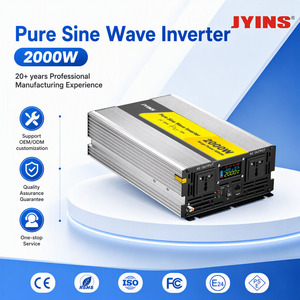
| Industrial Pure Sine Inverter | 12V / 24V / 48V DC | 110V / 220V / 230V AC | > 94% | Heatsink Assembly Fins (Fan-Free) | CE, IEC 62109-1 |
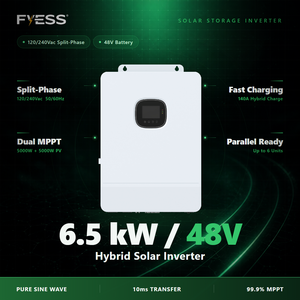
| Split-Phase Hybrid Inverter | 48V DC (40-60V Range) | 120V / 240V AC Split Phase | > 95% | Forced Air with Dust Filtering | CE, UL1741 Standard |
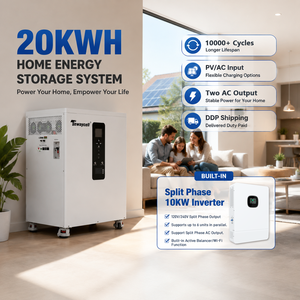
| Commercial ESS Storage | 51.2V DC Nominal (Lithium) | 120V / 240V / 415V AC | > 96.5% | Integrated Mobile ESS Cabinet | CE, UN38.3, KEBS Compliant |
| Utility C&I Peak-Shaving | 400V - 800V High DC Bus | 380V / 415V AC 3-Phase | > 98% | NEMA 4X / IP65 Cabinet | CE, Grid-Tied IEEE 1547 |
Answers to common technical, legal, and operational questions asked by system integrators, EPC contractors, and procurement managers in Kenya.
CE Certification serves as proof of compliance with European Union safety, health, and environmental protection standards (specifically LVD 2014/35/EU and EMC Directive 2014/30/EU). The Kenya Bureau of Standards (KEBS) and EPRA reference CE marking under the Pre-Export Verification of Conformity (PVoC) program. CE-certified converters clear customs inspections efficiently and guarantee that electrical noise will not interfere with sensitive telecommunications or industrial control gear.
Our hybrid step-up inverters and power conversion systems incorporate wide input voltage window protection, fast automatic transfer switches (ATS < 10ms), and surge suppressors capable of handling sudden utility line surges and severe voltage dips. When KPLC line power drops below operational thresholds, the system seamlessly transitions to stepped-up battery or solar energy without interrupting connected loads.
Yes. For harsh East African environments characterized by fine dust, high ambient heat, or insect activity, we provide IP66-rated fully encapsulated DC-DC converters and fan-free convection-cooled inverters. Internal electronics are protected within sealed aluminum enclosures or vacuum-potted with thermally conductive epoxy compound, allowing continuous operation at ambient temperatures exceeding +50°C.
In solar microgrids, transmission losses over long low-voltage DC cables can impair energy yield. By stepping up low battery bank voltages (e.g., 24V or 48V DC) to a high-voltage DC bus (e.g., 300V–400V DC) right at the generation source, cable copper requirements are significantly reduced, system efficiency rises by up to 12%, and cable line loss is minimized across distributed mini-grid networks.
Engineering teams can submit their detailed electrical requirements—including minimum/maximum DC input rails, target output voltage, surge currents, mechanical envelope constraints, and preferred cooling methods—directly to our technical team. As a dedicated OEM manufacturer, we adapt proven topological platforms to deliver semi-custom or fully custom qualified units rapidly.
We support multiple delivery terms including FOB, CIF (Mombasa Port), and DDP (Delivered Duty Paid) to Nairobi, Mombasa, Naivasha, and major industrial towns. Cargo can be dispatched via air freight for urgent project timelines or ocean freight for heavy commercial energy storage systems.
Speak directly with our engineering sales team to request technical datasheets, full product specifications, CE certificates, or custom input/output topological designs tailored for East Africa.