
Engineering Support +1-613-836-3511
Engineered for high power density, extreme thermal stability, zero optocoupler failure points, and strict adherence to IEEE, UL, and regional New York electrical grid mandates.
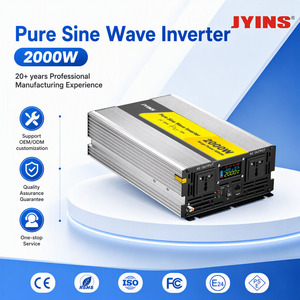
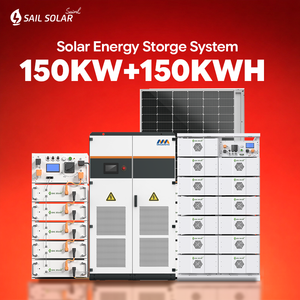
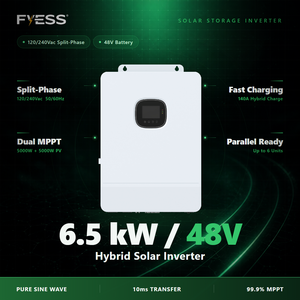
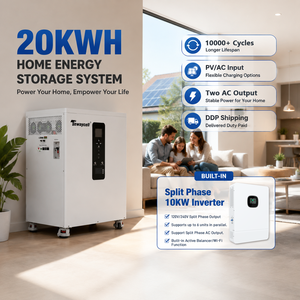
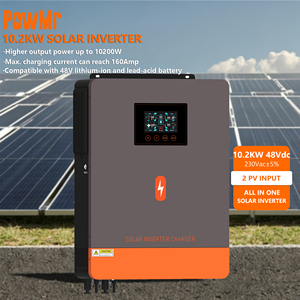
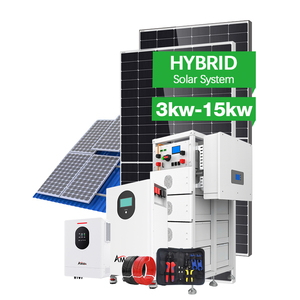
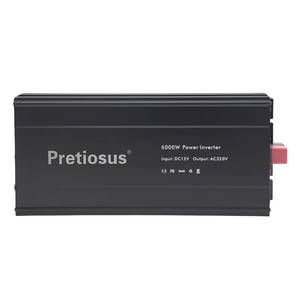
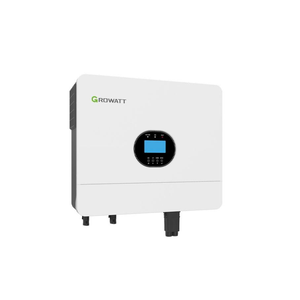
Combining 40+ years of North American OEM power electronics design, customized topology adaptation, and direct manufacturing control to deliver failure-proof power solutions.
We do not just ship off-the-shelf components. Our Ottawa-based engineering facility modifies proven step-down buck topologies to match exact input voltage rails (12Vdc to 600Vdc), extreme step-down ratios, specialized connector footprints, and custom mechanical enclosures.
Standard industrial converters fail prematurely when optocouplers degrade under high ambient temperatures. Our proprietary feedback topologies eliminate optocouplers entirely, utilizing magnetics and robust solid-state feedback loops to target continuous service lives of up to 30 years.
Designed for damp, dirty, or corrosive operating spaces across New York State. From sub-grade NYC subway vaults to exposure in coastal Long Island naval facilities, our encapsulated and IP66 die-cast aluminum power units withstand salt fog, water jets, metallic dust, and severe vibration.
An engineering analysis on step-down conversion architectures, thermal management in high-density urban installations, and power quality compliance for modern electrification.
A Buck Converter (step-down DC-DC converter) is fundamental to efficient electrical energy management, stepping down high DC input voltages to lower DC output voltages with minimal energy dissipation. Unlike linear regulators that dissipate excess power as waste heat, pulse-width modulated (PWM) and synchronous buck converters operate by rapidly switching semiconductor devices (MOSFETs or SiC switches) across low-loss inductors and high-grade capacitors.
In demanding industrial environments, step-down converters must achieve efficiencies exceeding 95% to 98%. By utilizing Synchronous Rectification—replacing traditional freewheeling diodes with ultra-low $R_{DS(on)}$ MOSFETs—conduction losses are dramatically minimized. For New York OEM developers constructing clean-energy systems, automated manufacturing facilities, and transit equipment, selecting buck conversion hardware with high switching frequencies (100kHz to 500kHz) enables significant reductions in physical inductor mass and filter capacitor footprint, resolving strict enclosure volume constraints.
New York represents a unique ecosystem of high-density metropolitan infrastructure, advanced semiconductor manufacturing, and rapid renewable grid modernization. Custom buck converters and power conversion assemblies serve critical roles across these distinct sectors:
A. Metropolitan Transportation & Mass Transit (NYC MTA / LIRR / Metro-North): High-voltage third-rail DC power (typically 600Vdc to 750Vdc) requires exceptionally rugged step-down power units to drive onboard control electronics, passenger communications, signaling circuits, and emergency LED lighting. Converters operating in these environments must conform to EN 50155 and IEEE standards, offering high galvanic isolation, immunity to extreme supply transients, and vibration tolerance.
B. Semiconductor & Nanotech Manufacturing (Albany Tech Valley & Rochester Corridor): Ultra-precision fabrication equipment requires low-ripple, fast-transient-response buck converters to step down plant DC distribution lines to ultra-stable low voltage rails (e.g., 48V to 12V or 5V DC) powering high-speed robotics, plasma etching systems, and optical verification tools. Zero-noise output prevents process interference during microchip fabrication.
C. Commercial Building Electrification & Battery Storage (NYC Local Law 97): Under NYC Local Law 97 mandates, commercial properties are actively installing battery energy storage systems (BESS) and urban microgrids. Buck converters serve as the core bidirectional charge-discharge link between 400V–800V DC battery strings and localized sub-distribution buses, facilitating peak shaving during high ConEdison grid demand cycles.
D. Defense, Aerospace & Marine Operations (Long Island & Hudson Valley): Subsea ROVs, naval communication arrays, and defense radars deployed across New York's coastal zones demand fully encapsulated, IP66-rated buck power supplies. High power-density units built into cast aluminum frames resist salt spray, oil mist, and broad ambient operating windows (-40°C to +70°C ambient).
Space in New York industrial and commercial real estate commands a high premium. Consequently, power system footprint reduction is a top priority for electrical design engineers. The power supply industry is rapidly transitioning to Silicon Carbide (SiC) and Gallium Nitride (GaN) switching components within buck converters.
SiC devices permit higher breakdown voltages and significantly reduced switching losses at high operational frequencies. This transition allows our engineering team to reduce magnetic core sizes by up to 50% while scaling operating temperatures upward without sacrificing reliability. Combined with Eurocard 19-inch rack-mount modularity, modern step-down systems provide hot-swappable N+1 redundancy, guaranteeing zero-downtime operation for critical financial data centers in Wall Street and industrial plants upstate.
Convection cooling without mechanical fans is often mandatory in underground utility vaults, subways, and sealed IP66 enclosures where dust, moisture, and conductive debris render cooling fans prone to failure. Our buck converter platforms utilize heavy-duty heatsink assembly (HSA) fins and direct conduction-cooled aluminum baseplates. By transferring heat via conduction directly to the mounting chassis, our designs operate reliably without liquid cooling loops or forced-air maintenance risks.
Selecting the optimal power conversion build based on environment, cooling constraints, and electrical requirements.
EN50155 certified buck converters stepping down 750Vdc or 110Vdc to 24Vdc/12Vdc for train control, display units, and HVAC controls with wide input range tolerance.
High-power synchronous step-down units interfacing high-voltage solar arrays and wind turbines with 48V battery backup networks, compliant with IEEE 1547 grid integration guidelines.
Ruggedized chassis-mount buck power supplies for 24V factory automation lines, robotics cell power distribution, and motor control systems with high surge immunity.
Answers to technical specifications, delivery logistics, certification compliance, and custom design lead times.
Because our primary R&D and manufacturing facility is located in North America (Ottawa, Canada), standard lead times for custom or semi-custom prototype power supplies delivering to New York State (NYC, Albany, Rochester, Buffalo) range from 4 to 8 weeks. Regional proximity avoids transoceanic shipping delays and allows direct engineering-to-engineering collaboration throughout the qualification phase.
Yes. Our buck converters, AC-DC power supplies, and DC-AC sine wave inverters are designed to meet or exceed international safety and EMC standards including UL 62368-1, UL 508, IEEE 519 (for harmonic control), EN 55032 Class A/B EMI limits, and MIL-STD-810G for environmental shock and vibration. Specific agency approvals can be conducted during custom project engineering.
Absolute capability. We specialize in high input-to-output step-down ratios with robust galvanic isolation (up to 4300Vdc isolation test voltage). Whether stepping down 600Vdc traction lines, 380Vdc microgrid buses, or 125Vdc substation battery banks down to regulated 12V, 24V, 48V, or multi-rail outputs, we configure custom transformer windings and switching topologies tailored to your load.
We build fully potted (encapsulated) modules and IP66-rated die-cast aluminum enclosures that rely entirely on pure conduction cooling via baseplate or natural convection cooling via heavy-duty HSA heatsink fins. By eliminating optocouplers and using electrolytic capacitors derated conservatively for high ambient operational windows (-40°C to +70°C), our units achieve operational lifespans of up to 30 years without fan failures.
We work directly with original equipment manufacturers (OEMs), municipal transit authorities, utility operators, engineering consultants, and system integrators. Buyers can submit detailed specification sheets directly through our technical sales engineers for formal commercial quotes, DDP delivery options, and volume supply agreements.
Speak directly with our senior power electronics engineering team. We will review your input/output specs, mechanical footprint, cooling constraints, and regulatory requirements to deliver a tailored, failure-proof solution.
Inquire Now