
Engineering Support +1-613-836-3511
Proven Heavy-Duty Inverters, Rectifiers, and ESS Systems Configured for Rugged Industrial Operation in Algeria
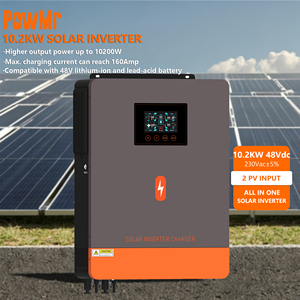
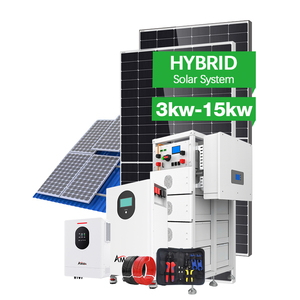
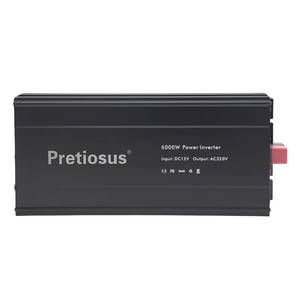
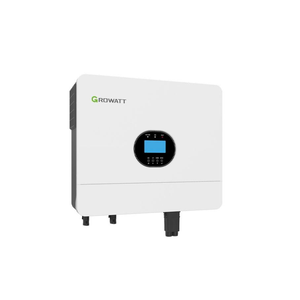
In modern industrial electrical engineering, bridge rectification forms the fundamental backbone of AC to DC energy transformation. A bridge rectifier utilizes a four-diode (single-phase) or six-to-twelve-diode (three-phase) Graetz bridge topology to convert alternating voltage input into smooth, unidirectional direct current voltage output. For industrial procurement teams, electrical engineering contractors, and energy sector operators in Algeria, choosing an established bridge rectifier exporter is a critical design decision that impacts plant uptime, power factor performance, and long-term equipment reliability.
Industrial power environments across Algeria—from the coastal petrochemical processing plants in Skikda and Arzew to the remote oilfield substations in Hassi Messaoud—impose extreme demands on power electronics. Unstable grid voltages, severe ambient heat exceeding +50°C, airborne dust, and abrasive particulate contamination require bridge rectifiers engineered with conservative component derating, robust transient suppression, and advanced thermal management.
Industrial bridge rectifiers supplied to international markets generally fall into three structural topology categories depending on load dynamics and regulation requirements:
1. Uncontrolled Diode Bridge Rectifiers: Utilizing high-purity silicon planar or Schottky diode junctions, these units provide fixed-ratio AC to DC conversion with ultra-low conduction losses and maximum Mean Time Between Failures (MTBF). They are ideal for raw DC bus creation in variable frequency drives (VFDs) and utility battery chargers.
2. Half-Controlled & Fully-Controlled Thyristor (SCR) Bridges: Incorporating Silicon Controlled Rectifiers (SCRs), phase-angle control enables precise regulation of output DC voltage under fluctuating AC input. Controlled rectifiers are heavily specified in Algerian electro-galvanizing plants, cathodic protection systems, and high-capacity industrial electroplating.
3. Active Front End (AFE) Silicon Carbide (SiC) Rectifiers: The latest evolution in power electronics replaces passive diodes with SiC MOSFETs operating under pulse-width modulation (PWM). AFE rectifiers achieve near-unity power factor ($\cos\phi \approx 0.99$), lower Total Harmonic Distortion ($\text{THD} < 3\%$), and bi-directional energy flow, making them crucial for advanced grid-tied solar microgrids in Algeria's southern provinces.
Algeria’s industrial landscape is undergoing rapid modernization driven by state-backed infrastructure investments, the 1000MW Solar Initiative, and Sonatrach’s upstream energy expansion. Export-grade bridge rectifiers and AC-DC power conversion units play dedicated roles across localized industrial hubs:
Explosion-proof, heavy-duty DC cathodic protection rectifiers installed along thousands of kilometers of natural gas pipelines. These systems require IP66 sealed die-cast enclosures to withstand blowing desert sand (Haboob storms) and maintain constant-current DC feeds to prevent soil corrosion on steel conduits.
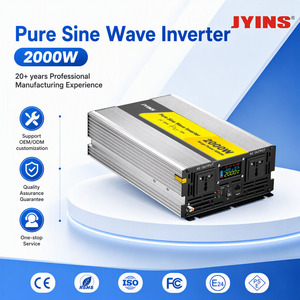
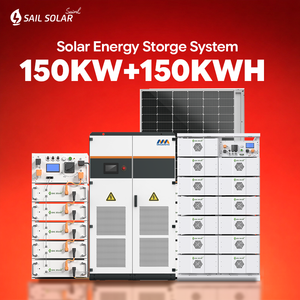
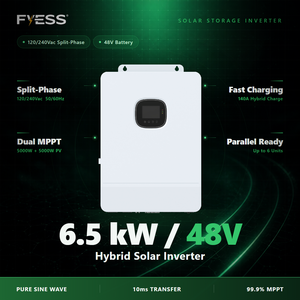
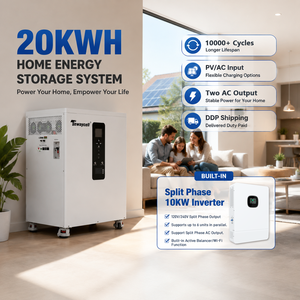
Hybrid solar-battery energy storage systems (ESS) integration. High-efficiency bridge rectifiers and off-grid/hybrid pure sine wave inverters convert intermittent PV energy into stable 48V/110V/220V DC and 3-phase AC power for off-grid military, telecom, and agricultural irrigation sites.
High-current three-phase rectifiers designed for heavy continuous duty in steel mills, aluminum electrolysis, and motor drive systems. Low-ripple DC output protects sensitive control electronics from harsh electromagnetic interference (EMI).
Substation battery tripping rectifiers and continuous DC auxiliary power supplies operating at 110Vdc and 220Vdc. Redundant N+1 module configurations ensure zero downtime for circuit breaker actuation during main grid failures.
Evaluating electrical specifications prior to issuing procurement tenders ensures complete compatibility with Algerian utility standards (Sonelgaz grid codes, 230V/400V 50Hz nominal input limits):
| Platform Category | Input Voltage (AC) | Output Voltage (DC) | Efficiency Rating | Cooling Topology | Ingress Protection |
|---|---|---|---|---|---|
| 1-Phase Bridge Rectifier Modules | 115V / 230V RMS (±20%) | 12V, 24V, 48V, 110V DC | > 94% | Convection Fin / Conduction | IP20 to IP66 Encapsulated |
| 3-Phase Industrial Power Rectifiers | 400V / 480V 3-Phase 50Hz | 24V to 600V DC Adjustable | > 96% | Forced Air / Heavy Fan Filters | 19-Inch Rack / NEMA 4X |
| Active PFC Rectifier Charger | 95V – 264V Universal AC | 48V / 51.2V Battery Bus | > 95.5% | Pure Convection (Fan-Free) | IP65 Aluminum Die-Cast |
| Solar Energy Storage Hybrid Inverter | AC 120/240V, 230V, 400V 3P | 51.2V nominal / PV 500V max | > 97.8% | Microprocessor Controlled Air | NEMA 3R / Outdoor Sealed |
Algeria represents one of the largest industrial and energy markets in North Africa. As part of the national economic diversification drive, industrial operators are heavily prioritizing energy efficiency, power quality, and equipment longevity. Importing power conversion products into Algeria requires a thorough understanding of regional trade regulations, customs clearance protocols, and technical certification mandates.
• Thermal Resiliency vs. Fanless Designs: Traditional forced-air cooling systems frequently fail in Saharan regions due to fine dust clogging cooling fans. Demand is shifting rapidly toward conduction-cooled and convection-cooled rectifiers featuring oversized aluminum heat sinks and potted electronics.
• Custom Voltage Rail Adaptability: Algerian legacy industrial sites often operate unusual DC power distribution buses (such as 36V, 72V, 125V, or 250V DC). Overseas exporters capable of offering custom and semi-custom engineering hold a distinct competitive advantage over rigid standard catalogue distributors.
• Long-Lifecycle Availability: Major energy utilities and municipal operators demand operational lifespans up to 30 years. Long-life topologies that eliminate optocouplers (which degrade over time under high thermal stress) from the feedback loop represent the gold standard in continuous-duty power conversion.
Backed by over four decades of dedicated research, design, and manufacturing excellence since 1982, our power electronics manufacturing facility stands as a premier global OEM for heavy-duty DC-DC converters, AC-DC switching power supplies, battery chargers, and sine wave inverters.
Spanning an 80,000 sq ft state-of-the-art facility in Ottawa, Canada, every magnetics assembly, circuit board build, potting phase, burn-in test, and final electrical QA inspection is conducted under one roof to ensure absolute quality traceability.
We do not restrict project specifications to off-the-shelf catalogues. Our engineering team routinely modifies established platform topologies to accommodate specialized input/output voltages, non-standard mechanical envelopes, and severe environmental protection requirements.
Through conservative electrical component derating, elimination of wear-prone components, and optimized thermal dissipation pathways, our power supplies deliver dependable service across decades of continuous operation.
We work directly with engineering procurement contractors (EPCs), system integrators, rolling stock builders, and state utilities in Algeria, delivering direct factory support without intermediary delays.
Partner directly with certified power conversion engineers. Contact our Ottawa technical center today to review your electrical schematic, request formal product catalogs, or receive a competitive factory-direct export quote tailored for your project in Algeria.
Get Catalog