
Engineering Support +1-613-836-3511
Engineered for high efficiency, multi-stage charge profiles, sub-zero operation, and rugged endurance across Norwegian marine, industrial, and transportation sectors.
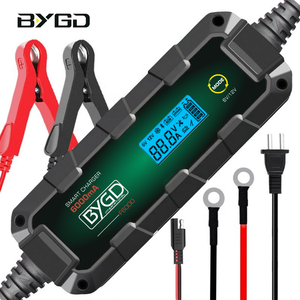
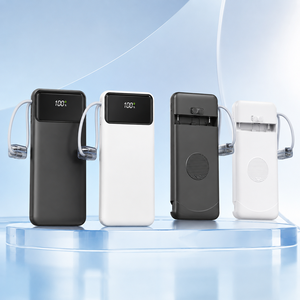
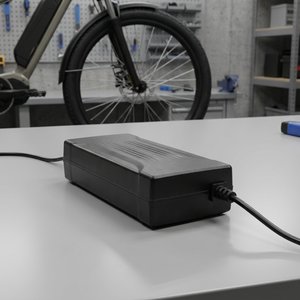
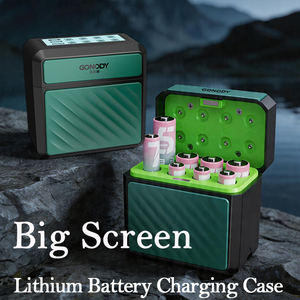
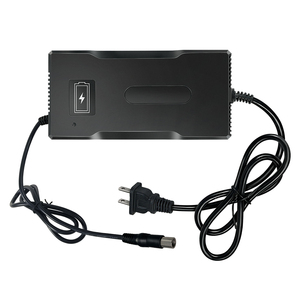
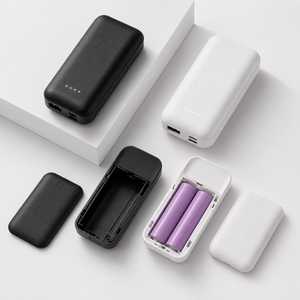
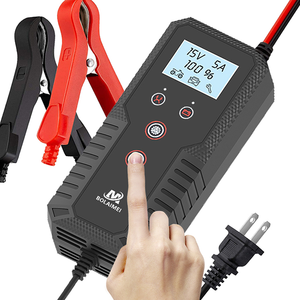
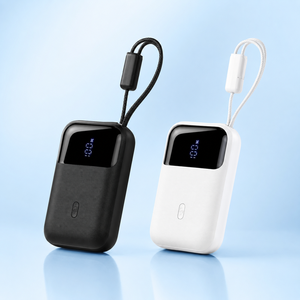
Norway stands at the global forefront of green electrification, driving unprecedented technological mandates across maritime vessels, subsea exploration, arctic mining, offshore wind, and zero-emission public transport. The country’s commitment to achieving zero-emission status in its UNESCO world heritage fjords by 2026, combined with its ambitious maritime decarbonization roadmap, has created a critical requirement for high-reliability, ruggedized, and highly efficient battery charger systems.
Industrial battery charging in the Nordic region is fundamentally different from standard commercial applications. Equipment deployed in Norwegian environments must withstand severe sub-zero thermal stress down to -40°C, high humidity, salt spray fog in coastal fjords, heavy mechanical shock from rough seas, and wide input voltage fluctuations common in isolated offshore grids. OEM system designers, electrical utilities, and naval architects require battery chargers built with conservative component derating, robust thermal dissipation topologies, and long design lifespans targeting up to 30 years of operational service.
Microprocessor-controlled thermal compensation prevents lithium plating and thermal shutdown under extreme Arctic winter conditions down to -40°C.
IP66 and IP67 die-cast aluminum enclosures combined with full internal encapsulation (potting) isolate sensitive electronics from corrosive marine air.
Intelligent 8-stage charging algorithms customized for Lithium-Ion (LiFePO4/NMC), VRLA, Gel, AGM, and flooded Lead-Acid battery banks.
As a leading supplier and manufacturer supplying custom power conversion solutions worldwide, our battery charger platforms are customized to serve critical Norwegian sectors where system failure is never an option:
Norway operates one of the world's largest fleets of electric ferries (such as those serving the Bergen-Stavanger corridors) and hybrid offshore supply vessels (OSVs). Onboard emergency battery banks, auxiliary power units, and main propulsion buffer chargers require heavy-duty AC-DC rectifiers and DC-DC chargers compliant with DNV marine safety standards. Systems feature active Power Factor Correction (PFC) to avoid harmonic pollution on shipboard generators.
Norwegian salmon farming stations deployed in open fjords rely heavily on autonomous feeding barges, remote environmental monitoring buoys, and underwater ROV inspection vehicles. Chargers powering these remote battery banks must be housed in IP66-rated corrosion-resistant enclosures that prevent salt air ingress, oil degradation, and water jet damage during high-pressure deck washdowns.
Operations in northern regions like Svalbard, Kirkenes, and Rana present extreme freezing challenges. Battery-powered underground mining vehicles, autonomous haulers, and ventilation backup batteries require chargers built with conduction-cooled baseplates, eliminating failure-prone cooling fans while utilizing automatic pulse-heating stages to safely charge cold batteries without thermal shock.
Norwegian power grid operators (Statnett and regional utilities) rely on 110V/125V DC battery backup systems in remote mountain substations. Our rack-mount battery charging rectifiers feature N+1 redundancy, hot-swappable Eurocard plug-in modules, and zero-optocoupler feedback control loops designed to ensure uninterrupted power during severe winter storms.
Comparing key engineering attributes across custom industrial charger series supplied to Norwegian equipment manufacturers and integrators:
| Charger Category | Power Output Range | Input Rail Compatibility | Charge Profiles | Protection & Cooling Build |
|---|---|---|---|---|
| Compact Smart Chargers (12V-24V) | 50W – 300W | 90-264Vac Universal AC / Active PFC | 8-Stage Smart (Bulk, Absorption, Equalize, Float) | Convection Cooled, Over-voltage, Reverse Polarity Protection |
| High-Power Industrial Chargers | 500W – 10kW+ | 115/230/400Vac 3-Phase or 110-250Vdc | Custom Microprocessor CC/CV Curves (Li-ion/Lead-Acid) | Heatsink-Assembly Convection or Heavy-Duty Fan Filters |
| Sealed Marine & Subsea Units | 100W – 1500W | 12V, 24V, 48V, 125V DC / 115V-230V AC | Temperature-Compensated Float & Trickle | IP66 Die-Cast Aluminum Enclosure / Full Encapsulation |
| Rack-Mount Modular Charger Rectifiers | 1kW – 30kW Scalable | Single-Phase or 3-Phase AC Inputs | Remote Monitored CANbus / RS485 Dynamic Charge Profile | 19-Inch Eurocard Plug-In System with N+1 Redundancy |
Building on over four decades of custom power supply engineering expertise, our purpose-built 80,000 sq ft manufacturing facility in Ottawa, Canada, designs and produces heavy-duty switch-mode power conversion products supplied directly to OEMs, system integrators, and industrial clients worldwide.
We do not merely sell off-the-shelf units. Our engineers adapt proven power topologies to match your specific input/output rail requirements, custom enclosures, mechanical dimensions, and cooling parameters.
By eliminating optocouplers from feedback loops, derating components conservatively, and protecting magnetics with vacuum encapsulation, our designs achieve unmatched long-term reliability.
Every unit undergoes rigorous thermal verification, burn-in testing, and full electrical characterization in-house, meeting CE, DNV marine guidelines, and ISO quality standards.
Our battery chargers engineered for cold climates feature extended temperature component selection and customized micro-controller firmware. They incorporate automatic thermal compensation to adjust charging voltage according to ambient temperatures down to -40°C. For lithium-ion battery banks, units can trigger auxiliary heating pads before delivering charge current to prevent irreversible cell damage and lithium plating.
Yes. We design chargers specifically to meet maritime standards such as DNV guidelines and IEC 60945 for electronic marine equipment. Features include heavy-duty mechanical vibration resistance, conformal coating on all printed circuit boards, high-grade stainless steel hardware, salt-spray immune IP66 die-cast enclosures, and low electromagnetic interference (EMI) profiles compliant with shipboard radio frequencies.
Cooling fans are often the primary point of mechanical failure in industrial power systems. In harsh Norwegian environments—such as coastal salt air, dusty mining shafts, or remote mountain telecom shelters—fans draw in moisture, salt fog, dust, and insects. Fanless convection-cooled or conduction-cooled designs dissipate heat through heavy-duty heatsink fins or internal potting compounds, guaranteeing silent operation and significantly higher mean time between failures (MTBF).
Yes. Our engineering team routinely customizes multi-stage charging software to accommodate Lithium Iron Phosphate (LiFePO4), Lithium Nickel Manganese Cobalt Oxide (NMC), Nickel-Cadmium (NiCd), and conventional flooded or sealed Lead-Acid chemistries. Charging parameters—including pre-charge current, constant current (CC), constant voltage (CV), float voltage, and automatic cutoff thresholds—can be tailored to your battery manufacturer's exact specifications.
Because all prototyping, transformer winding, assembly, encapsulation, and testing occur under one roof in our 80,000 sq ft Ottawa facility, prototype units are typically delivered within weeks of final design sign-off. We ship directly to Norwegian ports and cities including Oslo, Bergen, Stavanger, Trondheim, and Tromsø using express air freight or consolidated ocean logistics.
Speak directly with our senior application engineers to discuss input/output voltages, thermal specifications, ingress requirements, and custom mechanical envelopes tailored for Nordic deployments.
Inquire Now