
Engineering Support +1-613-836-3511
As a global OEM power conversion pioneer and top trusted industrial charger factory, our operations combine decades of custom switch-mode design engineering with advanced manufacturing infrastructure. Operating from an 80,000 sq ft purpose-built facility, our team delivers heavy-duty AC-DC battery chargers, isolated DC-DC converters, pure sine wave DC-AC inverters, and utility-scale hybrid solar energy storage systems (ESS). Designed to perform flawlessly under severe thermal stresses, corrosive marine atmospheres, heavy vibration, and unconditioned industrial utility grids, our equipment targets an operational lifespan of up to 30 years.
Select from our benchmark OEM product lines engineered for heavy industry, commercial microgrids, off-grid telecom infrastructure, and residential backup systems.
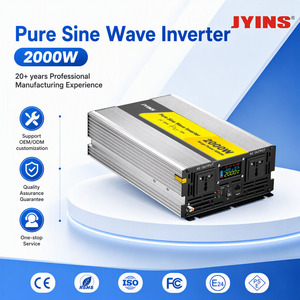
Wide DC input options (12V, 24V, 48V) to AC 110V/220V/230V clean output. Features ultra-low harmonic distortion (<3% THD) and industrial surge capability for heavy motorized loads.
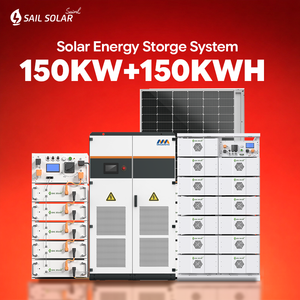
Utility-grade commercial energy storage system designed for peak cutting, load shifting, and seamless microgrid switching. High efficiency up to 98.5% with advanced CAN/RS485 telemetry.
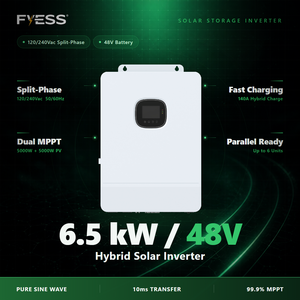
Dual 120V/240V AC output architecture tailored for North American and South American residential and light commercial solar battery storage setups with dual MPPT tracking.
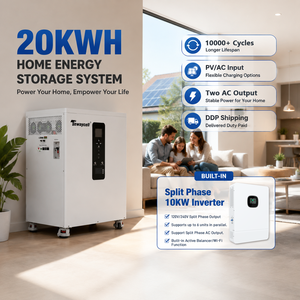
Heavy-duty mobile energy storage module offering 51.2V LiFePO4 capacities of 314Ah, 400Ah, to 628Ah (16kWh–32kWh). Plug-and-play design engineered for rapid field deployment.
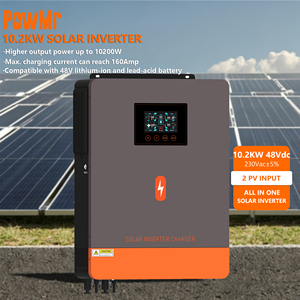
Industrial-class high-surge inverter designed for heavy inductive loads. Accepts 48Vdc input and converts cleanly to 220V/230Vac with comprehensive thermal & electrical protections.
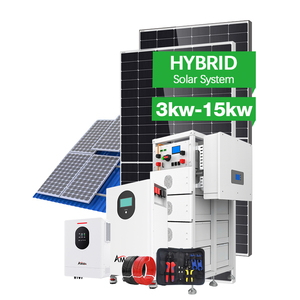
Complete residential & micro-industrial renewable energy system utilizing ultra-high-efficiency N-Type TOPCon monocrystalline panels paired with low-noise hybrid battery charging.
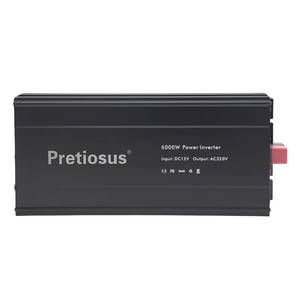
Industrial grade UPS power inverter with integrated multi-stage smart battery charger. Automatically transitions from mains to battery power in <10ms for zero mission disruption.
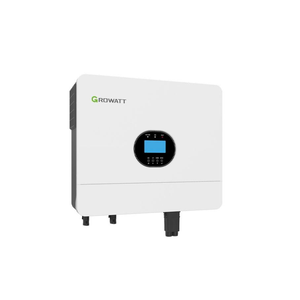
High-power 51.2V low-voltage battery compatible inverter system. Features parallel expansion capability up to 6 units, high PV input voltage handling, and robust overload protection.
As global industries transition toward electrified fleets, automated infrastructure, and microgrid autonomy, industrial power supply procurement relies on distinct technical paradigms.
The industrial power conversion landscape is rapidly abandoning legacy silicon MOSFETs in favor of Silicon Carbide (SiC) and Gallium Nitride (GaN) switching devices. SiC devices allow switching frequencies above 100kHz at extreme voltages, reducing magnetic component sizes by up to 40% while raising overall system efficiency beyond 97.5%. Procurement officers must prioritize SiC-based topologies to shrink equipment footprint and reduce operational thermal dissipation.
Industrial operations deploy diverse energy storage chemistries, ranging from legacy vented lead-acid (VRLA) and Nickel-Cadmium (NiCd) to advanced Lithium Iron Phosphate (LiFePO4) and Lithium Titanate (LTO). Modern industrial chargers integrate DSP-driven software profiles that adapt active charging voltage/current phases (Bulk, Constant Current, Constant Voltage, Equalize, Float) with dynamic temperature compensation to prevent thermal runaway and extend battery cycle life.
Industrial facility operators increasingly require hybrid inverters and chargers to operate bidirectionally. Through Grid-Forming and Peak Shaving algorithms, energy storage systems charge during off-peak utility pricing periods and discharge into facility distribution buses during high-tariff periods, dramatically lowering demand charges while providing microgrid black-start capability.
Industrial sites—including underground mining shafts, offshore marine decks, and chemical processing facilities—expose power supplies to conductive metallic dust, humidity, salt fog, and washdown spray. The industry is moving away from internal forced-air fans toward sealed die-cast IP66 aluminum enclosures and conduction-cooled baseplate designs that eliminate mechanical fan failures.
Unplanned downtime in telecommunications, railway signaling, and power substations carries severe financial penalties. Procurement trends emphasize 19-inch and 23-inch rack-mount architectures built from plug-in Eurocard modules. Hot-swappable N+1 redundant configurations allow technicians to replace power modules live without disrupting critical downstream operations.
Modern industrial chargers are no longer isolated black boxes. Integration with CAN 2.0B, Modbus TCP, SNMP, and IoT cloud gateways enables real-time monitoring of internal capacitor health, ripple voltages, operating temperatures, and battery state-of-health (SoH). Predictive analytics alert maintenance crews prior to component breakdown.
Building reliable power supplies for critical industrial applications requires an uncompromising commitment to conservative design derating and absolute control over manufacturing quality. While standard commercial power supplies rely on low-cost consumer components that degrade quickly under heat and shock, our custom designs target up to 30 years of continuous service.
Optocouplers are primary failure points in traditional power supplies under high ambient temperatures. Our long-life topologies eliminate optocouplers from feedback loops, utilizing pulse transformers or magnetic feedback for permanent thermal stability.
From custom transformer winding, surface-mount PCB assembly, and vacuum encapsulation to 100% full-load thermal burn-in, every step is executed within our own 80,000 sq ft facility in Ottawa, Canada, ensuring total component traceability.
Units meet rigorous international standards, including EN50155 for railway rolling stock, IEC 61400-21 for wind utility substations, MIL-STD-810G shock/vibration compliance, and IP66 ingress protection ratings.
Understanding the engineering distinctions between industrial-spec equipment and off-the-shelf commercial power supplies.
| Engineering Specification | Our Heavy-Duty Industrial Chargers | Standard Commercial / Consumer Chargers |
|---|---|---|
| Design Operational Lifespan | Up to 20–30 Years (Conservative component derating) | 3–5 Years (Designed for low cost, minimal thermal margin) |
| Cooling Methodology | Convection Heatsink, Baseplate Conduction, or Sealed IP66 | High-RPM internal fans prone to dust clogging & mechanical failure |
| Feedback Loop Componentry | Magnetic / Pulse Transformer Feedback (No Optocouplers) | Standard Optocouplers (Degrade rapidly above 50°C ambient) |
| Operating Ambient Temperature | -40°C to +70°C full load continuous operating range | 0°C to +40°C (Requires severe thermal derating above 35°C) |
| Ingress Protection (Protection Grade) | Fully Encapsulated potted modules or IP66 Die-Cast Enclosures | IP20 / IP21 Open Vented Chassis (Vulnerable to moisture & dust) |
| Input Voltage Transient Tolerance | Heavy metal-oxide varistors (MOVs), active surge suppression | Basic fuse and single-stage EMI filtering |
| Customization Capability | Full OEM/ODM engineering to exact customer envelope/rails | Fixed stock catalog items with zero mechanical adaptability |
Direct technical answers to common queries submitted by consulting engineers, system integrators, and OEM purchasers.
Our industrial battery chargers support universal AC single-phase and 3-phase inputs (95Vac to 480Vac, 50/60/400Hz) with active Power Factor Correction (PFC), as well as high-voltage DC input rails (110Vdc, 250Vdc, or custom wide-range inputs). Programmable microcontrollers allow customized charging algorithms for LiFePO4, Lithium Titanate (LTO), VRLA, Gel, NiCd, and flooded lead-acid battery banks.
Yes. We specialize in semi-custom and custom OEM power supply engineering. We modify proven base platform topologies to fit restricted mechanical envelopes, custom connector pinouts, unique heat-sink profiles, and exact output voltage/current requirements, drastically reducing NRE costs and development lead times.
IP66-rated units utilize heavy-duty die-cast aluminum enclosures integrated with heavy external cooling fins. Heat-generating power components (MOSFETs, diodes, inductors) are mounted directly against internal baseplates, allowing pure conduction and natural convection cooling without introducing outside air, dust, or moisture into the electronics.
All products undergo 100% full-load thermal burn-in, dielectric strength testing, high-voltage isolation checks, and functional electrical verification prior to dispatch. Systems can be qualified to relevant international standards, including CSA, UL, CE, EN50155, IEC 62477-1, and MIL-STD-810G upon customer specification.
Off-grid pure sine wave inverters convert DC battery power into clean AC electricity for isolated applications without utility grid interaction. Hybrid Energy Storage Systems (ESS) integrate solar MPPT charge controllers, battery chargers, and grid-interactive inverters into a unified unit capable of dynamic grid feed-in, peak shaving, and automatic emergency transfer during blackout events.
You can initiate technical consultation immediately by clicking the contact buttons on this page. Provide your input supply parameters, output power requirements, preferred cooling mode, target enclosure size, and ambient environmental conditions to receive an engineering review and quotation.
Need a custom industrial charger, heavy-duty DC-AC inverter, or scalable commercial energy storage system designed to survive the toughest operational environments?
Contact Us