
Engineering Support +1-613-836-3511
Explore our top-tier export-grade power conversion catalog engineered for utility substations, renewable grids, marine infrastructure, and heavy automated industries.


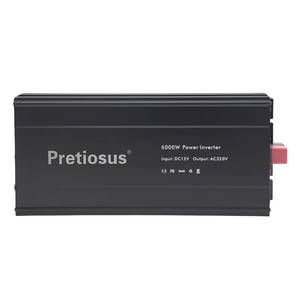
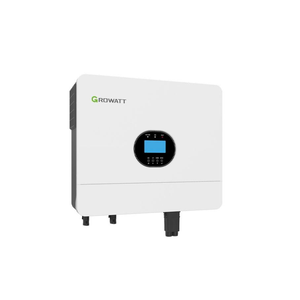
Since 1982, our dedicated engineering facility has delivered over four decades of proven reliability in mission-critical power conversion electronics.
Every bridge rectifier unit, power converter, and inverter is designed, prototyped, potted, burned-in, and tested under one roof at our Ottawa, Canada facility, ensuring absolute quality control and component traceability.
Engineered to survive extreme environments. We produce die-cast aluminum, fully potted, IP66-rated assemblies resistant to conductive metallic dust, salt fog, high humidity, shock, and severe washdown pressures.
We tailor topology, input/output voltage rails, transient suppression, thermal management fins, and physical dimensions to match your exact OEM specifications without massive NRE lead times.
We supply original equipment manufacturers (OEMs), electrical utilities, mining consortiums, railway system integrators, and industrial distributors directly across North America, Europe, Asia, and worldwide.
Our designs intentionally eliminate failure-prone optocouplers from feedback loops, employ conservative component derating, and prioritize passive convection/conduction cooling for continuous decades-long operation.
Rigorous adherence to international safety, railway (EN50155 compliance options), environmental (RoHS/REACH), and Conflict Minerals sourcing guidelines for sustainable procurement confidence.
In industrial electrical engineering, the bridge rectifier serves as the foundational component for converting Alternating Current (AC) into Direct Current (DC). Whether operating within massive electric utility substations, renewable energy microgrids, or high-capacity power supplies for industrial automation, the reliability of the bridge rectifier network dictates the performance, efficiency, and longevity of the entire downstream system.
As global energy systems transition toward higher power densities and integration with distributed renewable resources, procurement leaders and lead design engineers face increasing challenges regarding thermal dissipation, total harmonic distortion (THD), voltage surge immunity, and mechanical durability in harsh working environments.
Key Engineering Insight: Modern heavy-duty bridge rectifiers have evolved from standard diode configurations to active Silicon Carbide (SiC) and Gallium Nitride (GaN) semiconductor topologies equipped with Active Power Factor Correction (PFC), yielding conversion efficiencies exceeding 98.5% while vastly reducing electromagnetic interference (EMI).
Bridge rectifiers function by utilizing diodes arranged in a closed-loop bridge topology to convert both polarities of an AC input into a continuous DC output. For industrial-scale applications, selecting the optimal configuration is critical:
Single-Phase Bridge Rectifiers: Commonly deployed in low-to-medium power equipment (up to 5kW), single-phase full-wave bridge rectifiers utilize four diodes. While cost-effective and compact, single-phase rectification inherently generates a higher DC output ripple voltage, requiring substantial output smoothing capacitors to maintain steady direct current output for sensitive digital electronics and power inverters.
Three-Phase Bridge Rectifiers: Essential for industrial power conversion exceeding 5kW, three-phase bridge rectifiers employ six diodes (or active switching MOSFETs/IGBTs) configured across three AC phase legs. The overlapping phase angles inherent to three-phase utility power result in a significantly smoother baseline DC waveform with minimal voltage ripple before filtration. This high fundamental ripple frequency drastically reduces the physical volume of passive storage components (inductors and capacitors), enhancing system longevity and lowering thermal stress.
Legacy passive bridge rectifiers suffer from non-linear current draw, introducing high levels of harmonic pollution back into the electrical grid and reducing the Power Factor (PF) to as low as 0.65–0.70. Modern international utility codes now mandate near-unity power factor (PF > 0.98) for high-capacity industrial equipment.
To meet these strict standards, premier bridge rectifier manufacturers incorporate Active Power Factor Correction circuit blocks directly into the AC-DC conversion stage. By using high-frequency switching transistors operating under Pulse Width Modulation (PWM) algorithms, the input current is actively shaped to follow the input voltage sine wave in real time. This technical innovation yields several operational advantages:
Thermal stress remains the single greatest cause of semiconductor junction failure in industrial bridge rectifiers and high-power inverters. During conduction, forward voltage drops across rectifier diodes generate heat proportional to current throughput (P = I × Vf). Without aggressive thermal dissipation, internal silicon temperatures rapidly breach safe operating limits (typically 150°C to 175°C junction temperature limits).
To combat thermal degradation in dusty, humid, or chemically aggressive environments, top-tier bridge rectifier suppliers utilize robust thermal packaging methodologies:
Direct Copper Bonding (DCB) Substrates: Replacing traditional printed circuit boards with DCB ceramic substrates provides exceptionally high electrical isolation while lowering thermal resistance between the rectifier die and the outer metal chassis.
Conduction and Convection Cooling Fins: Integrating specialized aluminum Heatsink Assembly (HSA) fins allows high-wattage rectifiers to operate fan-free via pure natural convection. Eliminating forced-air cooling fans removes moving mechanical parts, extending system Mean Time Between Failures (MTBF) up to 300,000+ hours.
IP66 Die-Cast Waterproof Enclosures: For subsea, mining, marine deck machinery, and outdoor utility applications, bridge rectifiers are completely encased in die-cast aluminum boxes filled with thermally conductive polyurethane or silicone potting compounds. This barrier completely excludes salt spray, moisture condensation, fine metallic dust, and chemical fumes.
Sourcing heavy electrical infrastructure components requires strategic foresight. Procurement managers and technical purchasing directors must navigate shifting global supply chains, tightening environmental directives, and rapid technology integration. Key purchasing trends currently reshaping the power conversion industry include:
The next decade of industrial power electronics will be defined by digitization, bidirectional energy flow, and extreme environmental resilience. Key technology vectors include:
Smart Predictive Maintenance via Microcontroller Telemetry: Modern high-power bridge rectifier assemblies now feature embedded microcontrollers that continuously monitor junction temperature, input phase balance, line surges, and ripple currents. Using CAN-bus, RS485, or Ethernet interfaces, these systems broadcast health telemetry to central supervisory control systems (SCADA), predicting component wear before functional failure occurs.
Bidirectional Power Flow for Hybrid Microgrids: As commercial facilities integrate solar PV generation and localized Battery Energy Storage Systems (BESS), the line between simple AC-DC rectifiers and DC-AC inverters is blurring. Dual-mode active bridge rectifiers allow seamless bidirectional power flow—rectifying AC grid power to charge high-voltage battery banks off-peak, and inverting DC back into AC during peak tariff windows.
Elimination of Electrolytic Capacitors: Electrolytic capacitors have historically represented the primary wear item in power converters due to electrolyte dry-out over time. Advanced inverter and bridge rectifier designs now utilize solid-state film capacitors and specialized high-frequency switching algorithms to extend service lifespans to 30 years without component replacement.
Get immediate answers to common technical, customization, and export inquiries regarding our bridge rectifiers, power supplies, and inverter series.
To receive an accurate custom or semi-custom proposal, please provide: 1) Input AC voltage, phase count (1-phase or 3-phase), and line frequency (50Hz, 60Hz, or 400Hz); 2) Required DC output voltage, continuous load current, and peak surge capacity; 3) Preferred cooling method (convection, cold-plate conduction, or forced air); 4) Environmental requirements (IP rating, ambient temperature extremes); and 5) Regulatory standards required (e.g., EN50155 for rail, UL/CSA certifications).
Our IP66-rated power solutions utilize robust die-cast aluminum enclosures coupled with complete internal potting using specialized thermally conductive silicon resin. This total seal eliminates air pockets, making the internal electronics completely impervious to high-pressure washdowns, metallic dust, conductive coal particles, salt water fog, corrosive fumes, and high vibrational loads found in mining and marine environments.
Yes. Industrial motors, solenoids, and heavy transformers draw high initial inrush currents upon startup. Our heavy-duty rectifiers and pure sine wave inverters are built with high peak surge current capabilities (often 200% to 300% of nominal rating for several seconds) along with robust internal snubber networks to absorb inductive back-EMF voltage spikes without degradation.
Standard catalogue stock power supplies often force engineering compromises regarding mechanical dimensions, thermal limits, or precise output voltage rails. As a direct OEM manufacturer, we adapt field-proven baseline topologies to your exact mechanical, electrical, and cooling requirements—eliminating unnecessary external adaptors, extending operating life, and guaranteeing long-term component availability for 15 to 30 years.
Yes, as a premier global supplier and exporter, we ship directly from our manufacturing plant in Ottawa, Canada to engineering firms, system integrators, and industrial facilities worldwide. All shipments include comprehensive technical specification datasheets, schematics, installation manuals, and compliance documentation required for smooth customs clearance and rapid site deployment.
Whether you require heavy-duty three-phase bridge rectifiers, custom IP66 power supplies, or off-grid pure sine wave inverters, our Canadian engineering team is ready to review your exact technical specifications.
Get Catalog