
Strategic Sourcing Guide: Evaluating Top China Solar Inverter Manufacturers
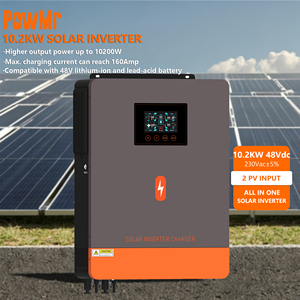
The global energy transition has placed solar inverters—the primary electronic brain of photovoltaic systems—at the epicenter of renewable infrastructure procurement. When evaluating Top China Solar Inverter Manufacturers & OEM Supplier Capabilities, engineering buyers, EPC contractors, and system integrators must look beyond initial equipment purchase cost (CAPEX). Achieving a low Levelized Cost of Energy (LCOE) requires rigorous technical evaluation of internal topology, heat dissipation mechanisms, component derating, grid-code compliance, and lifetime reliability under harsh operating environments.
China accounts for over 75% of global solar inverter manufacturing output, ranging from residential microinverters and split-phase hybrid ESS units to high-power 250kW+ commercial string and central inverters. However, manufacturing quality, component sourcing standards, and thermal topologies vary significantly across suppliers. This B2B technical guide provides actionable engineering criteria, procurement trend analysis, and structural benchmarks to assist procurement teams in selecting bankable OEM partners.
OEM Manufacturing Heritage & Heavy-Duty Engineering Architecture
Our power conversion manufacturing philosophy is anchored in over four decades of heavy-duty OEM switch-mode power design. Originating from high-reliability Canadian industrial electronics manufacturing protocols established in 1982, our production operations integrate ruggedized topologies capable of operating reliably in extreme ambient environments where standard commercial inverters frequently degrade or suffer catastrophic component failure.
Extended 30-Year Service Life Topology
By eliminating optocouplers from feedback loops and implementing magnetic feedback mechanisms alongside conservative component derating, power conversion stages achieve an operational lifespan target of up to 30 years under continuous duty cycle.
IP66 & Heavy Conduction Thermal Design
Designed for washdown, high-dust mining, marine, and subsea application envelopes. Fully encapsulated assemblies and die-cast aluminium enclosures prevent ingress of conductive metallic dust, humidity, salt fog, and insects.
Tailored OEM & Semi-Custom Adaptations
Engineering modifications tailored precisely to customer specs: custom DC/AC input ranges, multi-rail outputs, split-phase configurations, specific mechanical envelopes, and customized communications protocols (CANbus, Modbus RTU, SunSpec).
Scalable Power Modular Infrastructure
From 5W DC-DC micro-converters to 10kW+ single phase modules and scalable 250kW commercial energy storage systems. Support for N+1 active redundancy and parallel load sharing in standard 19-inch/23-inch rack configurations.
Advanced PFC & Pure Sine Wave Topology
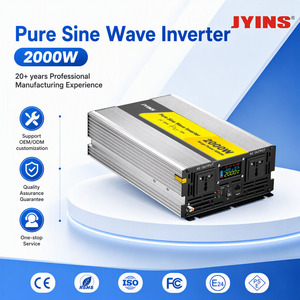
Microprocessor-controlled active Power Factor Correction (PFC) delivering true pure sine wave outputs with Total Harmonic Distortion (THD) under 2.5%, ensuring smooth grid interconnection and protection for sensitive loads.
In-House Production & Full Traceability
All magnetics winding, Surface Mount Technology (SMT) assembly, environmental vacuum potting, full load burn-in testing, and automated electrical validation occur in-house under single-facility quality control standards.
Technical Architecture Breakdown: Solar Inverter Categories & Applications
When selecting a manufacturing partner in China, technical buyers must match specific application constraints with the correct inverter internal architecture. Below is an engineering comparison of the primary equipment classes manufactured for global export:
| Inverter Classification | Target Applications | Typical Power Range | Key Technical Features | Procurement Criticality |
|---|---|---|---|---|
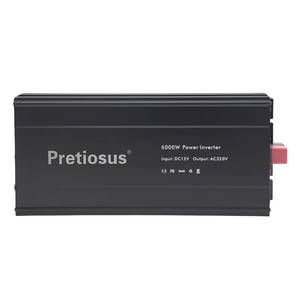
| Pure Sine Wave Off-Grid | Remote telecom, marine, off-grid cabins, industrial automation | 300W – 13.2kW | Low THD (<3%), surge capacity 2x-3x nominal, high galvanic isolation | No-load idle consumption, low-voltage battery protections |
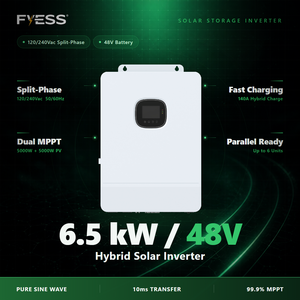
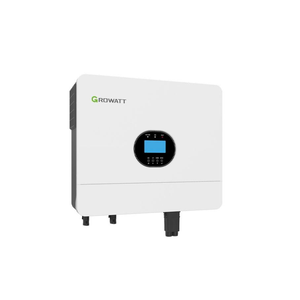
| Split Phase Hybrid (120/240V) | North American & Latin American residential ESS | 5kW – 15kW | Integrated ATS, dual MPPT inputs, generator auto-start relay | UL1741 SA/SB compliance, rapid shutdown (NEC 2020) |
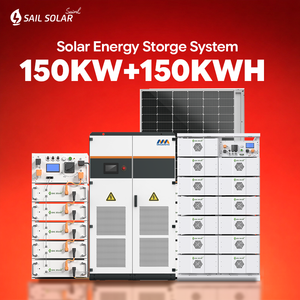
| Commercial Peak Shaving | Industrial parks, microgrids, commercial peak-cutting | 50kW – 250kW+ | High-voltage DC bus (up to 1000V/1500V), SiC MOSFET switches | Multi-unit paralleling stability, thermal derating curve at 50°C |
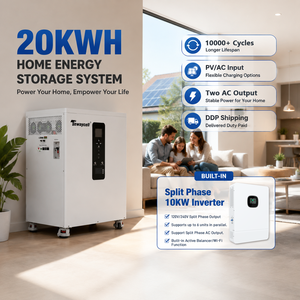
| Integrated Mobile ESS | Disaster relief, mobile power, temporary site construction | 10kW Inverter + 16-32kWh LFP | Built-in BMS communications, shock-mounted casing, plug-and-play | UN38.3 transport certification, cycle life (>6000 cycles) |
Future Technology Trends in Solar Inverter Manufacturing (2026–2030)
The solar electronics industry is undergoing rapid technological transformation. Manufacturers in China are leading the integration of next-generation power electronics components and digital controls. Engineering buyers should anticipate the following technology vectors when establishing long-term OEM contracts:
1. Adoption of Wide Bandgap (WBG) Semiconductors: Silicon Carbide (SiC) & GaN
Traditional silicon-based Insulated Gate Bipolar Transistors (IGBTs) are increasingly being replaced by Wide Bandgap Silicon Carbide (SiC) MOSFETs in high-frequency switching stages. SiC semiconductors offer superior thermal conductivity, higher switching speeds (up to 100kHz+), and significantly lower switching losses. This transition enables inverter peak efficiencies to breach 99.2% while reducing the physical footprint and weight of passive magnetic components by over 35%.
2. High-Voltage DC Bus Architectures (800V – 1500V DC Systems)
Moving from legacy 48Vdc and 400Vdc battery bus systems toward 800Vdc and 1500Vdc high-voltage architectures allows commercial energy storage systems (such as the 150kW-250kW Megerevo hybrid series) to minimize DC line losses and dramatically lower copper cabling expenses. Lower operating current directly translates into reduced thermal stress on internal busbars and power modules, extending the mean time between failures (MTBF).
3. AI-Driven Smart MPPT & Grid-Forming Control Algorithms
Modern hybrid inverters are evolving from "grid-following" devices to active "grid-forming" power sources. Advanced digital signal processors (DSPs) execute real-time AI algorithms to track maximum power points under complex multi-peak shading conditions. Furthermore, synthetic inertia and droop control enable solar inverters to stabilize microgrids, inject reactive power (VAR support), and respond dynamically to frequency shifts on local utility lines.
4. Comprehensive Battery-to-Inverter Ecosystem Integration
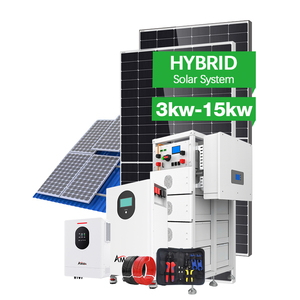
The boundary between standalone solar inverters and energy storage batteries has blurred. Leading Chinese manufacturers are shipping fully integrated Split Phase Mobile ESS systems featuring built-in LiFePO4 (LFP) chemistry, dynamic cell balancing, and unified Cloud IoT telemetry. This eliminates communication mismatch issues between third-party BMS units and inverter controllers via standardized CANbus protocols.
Future B2B Procurement Trends & Supplier Risk Mitigation Strategies
Navigating global supply chain volatility, international trade tariffs, and evolving grid standards requires a strategic approach to supplier selection. Top global procurement teams rely on three core procurement frameworks:
A. Supply Chain Resilience & Component Traceability
Leading EPC firms require tier-1 Chinese inverter manufacturers to provide transparent Bills of Materials (BOMs). Evaluating whether a supplier uses premium automotive-grade capacitors (e.g., Nippon Chemi-Con, Rubycon) and tier-1 semiconductor power switches is vital. Facilities operating fully integrated in-house magnetics and SMT lines exhibit higher resiliency against component shortages.
B. Regional Warehouse Infrastructure & Local Technical Support
Procurement contracts are increasingly favoring Chinese OEMs that maintain localized European (EU Warehouse stock) and North American staging centers. Local warehouse stocking for models like the 12kW 51.2V Off-Grid series drastically reduces transit lead times and streamlines Warranty Replacement (RMA) procedures.
C. Comprehensive Compliance with Dynamic Grid Codes
Grid integration policies are becoming stricter worldwide. Inverters exported to North America must comply with IEEE 1547-2018 and UL 1741 SA/SB, while European deployments require EN 50549-1 and VDE-AR-N 4105 compliance. Ensuring your OEM manufacturer provides pre-certified firmware variants prevents costly grid interconnection delays during site commissioning.
Why Industrial Buyers Partner with Canadian Heritage & Chinese Manufacturing Synergies
Combining Canadian power electronics engineering standards—established through ABSOPULSE Electronics' decades of heavy-duty OEM design since 1982—with high-volume Chinese manufacturing logistics creates a unique competitive advantage for B2B buyers:
- Rugged Design Mindset: Inverters are designed from the ground up to operate in unconditioned outdoor environments (-40°C to +60°C ambient range), avoiding fragile commercial-grade consumer electronics components.
- Strict Conduction Cooling Options: Elimination of high-failure external cooling fans in harsh dust environments through heavy-duty heatsink-assembly (HSA) fins and fan-free convection designs.
- Custom Topology Conversion: Ability to quickly modify standard 48Vdc or 120V/240V split-phase platforms into custom input/output converter builds tailored for specialty industrial infrastructure projects.
- Proven Field Reliability: Designs verified by stringent burn-in procedures, high-potential voltage isolation tests, and vibration/shock testing matching heavy transit and industrial site specs.
Frequently Asked Questions (FAQ) for Solar Inverter Procurement
Require Customized Solar Inverter Engineering or Bulk OEM Pricing?
Consult directly with our power electronics application team to review your technical specifications, request full data sheets, or discuss custom OEM/ODM manufacturing requirements.
Get Catalog