
Engineering Support +1-613-836-3511
Engineered for industrial resilience, extreme operational temperature ranges, and precision voltage conversion.
Evaluating Reliability, Thermal Management, and Semantic Power Efficiency in Global Procurement
In modern industrial infrastructure, telecommunications, subsea exploration, and commercial photovoltaic energy storage systems (BESS), power conversion reliability is the absolute cornerstone of operational continuity. Selecting a premier China regulated supply factory and supplier requires a deep technical audit of topology engineering, manufacturing standards, and component derating practices. Commercial off-the-shelf power converters frequently succumb to thermal stress, high total harmonic distortion (THD), and premature insulation breakdown when deployed in harsh operating environments.
As a leading regulated OEM power equipment facility, our manufacturing framework integrates switch-mode power supply (SMPS) topologies engineered to endure voltage transients, heavy vibration, dust, humidity, and extreme temperature fluctuations from -40°C to +70°C. Whether configuring off-grid pure sine wave inverters, split-phase hybrid solar power units, or megawatt-scale commercial peak-shaving storage plants, our production methodologies adhere strictly to ISO 9001 quality management systems and UL/IEC safety certifications.
How our Ottawa and China-aligned OEM facility delivers decades of continuous operation.
Available with IP66 die-cast aluminum enclosures and fully encapsulated potting options. Immune to metallic conductive dust, salt spray, subsea moisture, and severe vibration environments.
Microprocessor-controlled digital signal processing (DSP) delivers clean sine wave output with Total Harmonic Distortion (THD) under 2%, protecting sensitive inductive and capacitive loads.
Eliminating short-lived optocouplers from feedback loops and utilizing long-life industrial electrolytic or film capacitors derated by at least 30% under peak thermal loads.
Engineered to adapt proven base platforms to non-standard input/output voltage rails (e.g., 12Vdc to 600Vrms 3-phase, 51.2Vdc LiFePO4 packs, or 120V/240V split phase).
Seamless OEM direct supply chain management featuring localized warehouse options across Europe and North America to facilitate DDP delivery and rapid deployment.
Scalable 19-inch rack-mount configurations supporting hot-swappable plug-in Eurocard modules for uninterrupted power supply in microgrids and mission-critical telecom hubs.
Comprehensive technical metrics for selection across OEM regulated inverter and ESS categories.
| System Category | Power Range | Input Voltage Parameters | Output Characteristics | Thermal & Ingress Protection |
|---|---|---|---|---|
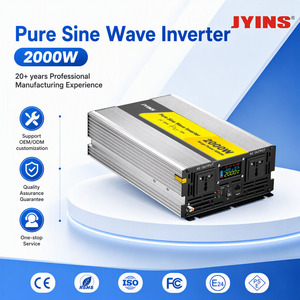
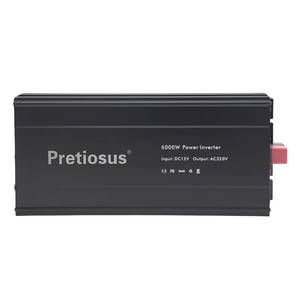
| Pure Sine Wave Off-Grid Inverters | 300W to 6000W | 12V, 24V, 48V DC nominal (Wide Range) | 110V / 220V / 230V AC pure sine, THD < 2.5% | Convection / Intelligent fan cooling, -20°C to +55°C |
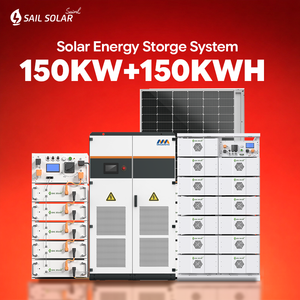
| Commercial Energy Storage Systems (ESS) | 150kW to 250kW+ | 350V – 750V DC High-Voltage Bus | 380V / 400V / 480V AC 3-Phase Peak Shaving | HVAC liquid-cooled enclosure, IP54 / IP65 rated |
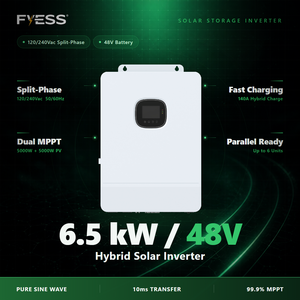
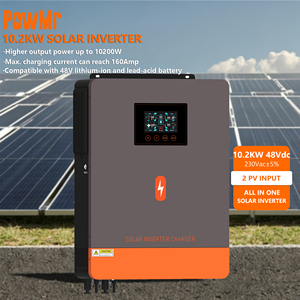
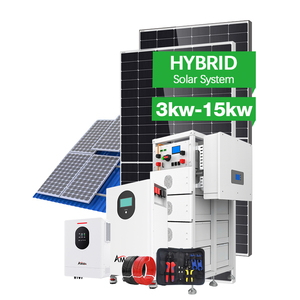
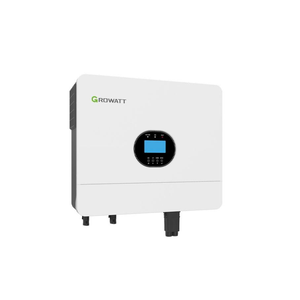
| Split-Phase Hybrid Solar Inverters | 6.5kW to 15kW | 24V / 48V / 51.2V LiFePO4 battery compatibility | 120V / 240V AC dual split-phase, 50Hz/60Hz auto | Force-air intelligent thermal control, IP21 / IP54 options |
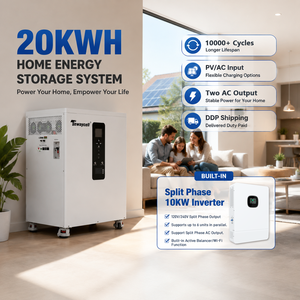
| Mobile Integrated Solar ESS Units | 10kW Inverter / 16-32kWh | 51.2V nominal (314Ah to 628Ah prismatic cell) | Regulated 120V/240V split phase, bypass UPS <10ms | Heavy-duty mobile chassis, shock-isolated module mounting |
| High-Output Pure Sine Inverters | 10kW to 13.2kW | 48V DC input rail | 220V / 230V / 240V AC pure sine wave output | Dual-ball bearing cooling fans, anti-corrosion PCB coating |
Strategic Insights for Supply Chain Directors and Senior Electrical Systems Engineers
The global power conversion landscape is undergoing a massive shift from legacy Silicon IGBTs to Wide Bandgap (WBG) semiconductors, predominantly Silicon Carbide (SiC) MOSFETs and Gallium Nitride (GaN) devices. Regulated factories in China are rapidly incorporating SiC technology into high-power hybrid inverters (10kW to 250kW). This transition elevates power conversion efficiency beyond 98.5%, drastically reduces thermal loss, and diminishes the physical size of magnetic components (transformers and inductors) by up to 40%.
Procurement teams must align with the industry movement away from standard 280Ah lithium iron phosphate (LFP) cells toward high-density 314Ah and 628Ah prismatic cell architectures. When coupled with regulated 51.2V ESS modules, these high-capacity cells increase volumetric energy density while offering over 6,000 charge-discharge cycles at 80% Depth of Discharge (DoD). This drastically improves the Levelized Cost of Storage (LCOS) for commercial peak-shaving applications.
Solar energy supply systems are increasingly specifying high-efficiency N-Type TOPCon monocrystalline PV modules featuring lower temperature coefficients (-0.30%/°C) and superior low-light performance. To capitalize on high PV array VOC voltages, modern hybrid inverters are engineered with dual and quad MPPT trackers capable of managing elevated short-circuit currents (up to 18A per string), ensuring zero yield loss under partial shading conditions.
International procurement criteria now prioritize full supply chain auditability. Top-tier regulated suppliers provide complete raw material documentation, conflict mineral verification, and adherence to European carbon border adjustment mechanisms (CBAM). Furthermore, encapsulated assemblies with IP66 washdown protection are becoming standard across mining, marine deck equipment, and outdoor microgrid infrastructure.
Addressing Crucial Operational, Safety, and Design Considerations for Technical Buyers
Speak directly with our technical team to analyze your system specifications, request semi-custom engineering schematics, or evaluate volume OEM pricing.