
Engineering Support +1-613-836-3511
Precision-Engineered DC-DC Buck Converters, Off-Grid Inverters & Modular Power Systems
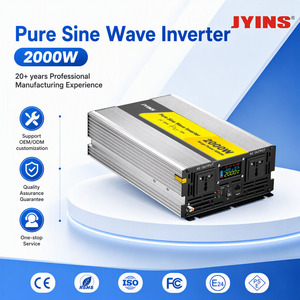
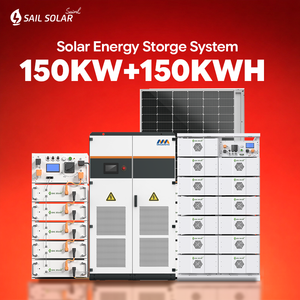
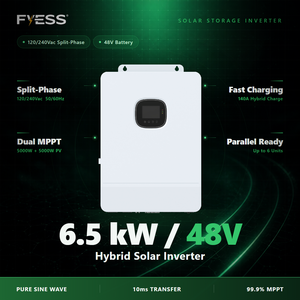
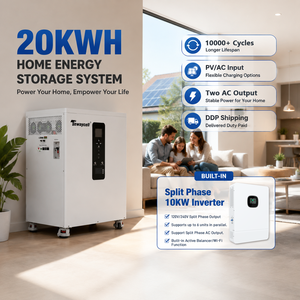
In modern industrial electronics, renewable energy infrastructure, heavy transportation, and subsea engineering, precise high-efficiency DC-DC conversion is paramount. As a premier China buck converter supplier and global OEM power specialist, our organization delivers fully integrated, ruggedized voltage reduction (step-down) topologies designed to thrive where standardized commercial off-the-shelf power modules fail.
A synchronous buck converter serves as a vital component in power architectures by converting higher continuous DC input voltages—such as 48V, 110V, 250V, or higher industrial rails—into tightly regulated, lower output voltages required by control microcontrollers, field actuators, telecom equipment, and auxiliary battery banks. Selecting the correct OEM partner in China involves assessing thermal dissipation techniques, transient suppressions, electromagnetic compatibility (EMC), and long-term design life.
Information Gain Insight: Modern industrial buck conversion has moved beyond basic pulse-width modulation (PWM) ICs. Modern OEM manufacturing focuses on Wide-Bandgap (WBG) Gallium Nitride (GaN) and Silicon Carbide (SiC) switches, multiphase synchronous rectification topologies, and dynamic loop control to achieve system efficiencies exceeding 97.5% under extreme industrial temperature swings (-40°C to +85°C).
Industrial DC-DC buck converters rely on low RDS(on) MOSFET switching topologies paired with custom-wound planar magnetic chokes. By replacing conventional free-wheeling Schottky diodes with actively controlled synchronous MOSFETs, conductive losses are drastically minimized. This topology optimization provides immediate engineering benefits:
The global industrial power supply industry is undergoing a structural transition driven by electrification, smart microgrids, automated manufacturing, and harsh environment infrastructure deployments. Understanding these technological trends allows procurement teams and system engineers to future-proof their supply chains.
Silicon Carbide and Gallium Nitride power devices replace silicon MOSFETs, allowing higher switching speeds, lower switching losses, and smaller magnetic passive filters.
Next-generation industrial equipment requires step-down ratios up to 10:1 or 20:1 without sacrificing efficiency, handling high input line surges seamlessly.
Microcontroller-driven switchers integrate real-time digital monitoring over PMBus, CANbus, or RS485 for predictive maintenance, load-sharing, and output voltage trimming.
| Engineering Parameter | Standard Commercial Grade | Industrial Heavy-Duty (Our OEM Standard) |
|---|---|---|
| Operating Temperature | 0°C to +40°C | -40°C to +85°C (Full continuous load) |
| Mean Time Between Failures (MTBF) | 50,000 – 100,000 Hours | > 500,000 Hours (MIL-HDBK-217F verified) |
| Ingress Protection Options | Open Frame / IP20 Vent Holes | IP66 Sealed Die-Cast Aluminum / Fully Encapsulated |
| Component Derating Rule | Minimal (80-90% rating load) | Conservative (50-60% component stress derating) |
| Target Service Life | 3 to 5 Years | Up to 30 Years in continuous operational service |
Procuring DC-DC buck converters and energy storage inverters from qualified manufacturers in China has expanded beyond unit price negotiations. Corporate purchasing directors and engineering lead specialists prioritize supply chain transparency, modular customizability, and total cost of ownership (TCO).
Fully custom power supply development requires high Non-Recurring Engineering (NRE) fees and lengthy qualification testing. Leading global buyers favor semi-custom platforms. By taking proven core power topologies (AC-DC, DC-DC buck/boost, DC-AC sine wave) and adjusting connector types, voltage tapings, and enclosure frames, OEMs achieve customized power profiles with fast time-to-market and low regulatory risk.
Unplanned downtime in mining sites, subsea sub-assemblies, trackside railway signals, and offshore wind turbines is often caused by dust accumulation, moisture condensation, or salt spray ingress. Strategic buyers mandate encapsulated modules or IP66-rated die-cast aluminum enclosures that protect sensitive switching controllers from airborne contaminants and high-pressure washdowns.
Industrial machinery often remains active in the field for decades. Procurement contracts require suppliers to commit to minimum 10 to 15-year manufacturing availability, eliminating optocouplers from feedback loops (which degrade over time) and selecting long-life solid polymer or film capacitors over short-lived electrolytics.
With an extensive manufacturing footprint spanning 80,000 square feet and over four decades of dedicated switch-mode power conversion experience, our facility provides comprehensive engineering, prototyping, magnetics winding, assembly, and final burn-in testing under one roof.
From custom magnetic choke fabrication to surface-mount assembly, conformal coating, and vacuum potting, all processes are internally controlled for strict quality assurance.
Our production protocols fully comply with RoHS3, REACH, and Conflict Minerals regulations, maintaining complete traceability across critical semiconductor components.
Units are engineered to meet specific enclosure geometry constraints: DIN-rail, 19-inch rack-mount chassis, Eurocard plug-in assemblies, or rugged die-cast aluminum boxes.
Strict Testing Protocol: Every buck converter, power supply, and inverter unit undergoes automated functional electrical verification, high-pot isolation testing, thermal cycling, and extended elevated-temperature full-load burn-in prior to final packaging.
A non-isolated buck converter shares a common ground rail between the input source and output load, providing maximum electrical efficiency and smaller footprints. An isolated buck converter utilizes a high-frequency transformer stage to electrically isolate the input source ground from the output ground, protecting sensitive control systems from severe input line surges, high common-mode noise, or ground loops.
Yes. We offer fully encapsulated assemblies potted with thermal silicone compounds, as well as rugged IP66-rated die-cast aluminum enclosures immune to water jets, conductive dust, salt fog, high humidity, and heavy mechanical shock and vibration.
Our long-life topologies eliminate optocouplers from feedback paths (replacing them with magnetic or primary-side feedback loops), strictly enforce conservative thermal and voltage component derating, utilize solid metal-film or long-life polymer capacitors, and rely on fanless convection or conduction cooling to remove mechanical failure points.
To provide an accurate technical proposal, please share your nominal input voltage range (with min/max surge limits), required output voltage(s), continuous and peak output currents, load transient specifications, ambient operating temperature range, preferred cooling method (convection, conduction, forced-air), enclosure dimensions, and compliance standard requirements (e.g., EN50155 for rail, IEC60950/62368 for industrial).
Yes. Many of our heavy-duty buck converters, power supplies, and inverters feature integrated active load-sharing circuits or decoupling diodes. This allows multiple units to operate safely in parallel configuration for elevated power capacity or N+1 redundant architectures.
Consult with our engineering team to select, configure, or custom-design high-efficiency buck converters, industrial DC-DC power supplies, or off-grid pure sine wave inverters.
Contact Us