
Engineering Support +1-613-836-3511
The global photovoltaic (PV) market has shifted decisively from simple energy conversion to dynamic, intelligent power management. Selecting a solar inverter manufacturer requires evaluating topology resilience, thermal derating curves, harmonic distortion thresholds, and wide-bandgap (SiC/GaN) semiconductor performance. Below is an engineering evaluation of market-leading photovoltaic inverter units engineered for scalable off-grid, hybrid energy storage systems (ESS), and grid-tied applications.
Review our top enterprise and residential power conversion hardware engineered for high thermal tolerance, split-phase compatibility, and seamless energy storage integration.
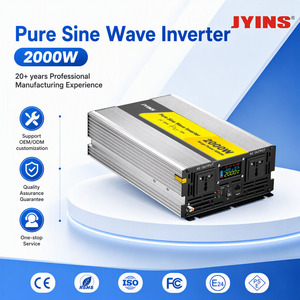
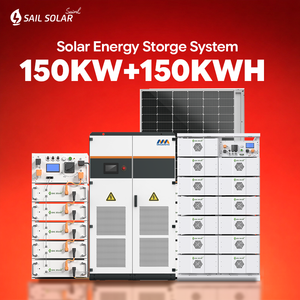
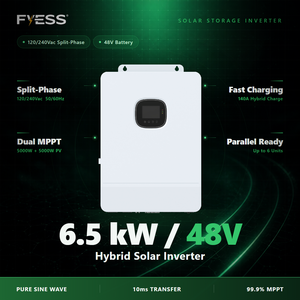
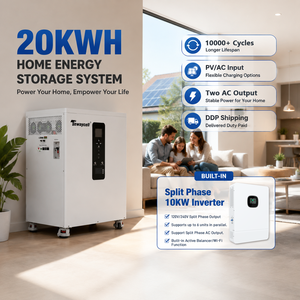
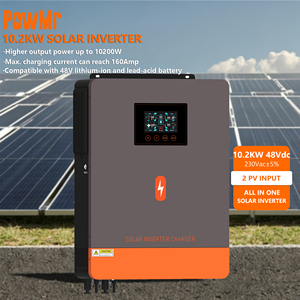
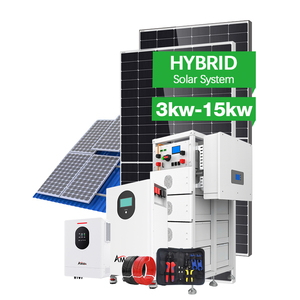

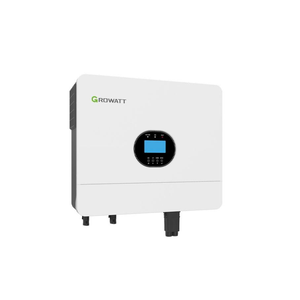
Detailed comparison of solar inverter topologies, efficiency thresholds, thermal specs, and grid-support features across key industry deployment categories.
| Inverter Category | Typical DC Input Bus | AC Output Voltage | Peak Efficiency | Cooling Topology | Primary Industrial Application |
|---|---|---|---|---|---|
| Micro-Inverters | 20V - 60V DC | 120V / 230V Single Phase | 96.5% - 97.2% | Passive Conduction (IP67) | Complex Residential Roofs & Shaded Systems |
| Residential Hybrid Inverters | 40V - 58.4V DC (or 100V-550V HV) | 120/240V Split Phase, 230V | 97.6% - 98.2% | Natural Convection / Silent Fan | Whole-Home Solar + Lithium Storage (ESS) |
| C&I String Inverters | 200V - 1000V DC | 380V / 400V / 480V 3-Phase | 98.5% - 98.9% | Smart Forced-Air Cooling | Commercial Rooftops, Factories & Microgrids |
| Utility-Scale Central Inverters | 1000V - 1500V DC | 600V - 800V AC (Transformerless) | 99.0% - 99.4% | Liquid Cooling / Forced HVAC | Ground-Mounted Utility Solar Plants |
| Heavy-Duty Industrial Off-Grid | 12V / 24V / 48V / 125V DC | 110V / 220V Pure Sine | 94.0% - 96.0% | Extruded Heatsink Heatsink-Assembly | Mining, Railway, Subsea & Telecommunications |
Tracing back to 1982, our engineering philosophy is grounded in designing power supplies and sine wave inverters that operate where standard commercial electronics fail. Operating out of an advanced 80,000 sq ft purpose-built manufacturing facility, we specialise in heavy-duty switch-mode power conversion.
Unlike off-the-shelf catalog suppliers, our engineering team tailors power topologies to resist thermal swings (-40°C to +70°C), severe shock, metallic dust intrusion, and unstable supply rails. Every design eliminates optocouplers from feedback loops to target an operational lifespan of up to 30 years in extreme environments.

Key technological transitions transforming solar power conversion efficiency, thermal handling, grid interaction, and energy storage integration.
The migration from traditional Silicon Insulated-Gate Bipolar Transistors (IGBTs) to Silicon Carbide (SiC) and Gallium Nitride (GaN) MOSFETs is revolutionizing power density. Wide-bandgap materials cut switching losses by up to 50%, enabling higher switching frequencies (over 100 kHz), reducing inductor footprint, and raising peak efficiency beyond 99.2%.
As renewable penetration increases, solar inverters must shift from grid-following (relying on stable utility voltage) to grid-forming topologies. Modern inverters mimic mechanical turbine inertia through synthetic virtual synchronous control, maintaining microgrid stability during sudden frequency deviations and blackout events.
High-efficiency N-type TOPCon and Heterojunction (HJT) panels exhibit higher short-circuit currents (Isc > 15A–18A per string). Next-generation string inverters feature upgraded MPPT current limits (up to 20A–30A per input) to avoid clipping solar yield during high irradiance peak hours.
Transitioning from low-voltage 48V battery architectures to high-voltage (200V–900V DC) battery coupling reduces I²R copper conduction losses significantly. High-voltage hybrid inverters simplify cable gauge requirements, lower overall installation cost, and improve round-trip energy efficiency in C&I deployments.
Enhanced safety regulations demand integrated DC Arc-Fault Circuit Interrupters (AFCI) driven by machine learning algorithms. By analyzing high-frequency noise spectra on DC lines, intelligent inverters detect electrical arcing within milliseconds, eliminating fire risks without false tripping.
Solar installations are expanding into desert environments, offshore floatovoltaics, and subsea mining infrastructure. Inverters require IP66/NEMA 4X die-cast aluminium enclosures, conformal coating on internal PCBA assemblies, and liquid cooling channels to survive salt fog, humidity, and fine dust storms.
Essential strategic considerations for B2B buyers, EPC contractors, and system integrators seeking resilient supply lines and low total cost of ownership.
Global supply chain volatility has accelerated the demand for local stocking hubs. Major procurement teams favor suppliers offering EU & North American regional warehouse dispatch (DDP) to bypass international shipping bottlenecks, shorten delivery windows from 12 weeks to under 5 days, and simplify warranty returns.
While initial capital outlay remains a metric, enterprise buyers prioritize long-term TCO. Inverters with conservatively derated industrial components, MTBF > 300,000 hours, and fanless heat-sink cooling yield dramatically lower operation and maintenance (O&M) costs over a 25-year plant life cycle.
Proprietary closed-loop communication protocol lock-in is being phased out. Procurement leads insist on open architecture inverters supporting MODBUS RTU/TCP, CAN 2.0B, and SunSpec standards, ensuring seamless compatibility across multi-vendor lithium battery banks (LiFePO4, NMC) and EMS platforms.
Detailed technical answers to common queries raised by electrical engineers, system integrators, and procurement directors during component selection.
Pure Sine Wave inverters deliver AC power with total harmonic distortion (THD) under 3%, matching utility grid quality. This is required for inductive loads (motors, compressors), medical instruments, and sensitive power supplies. Modified sine wave units produce stepped square waves that cause excessive heating, audible noise, and premature component breakdown in complex equipment.
Split-phase hybrid inverters utilize a center-tapped transformer or dual H-bridge topology to output two 120V AC phase lines 180° out of phase, along with a neutral wire. This configuration allows simultaneous powering of 120V single-phase domestic electronics across L1-N / L2-N and heavy 240V appliances across L1-L2 without requiring extra step-up transformers.
Thermal derating defines how much output capacity an inverter loses as ambient operating temperatures rise above nominal thresholds (typically +40°C or +50°C). Industrial-grade inverters feature heavy aluminum extruded heat sinks and conservative component derating to maintain 100% rated output power without thermal shutdown up to extreme ambient thresholds.
For North American markets, compliance with UL 1741 SB, IEEE 1547 (grid interconnection standard), and FCC Class A/B EMI limits is required. For Europe, key certifications include CE, IEC 62109-1/-2 (safety of power converters), EN 50549 (grid parallel connection), and RoHS/REACH environmental compliance.
Optocouplers in traditional feedback loops suffer from Current Transfer Ratio (CTR) degradation over time, especially when exposed to high operating temperatures. Topologies that replace optocouplers with magnetic pulse transformers or primary-side sensing gain long-term stability and extend operational lifespan up to 30 years.
While IP65 protects against low-pressure water jets, IP66 testing subjects the enclosure to high-pressure (100 kPa) powerful water jets from all directions, as well as total dust tightness. IP66-rated die-cast aluminum enclosures prevent moisture and fine airborne dust ingress, making them mandatory for marine, subsea, and washdown mining applications.
Partner directly with our engineering leadership to review your input rail tolerances, custom mechanical footprints, thermal constraints, and bulk supply requirements.