Engineering Support +1-613-836-3511
In modern industrial electronics, high-density power conversion systems require ultra-efficient Power Factor Correction (PFC) modules to satisfy stringent international standards such as IEC/EN 61000-3-2. As power requirements scale across electric vehicle infrastructure, subsea exploration, railway traction, telecommunications microgrids, and commercial solar-plus-storage platforms, specifying the optimal PFC module manufacturer is a critical design step. This comprehensive engineering report provides deep technical evaluation criteria, OEM manufacturing capabilities, market analysis, and strategic sourcing insights for system integrators, purchasing officers, and electrical hardware engineers.
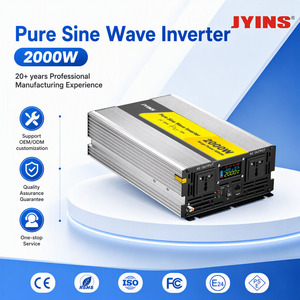
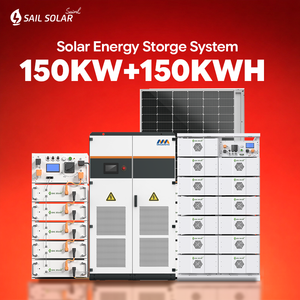
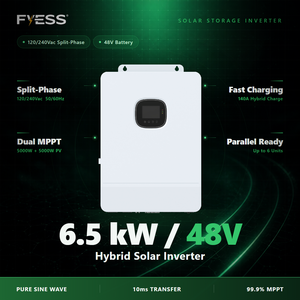
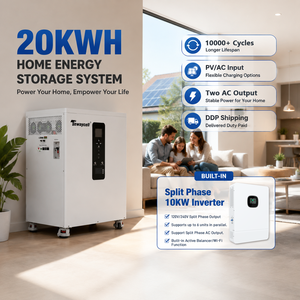
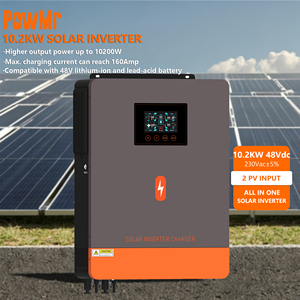
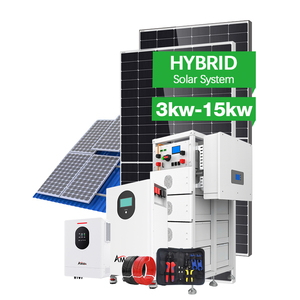
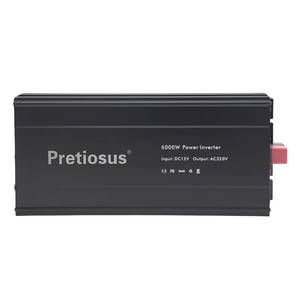
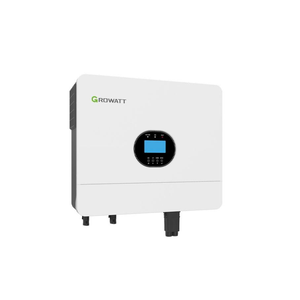
Explore our industrial-grade power conversion lineup, including Active PFC-enabled rectifiers, hybrid solar energy storage inverters, and heavy-duty DC-AC sine wave modules engineered for long service lifecycles in rugged environments.
Power Factor Correction (PFC) is an essential power conditioning mechanism designed to maximize real power drawn from an AC mains supply while suppressing phase displacement and harmonic current distortion. Uncorrected switch-mode power supplies present non-linear reactive and capacitive loads, creating current spikes that strain electrical utilities, cause neutral wire overheating, and impair adjacent sensitive avionics or industrial sensors.
A high-performance Active PFC Module actively shapes the input current waveform to mirror the sinusoidal AC supply voltage. Utilizing continuous conduction mode (CCM) or interleaved boost converter topologies driven by high-frequency PWM microcontrollers, modern Active PFC modules routinely achieve power factors exceeding 0.99 across wide universal input ranges (90Vac to 264Vac or up to 480Vac 3-phase systems).
Universal input designs accept 95-264Vac single-phase or 3-phase 400Vac utility power without manual voltage selector switches, eliminating field deployment errors across international installations.
Next-generation PFC modules replace legacy MOSFETs with SiC Schottky diodes and SiC MOSFETs, drastically reducing reverse recovery losses and elevating switching frequencies beyond 100kHz.
Advanced OEM topologies remove temperature-sensitive optocouplers from feedback loops, relying on magnetic feedback and conservatively rated passive components to target up to 30-year operational life.
When selecting a factory partner for industrial PFC module procurement, engineering teams must evaluate mechanical packaging, thermal management methods, input ranges, and ingress protection capabilities.
| Module Architecture | Power Range | Efficiency Target | THD Optimization | Primary Industrial Applications |
|---|---|---|---|---|
| Single-Stage Active Boost PFC | 100W – 1.5kW | 93% – 96% | < 5% THD | Medical grade power units, telecommunications power, process automation |
| Interleaved Continuous Conduction (CCM) PFC | 1.5kW – 6kW | 96% – 98% | < 3% THD | EV fast chargers, commercial ESS inverters, high-power server racks |
| 3-Phase Totem-Pole Bridgeless PFC (SiC/GaN) | 5kW – 25kW+ | 98.5% – 99.2% | < 2% THD | Utility microgrids, subsea power hubs, heavy industrial machinery |
| Fully Encapsulated IP66 Sealed PFC Module | 200W – 3kW | 92% – 95% | < 4% THD | Underground mining equipment, marine shipboard, oil & gas refining |
| Eurocard Plug-in 19" Rack Systems | Scalable to 10kW+ | 94% – 97% | < 3% THD | Railway signaling, substation battery backup, telecom central offices |
Established as a premier OEM with over 40 years of continuous power electronics manufacturing experience, our production infrastructure operates out of a state-of-the-art 80,000 square foot facility in Ottawa, Canada. Unlike commercial off-the-shelf component suppliers who offer rigid form factors, our core strength lies in custom and semi-custom engineering designed for non-standard industrial environments.
In-house capability includes magnetic component winding, surface mount technology (SMT) assembly, selective soldering, automated potting for high-vibration isolation, environmental burn-in testing, and full electrical parameter validation. This integrated lifecycle ownership safeguards complete traceability and product availability for long-horizon capital projects.
Custom die-cast aluminum enclosures certified up to IP66 protect sensitive power electronics against immersion, high-pressure water jets, conductive metallic dust, subsea humidity, salt spray, and oil fumes.
Fanless power designs utilize heavy-duty heatsink fins and internal thermal potting to dissipate heat directly through cold plates or chassis structures, eliminating failure-prone cooling fans.
We adapt proven baseline topologies to non-standard input rails (such as 12V, 24V, 48V, 110V, 125V, 250V DC or high-voltage AC) and integrate specialized ruggedized connector interfaces tailored to your system envelope.
Driven by global energy decarbonization initiatives and extreme power density demands, the design of Active PFC modules is undergoing rapid architectural shifts. Design teams evaluating long-term supply chain strategies must align with factories advancing the following technology vector trends:
Procurement directors face increasing challenges related to component lead-time volatility, regulatory compliance changes, and counterfeit part prevention. Evaluating PFC module factories requires looking beyond unit price to calculate Total Cost of Ownership (TCO) across decades of operational life.
Top-tier manufacturers maintain direct relationships with Tier-1 semiconductor vendors, enforcing Conflict Minerals Compliance and providing full component certificates of origin (CoC).
Industrial programs spanning 15 to 30 years require OEMs that offer form-fit-function redesign guarantees when raw semiconductor components enter End-of-Life (EOL) cycles.
Tier-1 factories apply conservative electrical and thermal derating rules (e.g., operating capacitors at 60-70% rated voltage), preventing early degradation in extreme ambient heat.
If you require high-reliability Active PFC modules, industrial rectifiers, heavy-duty DC-DC converters, or custom pure sine wave inverters built to withstand severe environmental stress, our application engineering team is available to assist with your technical specification review.