
Engineering Support +1-613-836-3511
High-efficiency DC-DC step-up boost converters, hybrid energy storage inverters, and industrial-grade sine wave output units engineered for extreme environmental reliability.
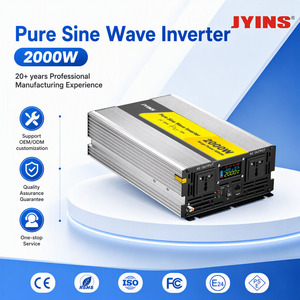
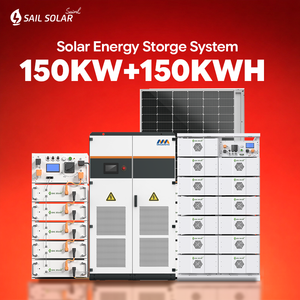
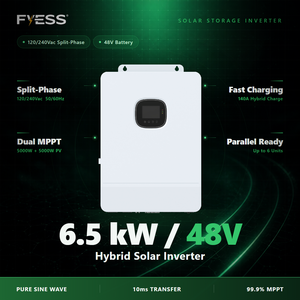
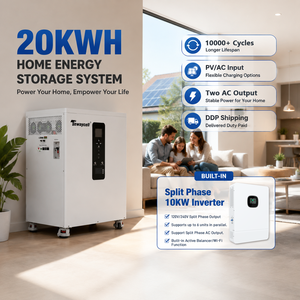
In modern industrial electrification, high-efficiency DC-DC step-up conversion—commonly known as boost topology—plays a critical role in bridging low-voltage energy sources with high-voltage DC distribution buses. As global industrial infrastructure transitions toward micro-grids, renewable integration, battery energy storage systems (BESS), and heavy transit electrification, selecting an OEM boost converter exporter requires rigorous technical evaluation far beyond nominal wattage ratings.
A true heavy-duty DC-DC boost converter must maintain tight output regulation while operating under dynamic input fluctuations, high thermal stress, and aggressive electro-magnetic interference (EMI) environments. Exporters serving sectors like railway rolling stock, subsea robotics, electrical substations, and underground mining face strict compliance mandates where operational downtime translates to compounding financial loss or severe safety risks.
Core Technical Insight: Unlike off-the-shelf commercial power supplies, industrial-grade DC-DC boost converters must employ conservative component derating (often 30–50% below peak thermal and voltage thresholds), eliminate high-failure optocouplers from feedback loops, and utilize advanced magnetic topologies to guarantee a service lifecycle exceeding 25 to 30 years.
The standard boost converter steps up an input voltage ($V_{in}$) to a higher output voltage ($V_{out}$) by temporarily storing energy in an inductor and delivering it to the load during switch off-state. The basic voltage transfer ratio under continuous conduction mode (CCM) is governed by:
$V_{out} = \frac{V_{in}}{1 - D}$ (where D represents the switch duty cycle)
However, scaling this basic principle to multi-kilowatt industrial platforms—such as 12Vdc-to-48Vdc heavy-duty step-up units or 48Vdc-to-500Vdc propulsion supplies—presents significant engineering challenges regarding thermal dissipation, switching losses, reverse-recovery currents in diodes, and electromagnetic compatibility. Leading OEM exporters solve these barriers using:
When engineering teams and international procurement directorates evaluate power conversion exporters, comparing suppliers based solely on initial unit price leads to elevated total cost of ownership (TCO). High-reliability sectors require rigorous verification of an exporter's in-house manufacturing capabilities, quality assurance protocols, thermal management design, and custom topology engineering.
| Evaluation Parameter | Tier-1 OEM Exporters (e.g., ABSOPULSE) | Standard Commercial Exporters | Low-Cost Mass Assemblers |
|---|---|---|---|
| Design Life Target | 20 to 30+ Years Continuous | 3 to 5 Years Typical | 1 to 2 Years |
| Cooling Options | Convection, Conduction, Cold-Plate, IP66 Sealed | Forced Air (High-RPM Internal Fans) | Basic Unfiltered Fans |
| Feedback Loop Design | Optocoupler-free, magnetic/transformer feedback | Standard Optocouplers (Thermal Degradation) | Generic Low-Grade Optocouplers |
| Customization Depth | Full custom input/output rails, mechanicals & enclosures | Limited to standard stock catalogs | No custom modifications supported |
| Environmental Protection | Fully encapsulated, potted, IP66 die-cast enclosures | Conformal coating optional | Unprotected PCB assemblies |
| Compliance & Traceability | 100% In-house design, test, burn-in & serialized tracking | Sample batch testing | Self-declaration without third-party lab proof |
For over four decades, ABSOPULSE Electronics Ltd. has remained a global leader in designing, qualifying, and manufacturing rugged power conversion solutions directly from Ottawa, Canada.
All engineering, magnetic design, surface-mount assembly, vacuum encapsulation, burn-in, and final electrical testing take place inside our 80,000 sq. ft. Ottawa facility, guaranteeing single-source quality control.
Our heavy-duty DC-DC boost converters and power supplies are housed in die-cast aluminum enclosures rated up to IP66, fully impervious to water jets, conductive dust, salt fog, shock, and extreme vibration.
Instead of forcing off-the-shelf constraints onto your application, our engineers adapt proven circuit platforms to match your exact input range, dynamic output loads, physical dimensions, and connector specs.
As global supply chains realign around sustainability, high energy density, and resilience, engineering buyers must account for several major technology shifts when choosing a boost converter exporter:
Industrial systems are rapidly migrating from legacy 12V and 24V supply lines to 48V, 110V, 250V, and even 800V DC distribution architecture. High input voltage boost conversion drastically reduces resistive transmission line losses ($I^2R$), allowing thinner cable gauges, reducing system weight, and improving overall plant energy efficiency.
Internal cooling fans remain the primary point of mechanical failure in power supplies, accumulating airborne grime and metallic dust over time. The future of industrial power conversion belongs to pure convection cooling and conduction baseplate designs. Utilizing high-efficiency topologies and heatsink assemblies allows power converters to operate reliably in ambient temperatures ranging from -40°C to +70°C without requiring moving parts.
Mission-critical applications demand continuous operational transparency. Modern boost converters and power supplies feature digital interface buses (PMBus, CANbus, Modbus), built-in N+1 redundancy diodes, active current sharing, and telemetry reporting for predictive failure analysis and remote grid control.