
Engineering Support +1-613-836-3511
Explore our engineering-grade OEM/ODM off-grid inverters, hybrid energy storage systems, and heavy-duty power supply units manufactured for zero-downtime missions.
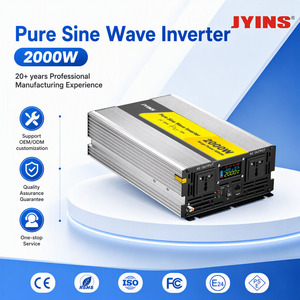
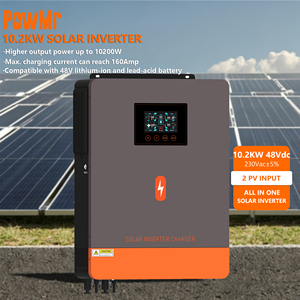
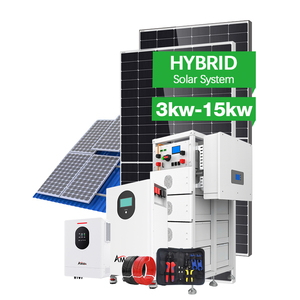
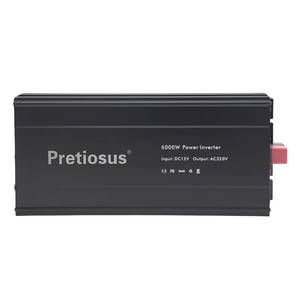
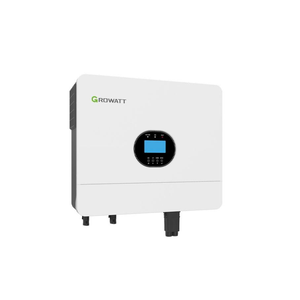
In modern industrial, utility, marine, and commercial operations, standard commercial-off-the-shelf (COTS) power electronics routinely fail when subjected to electrical transients, ambient temperature swings (-40°C to +70°C), continuous physical shock, and corrosive atmospheric contamination. As an original equipment manufacturer (OEM) and custom ODM engineering factory, our design philosophy revolves around high-reliability switch-mode power conversion, high-power DC-DC converters, heavy-duty AC-DC rectifiers, and industrial pure sine wave DC-AC inverters designed to eliminate single-point failures.
Mining applications, subsea ROVs, railway rolling stock, smart grid substations, and utility-scale energy storage demand custom electrical envelopes. Achieving an extended service life—targeting up to 30 years of operational longevity—requires avoiding design shortcuts such as cheap optocouplers in feedback loops, unrated electrolytic capacitors, or inadequate thermal derating. Instead, our OEM/ODM custom power architectures employ zero-optocoupler feedback topologies, magnetic feedback insulation, conservatively rated silicon carbide (SiC) and gallium nitride (GaN) switching components, and robust mechanical potting or IP66-rated enclosures.
When procurement teams select an OEM/ODM manufacturing partner for industrial-grade power supplies and hybrid energy storage systems, they require end-to-end control across design, prototyping, magnetic component winding, environmental testing, and final burn-in validation. Operating out of an 80,000 sq ft purpose-built facility, our manufacturing lines maintain strict traceability under ISO quality control protocols.
We adapt proven topologies to non-standard input voltages (12Vdc to 600Vdc, 95Vac to 480Vac), bipolar output rails, specific transient hold-up requirements, and active power factor correction (PFC).
From fan-free pure convection cooling using heavy-duty heatsink assembly (HSA) fins to conduction-cooled cold plates, fully encapsulated modules, and IP66 water-jet/dust-proof die-cast housings.
Component selection follows strict military and industrial derating guidelines (MIL-HDBK-217F standard principles), ensuring semi-conductors operate well below maximum junction temperatures under full load.
As global infrastructure transitions toward decentralized renewable microgrids, heavy vehicle electrification, and automated smart factories, procurement requirements for power supplies and inverters have evolved dramatically. B2B buyers must anticipate five macro engineering trends when specifying custom OEM/ODM supply partners:
Traditional silicon MOSFETs and IGBTs hit thermal limits in high-power density applications. Modern OEM switch-mode power supplies incorporate Silicon Carbide (SiC) and Gallium Nitride (GaN) switching devices. This yields >96% conversion efficiency, dramatically reduced heat dissipation, smaller planar magnetics, and compact mechanical envelopes without sacrificing thermal headroom.
In critical telecommunications, utility substations, and data routing networks, power loss translates directly to exponential revenue disruption. Global procurement strategies favor 19-inch and 23-inch rack-mount systems assembled from hot-swappable plug-in Eurocard modules. Built-in active load-sharing diodes, decoupled N+1 redundancy, and isolated status alarms ensure seamless maintenance without system shutdowns.
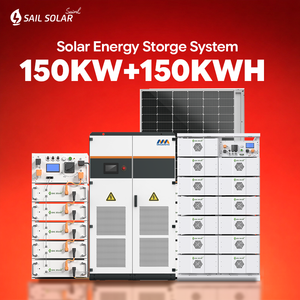
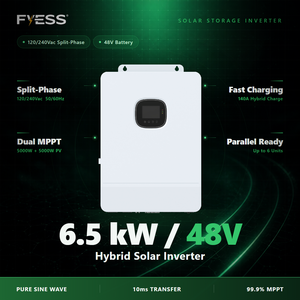
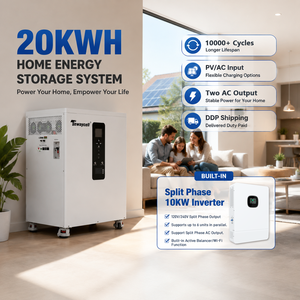
Commercial energy management now heavily relies on hybrid inverters paired with high-density Lithium Iron Phosphate (LiFePO4) battery architectures. Systems scaling from 10kW split-phase residential/commercial setups to 250kW commercial peak-shaving storage units allow facilities to perform load shifting, emergency UPS transitions within milliseconds, and solar generation optimization.
Outdoor infrastructure, surface mining equipment, subsea ROVs, and washdown food processing environments require complete protection against fine conductive mineral dust, salt fog, high-pressure water jets, and corrosive oils. The industry trend is moving away from fan-assisted ventilated boxes toward vacuum-potting encapsulation and IP66-rated die-cast aluminum enclosures.
From an operational design perspective, creating long-life power conversion products relies on mastering electromagnetic compatibility (EMC), thermal dynamics, and mechanical vibration damping. Key technical developments in our OEM/ODM factory workflow include:
Our collaborative custom design process ensures that engineered-to-order power supplies transition smoothly from initial specification sheets to qualified series production:
Step 1: Technical Requirement Analysis & Parameter Specification
Our engineering team evaluates input voltage fluctuations, transient surge thresholds, required output voltage/current profiles, hold-up times, physical dimensional boundaries, target cooling methods (convection, conduction, fan-cooled), and regulatory compliance specs (EN50155 for rail, IEC60945 for marine, UL/IEC62368 for industrial safety).
Step 2: Topology Selection & Computerized Simulation
Leveraging proven platform blueprints (push-pull, half-bridge, full-bridge phase-shifted zero-voltage switching), we simulate thermal performance, magnetic saturation limits, and electromagnetic interference (EMI) profiles prior to physical prototyping.
Step 3: Rapid Prototyping & Environmental Stress Screening (ESS)
Prototype units are assembled in-house with custom-wound planar magnetics. Prototypes undergo accelerated thermal cycling, highly accelerated life testing (HALT), and vibration screening to expose potential mechanical or electrical vulnerabilities.
Step 4: Qualification Testing & Full-Scale Factory Production
Following formal customer approval of qualified samples, volume manufacturing commences inside our 80,000 sq. ft. plant, incorporating automated surface-mount assembly, conformal coating/potting, automated burn-in under full load, and comprehensive QA documentation.
Get immediate insights into custom OEM parameters, power conversion limits, thermal management, and factory ordering procedures.