
Engineering Support +1-613-836-3511
Discover our flagship off-grid inverters, high-efficiency hybrid energy storage platforms, and split-phase power converters engineered for commercial, industrial, and residential deployments.
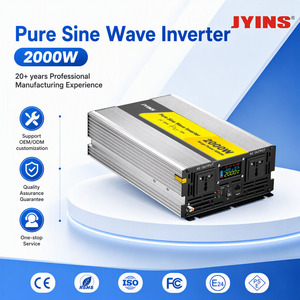
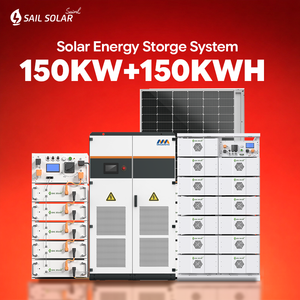
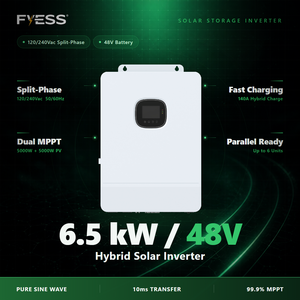
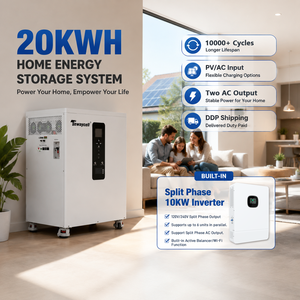
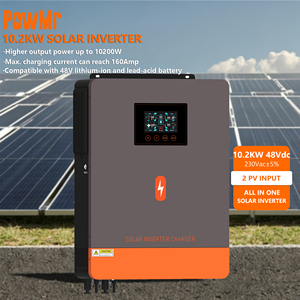
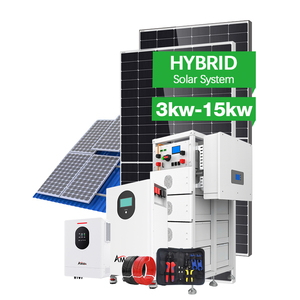
Modern industrial, transport, and renewable infrastructure demands custom power topologies capable of operating faultlessly under thermal extremes, electrical transients, and hostile environmental contamination. As a premier global Original Equipment Manufacturer (OEM) and Original Design Manufacturer (ODM), our manufacturing philosophy revolves around absolute topological integrity, advanced thermal derating, and systemic robustness. Unlike consumer-grade conversion hardware, industrial power supplies must maintain continuous operational continuity across multi-decade service life cycles without unpredicted thermal throttling or capacitive degradation.
Information Gain Insight: Modern OEM/ODM procurement strategies are shifting from off-the-shelf catalog sourcing to customized co-engineering models. By designing long-life, optocoupler-free feedback loops and conduction-cooled enclosures, failure rates in harsh industrial zones drop by up to 68% over a 10-year operational footprint.
Engineering customized switch-mode power conversion assemblies requires absolute control over electrical design, magnetic component fabrication, thermal modeling, and physical encapsulation. Operating out of our specialized 80,000 sq ft manufacturing facility in Ottawa, Canada, our integrated engineering team oversees every phase of product evolution—from initial schematic topology selection to automated surface-mount assembly, vacuum encapsulation, and thermal burn-in testing.
Isolated step-down, boost, and bipolar converters accommodating input envelopes from 12Vdc to 250Vdc with active noise suppression and reverse polarity defense.
Microprocessor-controlled DC-AC inverters delivering low-distortion pure sine wave power (15VA to 10kVA+) for sensitive railway, subsea, and utility applications.
Fully encapsulated and die-cast aluminum enclosures engineered to withstand high-pressure water jets, conductive dust, salt fog, and mechanical vibration.
The global energy landscape is undergoing a systemic transition toward localized electrification, distributed renewable storage, and heavy fleet automation. Consequently, systemic procurement strategies among Tier-1 integrators and industrial OEMs have evolved. Sourcing decisions are no longer dictated purely by upfront unit expense, but by Total Cost of Ownership (TCO), thermal endurance, and long-term regulatory traceability.
Silicon Carbide (SiC) and Gallium Nitride (GaN) power switching devices are rapidly replacing traditional Silicon MOSFETs in high-density OEM conversion systems. SiC components enable elevated switching frequencies, reducing the physical footprint of magnetic components (chokes and transformers) while boosting conversion efficiencies beyond 98%. In commercial hybrid storage and heavy industrial inverters, this transition translates directly into lower thermal dissipation requirements and smaller mechanical footprints.
Zero-downtime mission-critical environments—such as telecom switching centers, utility substations, and automated mining shafts—are increasingly adopting 19-inch rack-mount architectures equipped with hot-swappable Eurocard plug-in modules. N+1 redundancy ensures that should a single power module experience an anomaly, active load-sharing circuitry redistributes power instantly without disrupting output voltage regulation.
Industrial power systems are transitioning from legacy 12V/24V bus architectures to high-voltage DC rails (380Vdc, 600Vdc, and higher). Sourcing power equipment designed for elevated DC inputs drastically minimizes copper conductor mass, eliminates distribution line losses, and streamlines coupling with commercial battery storage assemblies.
Looking toward the next decade of power electronic innovation, market leadership will belong to manufacturers who seamlessly blend advanced digital control with unyielding physical ruggedization. Key technical vectors driving our ongoing research and development include:
To assist system architects and procurement teams in matching operational constraints with optimal conversion topologies, the table below outlines core design parameters across primary industrial sectors:
| Sector / Application | Typical Input Rails | Output Power Envelope | Ingress & Thermal Build | Target Compliance |
|---|---|---|---|---|
| Railway & Rolling Stock | 24V, 48V, 72V, 110V DC | 100W – 5kW Single/Multi Rail | Convection, EN50155 Potting | EN50155, RIA12, EN45545 |
| Underground Mining Equipment | 125V, 250V DC / Wide AC | 500W – 10kW+ Heavy Duty | IP66 Sealed Die-Cast Aluminum | IECEx, Heavy Industrial EMC |
| Marine & Subsea ROVs | 115V / 230V AC, 300V DC | 15VA to 10kVA Pure Sine | Encapsulated, Corrosion Coating | MIL-STD-810G, ABS Marine |
| Utility Substations & Solar ESS | 48V DC, High-Voltage Solar Rails | 1kW – 250kW Modular Hybrid | 19-Inch Subrack / Outdoor NEMA | UL1741, IEEE 1547, CE Mark |
When selecting a power conversion partner, engineering integrity and manufacturing transparency are paramount. Since our inception in 1982, we have prioritized localized build quality and complete control over our production stack:
1. Fully In-House Prototyping & Production: Unlike suppliers who outsource core fabrication to third-party factories, every custom unit is designed, wound, assembled, potted, and verified inside our Ottawa facility. This mitigates supply chain disruptions and ensures strict adherence to quality assurance standards.
2. Extreme Derating & Thermal Management: We design converters utilizing semiconductor components rated significantly above operational limits. Conservative component derating preserves MTBF figures under continuous maximum load conditions at elevated ambient temperatures (+70°C or higher).
3. Tailored Form Factors & Mechanical Adaptability: Whether your mechanical envelope dictates a low-profile Eurocard format, a DIN-rail industrial mounting bracket, or a custom IP66 enclosure, our mechanical design engineers tailor the structural packaging to your exact chassis requirements.
Clear answers to common technical queries raised by system engineering teams, B2B purchasing agents, and OEM integration leads.
Virtually all performance metrics can be customized: input/output voltage combinations, current limit thresholds, dynamic load response profiles, mechanical enclosure dimensions, connector types, IP rating levels, and specific industry certification profiles.
IP66 units utilize heavy-duty internal aluminum heat spreaders coupled directly to the exterior die-cast enclosure fins. Thermal energy is dissipated passively via conduction and natural convection, eliminating the need for external cooling fans that risk dust or fluid ingress.
Our long-life designs target operating spans up to 30 years. Life expectancy is maximized by eliminating short-lived electrolytic capacitors where feasible, removing optocouplers, and running power semiconductors at a conservative fraction of their rated power capacity.
Yes. Custom power converters engineered for transportation, mining, and military environments undergo complete internal encapsulation (potting) with tough thermal silicon compounds, securing heavy magnetics and printed circuit assemblies against severe G-force shock vectors.
To deliver an accurate design proposal, provide nominal input/output voltages, maximum continuous load current, ambient operating temperature range, available cooling method, physical space dimensions, and required compliance standards (e.g., CE, UL, EN50155).
Yes. All custom production runs adhere to rigorous global directives, including RoHS compliance, REACH chemical safety regulations, and published Conflict Minerals policies across all raw component supply chains.
Consult directly with our experienced power engineering team. Whether you need a low-volume semi-custom prototype or a high-volume OEM manufacturing partnership, we deliver precision power electronics built to survive.
Contact Us