
Engineering Support +1-613-836-3511
Engineered for extreme reliability, modular scalability, and seamless integration into modern utility grids, commercial microgrids, and off-grid residential energy infrastructure.
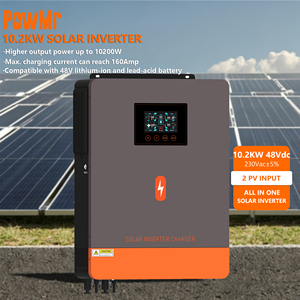
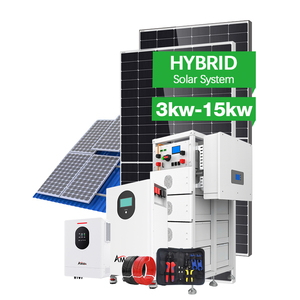
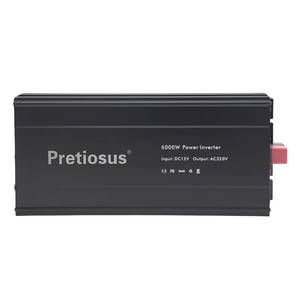
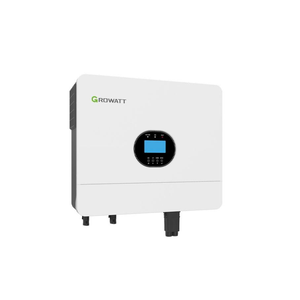
In an era defined by rapid energy transition, grid instability, and demanding industrial automation needs, the procurement of OEM/ODM modular power supplies, hybrid solar inverters, and heavy-duty switch-mode converters has shifted from standard off-the-shelf component sourcing to strategic technical partnership. Modern industrial infrastructure, subsea exploration, underground mining, rolling stock, and utility-scale energy storage systems require customized electrical topologies capable of operating reliably in harsh environments for decades.
Original Equipment Manufacturers (OEMs) and Original Design Manufacturers (ODMs) serving the global B2B sector must provide more than raw manufacturing capacity. Winning suppliers deliver deep engineering design authority, flexible modular platforms, robust qualification testing, and comprehensive supply chain control under one roof. Factories utilizing modular architectures allow system integrators to scale power throughput—from fractional 5W auxiliary modules up to megawatt-tier commercial energy storage systems (ESS)—without re-engineering core circuit topologies.
Standardized Eurocard and plug-in power modules enable dynamic N+1 redundancy, hot-swappable maintenance, and linear capacity expansion from kilowatts to megawatts.
Die-cast aluminium enclosures and full resin encapsulation provide total immunity against salt spray, metallic mining dust, submersion, and aggressive washdowns.
Targeting up to 30-year operational lifecycles by eliminating wear-out prone optical feedback loops, utilizing magnetic feedback and derated semiconductors.
As demonstrated by leading Canadian engineering manufacturers such as ABSOPULSE Electronics Ltd., in-house manufacturing—covering custom magnetics design, surface-mount assembly, automated conformal coating, thermal potting, and full load burn-in—is critical for meeting stringent international standards (including EN 50155 for railway, IEC 61850 for utility substations, and IEEE 1547 for grid interconnects).
When selecting an OEM/ODM partner for industrial switch-mode power supplies, DC-DC converters, or split-phase hybrid inverters, design engineers must evaluate performance across key operational matrices. Below is a detailed breakdown of core modular power platform capabilities engineered for heavy-duty deployment.
| Platform Category | Input Voltage Ranges | Output Configuration | Cooling Mechanism | Target MTBF / Design Life |
|---|---|---|---|---|
| Industrial DC-DC Converters | 12V, 24V, 48V, 72V, 110V, 250Vdc (Wide-range) | Single/Dual/Triple 5V to 125Vdc Isolated | Convection, Cold-Plate, IP66 Encapsulated | > 250,000 Hrs / 30 Years |
| AC-DC Power Supplies & Rectifiers | 95–264Vac Universal, Active PFC (PF > 0.98) | 12V, 24V, 48V, 125Vdc (Up to 10kW+ units) | Pure Convection or Low-Noise Variable Fans | > 200,000 Hrs / 25 Years |
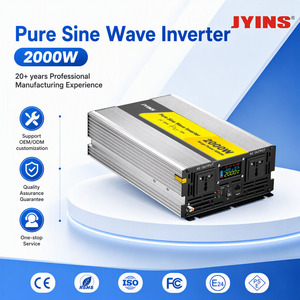
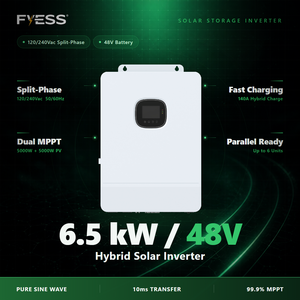
| Pure Sine Wave Inverters (DC-AC) | 24V, 48V, 110V, 250Vdc or High-Voltage Battery | 120V/240V Split-Phase, 230Vac, 3-Phase 400Hz | Heatsink Assembly (HSA), Conduction Baseplate | > 180,000 Hrs / 20 Years |
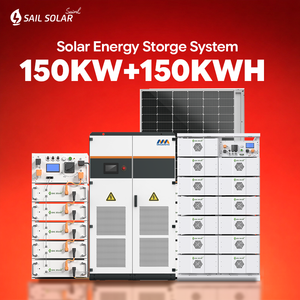
| Commercial ESS Hybrid Inverters | 150V–850Vdc High Voltage Battery Strings | 150kW – 250kW Megawatt Grid Tie & Peak Cut | Liquid Cooling / Forced Smart Air Flow | > 150,000 Hrs / 20 Years |
| Modular 19" Rack Systems | Dual-Source AC (110/220V) + DC Battery Feed | Scalable Hot-Swap Eurocard Plug-in Modules | N+1 Redundant Fan Trays & Air Channels | > 300,000 Hrs / 30 Years |
The global procurement landscape for modular power supplies and energy storage conversion hardware is undergoing a structural transition driven by four macro-economic vectors: total cost of ownership (TCO) optimization, local manufacturing resilience, wide-bandgap (WBG) semiconductor adoption, and strict environmental regulatory compliance.
Procurement departments in utility, rail, and heavy industrial sectors are abandoning low-bid purchasing models in favor of 20- to 30-year Total Cost of Ownership (TCO) evaluation. In commercial microgrids and remote telecom installations, the financial impact of a power supply failure includes un-planned downtime, site transit costs via helicopter or off-road transport, and collateral equipment damage. As a result, buyers prioritize units engineered with high thermal margins, long-life electrolytic-free topologies, and conservative component derating.
Silicon Carbide (SiC) and Gallium Nitride (GaN) field-effect transistors are revolutionizing OEM power designs. Modern modular factories are integrating SiC MOSFETs into high-power hybrid inverters and step-up DC-DC converters to achieve:
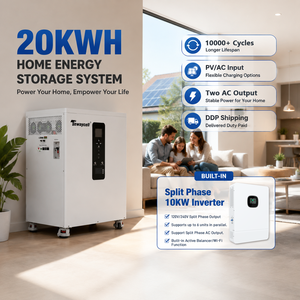
With utility demand charges soaring globally, commercial and industrial enterprises are procuring high-capacity hybrid solar inverters (ranging from 150kW to 250kW) paired with modular LiFePO4 battery banks. These systems enable automatic peak shaving, load shifting, and seamless black-start backup power during utility outages. OEM suppliers offering pre-configured, split-phase mobile containerized ESS solutions are capturing significant market share in agriculture, construction, and disaster relief sectors.
Global system integrators are increasingly specifying OEM/ODM suppliers who control their critical component supply chains. Facilities that manufacture custom planar transformers and inductors in-house, maintain direct semiconductor factory allocations, and perform full environmental screening (Vibration, Thermal Cycling, Burn-in) provide vastly superior delivery predictability and long-term spare-parts support.
To maintain high efficiency, signal integrity, and long operational life, modern industrial power supplies rely on sophisticated control and packaging technologies. Below are the key technological trajectories defining the next decade of power engineering.
Analog PWM control loops are rapidly being augmented by Digital Signal Processors (DSPs) and high-speed microcontrollers. Digital control allows real-time dynamic output voltage trimming, active power factor correction (PFC) balancing, dynamic load sharing across parallel modules, and programmable multi-stage battery charging profiles (compatible with Lead-Acid, NiCd, and advance Lithium-Ion/LFP chemistries).
Modern hybrid inverters designed for split-phase (120V/240V) and three-phase industrial grids utilize high-frequency planar transformers to achieve high-voltage galvanic isolation between DC battery banks and AC load circuits. This prevents DC offset injection into household or factory wiring, protects sensitive microprocessor equipment, and dampens electromagnetic interference (EMI) to meet strict FCC Part 15 Class A/B and EN 55032 standard thresholds.
For installations where forced-air cooling fans are prone to clogging by metallic dust (such as underground mining shafts or steel mills) or salt air corrosion (shipboard deck machinery and offshore wind turbines), fanless power conversion is mandatory. OEM factories are pioneering advanced thermal management solutions:
Internal heat-generating semiconductors (MOSFETs, diodes, planar magnetics) are mounted directly against a heavy aluminum baseplate, transferring thermal energy to the customer's cold chassis without requiring external air movement.
Entire circuit assemblies are cast in thermally conductive polyurethane or silicone potting compounds. This provides 100% protection against mechanical shock, severe vibration, dust ingress, high humidity, and chemical exposure.
Essential technical, procurement, and integration insights for engineering leads and sourcing managers.