
Engineering Support +1-613-836-3511
Precision-Engineered Off-Grid, Hybrid & Commercial Energy Storage Inverter Systems
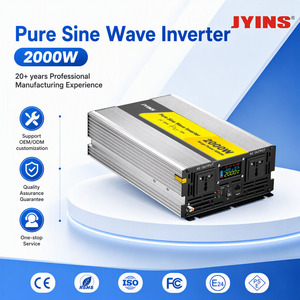
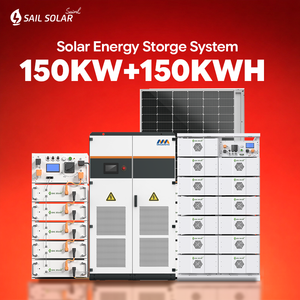
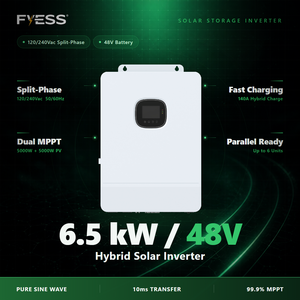
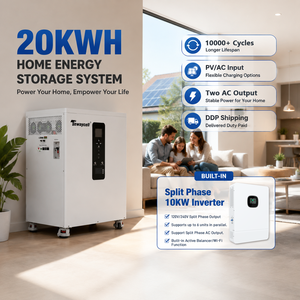
The global transition toward decentralized clean energy infrastructure has drastically shifted expectations for grid-tied, off-grid, and hybrid energy storage system (ESS) inverters. Modern power conversion equipment is no longer evaluated simply by peak efficiency metrics. Instead, utility operators, commercial EPC firms, and regional distributors assess OEM/ODM manufacturers through the lens of thermal performance under continuous full-load, total harmonic distortion (THD), electromagnetic compatibility (EMC), fault ride-through (FRT) capabilities, and absolute long-term reliability.
As a leading specialized Original Equipment Manufacturer (OEM) and Original Design Manufacturer (ODM) operating out of advanced manufacturing facilities, our production ecosystem bridges the gap between commercial off-the-shelf power electronics and customized high-reliability equipment. From multi-megawatt commercial peak-shaving systems to high-surge residential split-phase hybrid units, our design methodologies incorporate over four decades of power conversion engineering discipline.
Core Procurement Metric: High-reliability grid inverters must deliver a calculated mean time between failures (MTBF) exceeding 100,000 hours under real-world operating conditions (-40°C to +65°C ambient), leveraging optocoupler-free feedback loops and conservative semiconductor derating.
Our OEM/ODM manufacturing framework is anchored on three foundational design pillars: advanced topology efficiency, rugged mechanical housing, and intelligent firmware control. Whether designing a 300W DC-to-AC portable sine wave inverter or a 250kW utility-interactive commercial hybrid storage inverter, our topology choices reflect strict thermal and electrical parameters.
Integration of Silicon Carbide (SiC) MOSFETs and GaN switches reduces switching losses by up to 60%, enabling higher switching frequencies (up to 100kHz) and drastically reducing magnetic component footprint.
Reinforced isolation barriers between DC inputs and AC grid outputs prevent common-mode leakage currents, protecting sensitive battery storage systems and grid infrastructure from DC injection.
Advanced DSP-driven firmware allows seamless transition between Grid-Following (GFL) and Grid-Forming (GFM) modes, enabling black-start functionality and microgrid stabilization.
Procurement executives and energy infrastructure engineers must navigate rapid shifts in regulatory mandates, battery chemistries, and grid stability standards. Analyzing forward-looking data points reveals clear trajectories that define the next decade of power inverter sourcing:
Legacy 48V low-voltage battery systems are increasingly giving way to High-Voltage (HV) battery architectures (300VDC to 800VDC) in commercial, industrial, and high-capacity residential applications. Higher voltage reduces line current, minimizing copper losses, decreasing conductor thickness, and raising total system round-trip efficiency (RTE) above 98%. OEM/ODM specifications now prioritize wide DC input range flexibility to accommodate both legacy 48V LiFePO4 packs and high-voltage 512V/628V battery banks.
Vehicle-to-Grid (V2G) and Vehicle-to-Home (V2H) compliance is migrating from a niche feature to a baseline tender requirement. Modern hybrid inverters are expected to feature bidirectional power flow capabilities with split-phase (120V/240V) and three-phase outputs. This allows residential and fleet ESS installations to interface directly with electric vehicle chargers while serving as secondary emergency power supply (EPS) nodes.
Environmental durability has become a core differentiator in supplier selection. Inverters deployed in mining, marine, desert solar, or industrial washdown applications require protection levels far beyond standard IP20 enclosures. The market is rapidly standardizing on IP65/IP66 die-cast aluminum chassis with potted power modules, liquid cooling loops, or maintenance-free convection cooling assemblies that eliminate vulnerable cooling fans.
Modular scalability via CAN bus or RS485 communication protocols is essential. Modern commercial installations (e.g., 150kW to 1MW peak-shaving systems) require seamless parallel connection without single-point master-slave failure risks. Autonomous droop control algorithms ensure dynamic active and reactive power sharing across interconnected units.
Our 80,000 square foot purpose-built manufacturing facility operates under rigorous ISO 9001, ISO 14001, and ISO 45001 quality management regimes. Unlike contract assemblers that rely on white-label off-the-shelf subassemblies, our engineering team manages the entire value chain in-house—from custom transformer winding and SMT PCB placement to vacuum pressure impregnation (VPI), potting, and automated full-load burn-in testing.
Chassis designs tailored for standard 19-inch racks, NEMA 4X/IP66 enclosures, Eurocard plug-in modules, or ultra-compact vehicle-mounted footprints.
Automated acrylic and silicone conformal coating protects internal circuitry from metallic dust, high humidity, salt fog, and chemical vapor exposure.
100% of manufactured units undergo high-pot dielectric withstand testing, thermal imaging evaluation, and full-load burn-in under dynamic grid conditions.
Our OEM/ODM engineering protocol accommodates extensive customization across electrical, mechanical, and software parameters:
In an overcrowded marketplace filled with low-cost standard consumer-grade products, our enterprise distinguishes itself by engineering industrial-grade power solutions built for decades of operation in harsh environments.
Standard commercial inverters often fail prematurely due to dry-out of low-grade electrolytic capacitors or optocoupler degradation in high-temperature feedback loops. Our high-reliability product lines eliminate optocouplers entirely by employing pulse transformers and magnetic feedback mechanisms, paired exclusively with 105°C long-life film or solid polymer capacitors. This design methodology supports target operational lifespans of up to 30 years.
Industrial motors, compressors, air conditioning units, and heavy power tools exhibit initial inrush currents up to 300% of rated nominal power. Our pure sine wave inverters feature heavy-duty iron-core transformers or conservatively rated HF magnetics capable of sustaining up to 3x peak surge ratings for extended durations without tripping protection limits or causing voltage sag.
Operating as a direct exporter and OEM factory, we eliminate intermediary distributor markups while maintaining total component traceability. Our strategic supply partnerships for Tier-1 power MOSFETs, SiC diodes, and microcontrollers ensure long-term production availability—preventing unexpected product phase-outs and securing long-term spare part replacement pipelines for infrastructure projects.
Answers to critical questions asked by procurement directors, system integrators, and electrical engineers when evaluating our OEM/ODM inverter manufacturing capabilities:
Consult directly with our senior power electronics engineering team to review your technical specifications, request sample prototypes, or obtain customized enterprise pricing.
Inquire Now