
Engineering Support +1-613-836-3511
Standard and custom-engineered power conversion products designed for high reliability across harsh industrial environments.
TECHNICAL WHITEPAPER & PROCUREMENT GUIDE
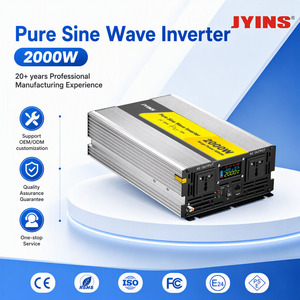
Modern electrical infrastructure, industrial automation networks, commercial energy storage systems, and heavy-duty transport vehicles demand reliable, precisely regulated power conversion solutions. As a global original equipment manufacturer (OEM) and turnkey ODM exporter specializing in switch-mode power conversion since 1982, our engineering facility designs and manufactures industrial DC-DC converters, AC-DC power supplies, battery chargers, and single-/three-phase AC-AC frequency converters ranging from fractional watts up to tens of kilowatts.
Standard off-the-shelf commercial power supplies often fail when deployed in critical environments characterized by ambient temperature extremes, severe vibration, conductive dust, high humidity, or volatile supply rails. This comprehensive whitepaper examines the core structural requirements, design methodologies, thermal dissipation topologies, and future procurement paradigms for engineering managers, procurement leaders, and system integrators seeking high-reliability OEM/ODM frequency converters and inverter systems.
To deliver an operational lifespan of up to 30 years in harsh operating environments, frequency converters and pure sine wave inverters must abandon fragile commercial component topologies. Industrial-grade power architecture relies on key engineering principles:
Re-engineered voltage rails, split-phase configurations, and wide-range DC inputs (12V, 24V, 48V, 110V, 250V, 600V) optimized for exact load requirements.
IP66-rated cast aluminum enclosures and fully encapsulated modules immune to conductive metal dust, salt spray, moisture, and vibration.
Peak conversion efficiencies exceeding 95-97%, reducing thermal load while maximizing usable power in space-constrained footprints.
Thermal stress remains the leading cause of power semiconductor degradation. Industrial frequency converters require robust cooling schemes designed specifically for their ambient operational envelope:
| Cooling Methodology | Operating Temp Envelope | Protection Rating | Ideal Application Environment |
|---|---|---|---|
| Pure Convection (Fanless) | -40°C to +70°C | IP50 - IP54 Chassis | Remote substations, sealed cabinets, low-maintenance outdoor infrastructure |
| Conduction Baseplate | -45°C to +85°C Baseplate | Module OEM Board | Underground mining vehicles, railway rolling stock, sealed chassis integration |
| Fully Encapsulated Potting | -40°C to +75°C | IP66 / IP67 Sealed | Subsea ROVs, marine deck machinery, high-humidity processing plants |
| Filtered Forced-Air | -20°C to +55°C | Heavy-Duty Fan Filter | 19-Inch Rack telecom cabinets, high-power commercial peak-shaving ESS |
As energy systems shift toward decentralized microgrids, renewable integration, and high-efficiency automation networks, procurement teams face new technical mandates when sourcing OEM/ODM frequency converters and pure sine wave inverters:
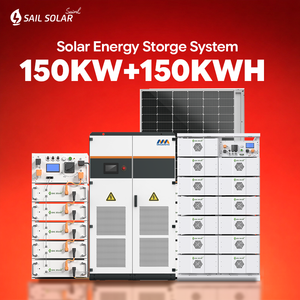
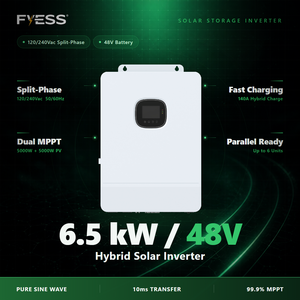
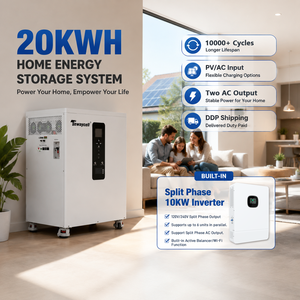
Modern commercial and industrial procurement strategies favor hybrid split-phase and 3-phase energy systems capable of seamless grid-tie and off-grid operational handoffs. Inverters must handle peak shaving, active frequency regulation, back-feeding, and automated load shedding. Multi-source architectures integrating solar PV, battery energy storage systems (BESS), and auxiliary diesel generators require high-power hybrid converters (10kW to 250kW) equipped with integrated DSP control units.
To eliminate system downtime in mission-critical applications such as data infrastructure, industrial chemical automation, and telecommunications, buyers are moving away from single monolithic inverters toward 19-inch and 23-inch rack-mount systems utilizing Eurocard plug-in modules. Configured with active load-sharing bus lines and internal decoupling diodes, N+1 modular systems allow maintenance personnel to hot-swap modules without dropping critical loads.
Global regulations (RoHS, REACH, Conflict Minerals Compliance) now directly influence vendor selection. Industrial buyers prioritize manufacturers capable of providing complete material traceability, extended 20-to-30-year component availability, and repairable modular topologies over short-lifecycle disposable commercial units.
The power conversion market is accelerating toward smart digital integration and wide-bandgap dominance:
With an 80,000-square-foot purpose-built engineering and manufacturing facility located in Ottawa, Canada, our enterprise combines decades of specialist magnetics design, surface-mount assembly, automated potting, and full-spectrum testing under a single quality management system:
Over 80% of total output comprises custom or semi-custom builds. We adapt proven platform topologies to specialized mechanical envelopes, custom voltage rails, and targeted industry standards.
Custom winding of transformers and inductors guarantees optimal thermal coupling, minimal leakage inductance, and complete supply chain control over critical core components.
100% of manufactured units undergo automated burn-in under full thermal and electrical load, complemented by high-potential isolation verification and shock/vibration screening.
Our industrial-grade frequency converters and sine wave inverters are designed to achieve a minimum operating lifespan target of 20 to 30 years. Mean Time Between Failures (MTBF) typically exceeds 250,000 to 450,000 hours per MIL-HDBK-217F standards, achieved through conservative component derating (using components at 50-60% of rated limits), high-grade aluminum electrolytic or film capacitors, and fan-free convection cooling options.
Yes. Customization is our primary operational focus. We routinely modify generic topologies to accommodate non-standard DC inputs (such as 36V, 72V, 125V, 250V, or 600Vdc) and custom single- or three-phase AC outputs (e.g., 115Vac 400Hz for aviation ground support, 208Vac/480Vac 60Hz, or specialized 50Hz rails), complete with tailored mechanical brackets and custom electrical connectors.
We offer fully encapsulated assemblies and IP66-rated die-cast aluminum packages. Internal printed circuit boards receive heavy conformal coating or complete silicone/polyurethane encapsulation potting. This locks components in place against mechanical shock and vibration (meeting EN50155 and MIL-STD-810G requirements) while creating a total physical barrier against water jets, metallic dust, chemical fumes, and salt air intrusion.
To expedite engineering analysis, clients should provide: nominal input voltage and input voltage range, required output voltage/current specifications, surge/peak load behavior, target conversion efficiency, thermal operating ambient range, physical enclosure dimensions, preferred cooling method (convection, conduction, fan-cooled), required agency certifications (UL, CE, CSA, EN50155), and estimated annual production quantities.
Connect directly with our senior power electronics engineering team to discuss your project requirements, request detailed platform datasheets, or initiate a custom OEM/ODM prototype build.
Get Catalog