
Engineering Support +1-613-836-3511
Explore our high-performance power conversion, hybrid inversion, and heavy-duty battery charging platforms
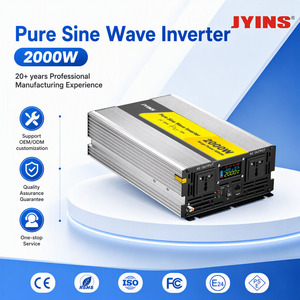
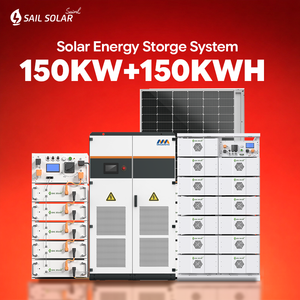
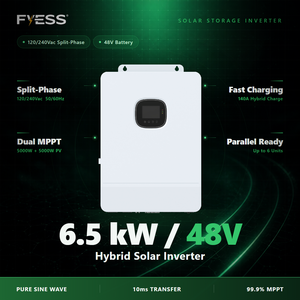
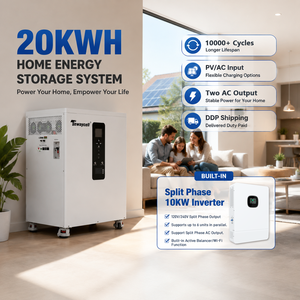
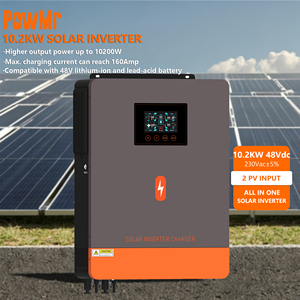
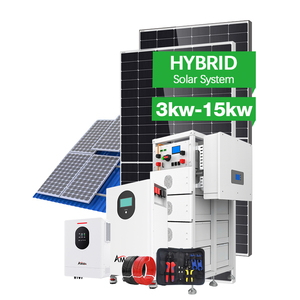
In high-reliability industrial infrastructure, electrical utilities, railway networks, underground mining operations, and subsea deployments, power conversion hardware must deliver uncompromising stability under severe operational stress. A custom OEM diode rectifier acts as the primary conversion bridge, taking raw single-phase or three-phase Alternating Current (AC) input and producing a controlled, isolated Direct Current (DC) bus ready for sensitive downstream instrumentation, battery bank charging, or high-power drive networks.
While commercial off-the-shelf rectifiers are mass-produced for mild office environments, industrial-grade custom diode rectifiers rely on heavy-duty switch-mode topologies combined with high-barrier Schottky diodes or ultra-fast recovery diode arrays. These components are conservatively derated to withstand massive voltage spikes, extreme harmonic distortion, thermal expansion cycles, and continuous operation at full rated load without thermal runaway.
Engineering Core Principle: Long-life reliability demands eliminating prone point components. By replacing optocouplers in feedback loops with magnetic pulse-transformer isolation and derating semiconductor junction temperatures by >30°C, continuous service life extends past 25 to 30 years.
Industrial specifiers often evaluate diode rectification across two primary circuit architectures:
When requesting semi-custom or fully custom diode rectifier units from an OEM manufacturer, engineering leads must evaluate specific design parameters to ensure total system integration:
| Electrical & Physical Parameter | Standard Commercial Grade | Heavy-Duty Industrial OEM Grade | Impact on Reliability |
|---|---|---|---|
| Operating Temperature Range | 0°C to +40°C | -40°C to +70°C (Fan-free option) | Prevents thermal shutdown during severe environmental swings. |
| Input Voltage Tolerance | ±10% Nominal | Wide-range ±20% to ±30% / Custom DC/AC inputs | Prevents failure during industrial brownouts and transient surges. |
| Feedback Loop Isolation | Standard Optocouplers | Optocoupler-free Magnetic/Hall Effect isolation | Eliminates CTR degradation over time; targets 30-year lifecycle. |
| Ingress Protection & Encapsulation | IP20 (Open frame / perforated) | IP66 Die-Cast Enclosure / Complete Potting | Immunity to washdown, conductive dust, salt fog, and humidity. |
| Cooling Methodology | High-RPM Small Fans | Convection, Conduction Baseplate, Filtered Air | Removes mechanical failure points; minimizes routine maintenance. |
As industrial automation, commercial solar-plus-storage integration, EV fleet charging infrastructure, and microgrid deployments accelerate, the expectations placed on custom OEM diode rectifier manufacturers are evolving rapidly. Procurement managers and lead electrical engineers are moving away from monolithic standard parts toward modular, future-proofed, and intelligence-enabled power architectures.
Adoption of Wide Bandgap (WBG) SiC diodes enables higher switching frequencies, drastically reducing the physical footprint of magnetic components while operating at up to 98% thermal efficiency.
Procurement strategies emphasize 19-inch and 23-inch rack-mount architectures housing plug-in Eurocard modules with automatic active current sharing for zero-downtime maintenance.
Demand for IP66-rated cast aluminium power supplies and fully encapsulated modules for mining, subsea ROVs, and roadside rail enclosures to resist aggressive corrosive agents.
Modern purchasing decisions prioritize Total Cost of Ownership (TCO) over initial unit purchase price. Standard industrial power converters frequently experience electrolytic capacitor drying, optocoupler aging, and fan failure within 3 to 5 years of continuous installation. In contrast, heavy-duty switch-mode rectifiers engineered with derated components, convection cooling, and planar magnetics drastically reduce field service calls, downtime losses, and expensive replacement labor over a multi-decade operational timeline.
The engineering landscape for custom power conversion is marked by advanced materials science and innovative circuit topologies. Leading OEM manufacturers focus on solving complex thermal management and electromechanical stress problems inherent to tough field applications:
Cooling fans remain the number one mechanical point of failure in power supply systems. In environments such as underground mining or desert solar installations, airborne particulate matter and fine metallic dust quickly lock cooling fans, leading to swift thermal destruction. Advanced custom rectifiers employ heavy heatsink assembly fins (HSA builds) and conduction-cooled cold plates. Heat from high-power diode arrays and switching transistors is transferred directly to the chassis wall or ambient air via passive fluid heat pipes, ensuring zero mechanical wear points.
For applications subject to continuous vibration, high humidity, or direct high-pressure washdown (such as marine deck machinery or food processing automation), internal assemblies are encapsulated in specialized thermally conductive polyurethane or silicone potting compounds. This structural barrier completely isolates sensitive surface-mount components from salt spray, water immersion, condensation, and mechanical shock up to 30G.
Standard catalog power supplies are designed around standard commercial voltages (12V, 24V, 48V DC) and standard utility grids (120V/230V AC). However, specialized industrial systems frequently operate on non-standard voltage rails, demanding tailored engineering:
OEM Capability Spotlight: From our 80,000 sq ft purpose-built facility in Ottawa, Canada, every prototype, magnetic transformer winding, printed circuit assembly, conformal coating, thermal burn-in, and final high-voltage insulation test is performed under one roof to maintain total quality control.
Frequently asked questions by engineering leads, system integrators, and purchasing officers
Our custom DC-DC converters and AC-DC diode rectifiers range from low-power 5W sensor modules up to 10kW+ single chassis units. Systems can be combined in 19-inch or 23-inch rack frames with active load-sharing to deliver tens of kilowatts for major substation or industrial installations.
Yes. Custom and semi-custom power conversion design is our primary business. We adapt field-proven topology platforms to accept unusual input sources (e.g., 125Vdc, 250Vdc, 400Vac 3-phase) and deliver precise output voltages with specialized current limit characteristics.
We eliminate failure-prone components such as feedback optocouplers and low-grade electrolytic capacitors. Combined with heavy component derating (running semiconductors well below maximum voltage/current capacity) and passive convection cooling, thermal aging is drastically reduced.
We supply IP66-rated cast aluminium enclosures and fully encapsulated potted assemblies. These units are completely impervious to high-pressure water jets, conductive metallic dust, salt fog, corrosive chemical vapors, and severe physical vibration.
To expedite the engineering review, provide nominal input voltage and variation limits, output voltage/current requirements, expected load transients, operating ambient temperature range, target physical dimensions, cooling method preference, and required regulatory compliance standards.
All design, prototyping, magnetic component winding, assembly, thermal burn-in, and final quality control testing take place at our Ottawa, Ontario, Canada facility, serving clients directly worldwide.
Consult directly with our senior power engineering team to discuss your input/output parameters, thermal constraints, and custom enclosure specifications today.
Inquire Now