
Engineering Support +1-613-836-3511
Explore our heavy-duty vector drives, off-grid power inverters, and high-efficiency hybrid energy conversion systems manufactured for demanding industrial applications.
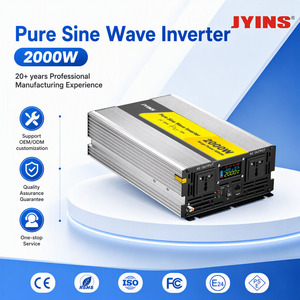
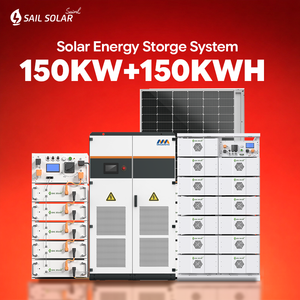
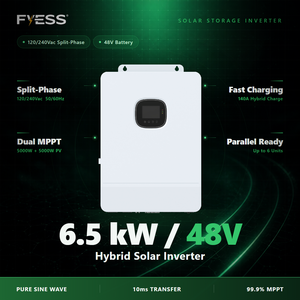
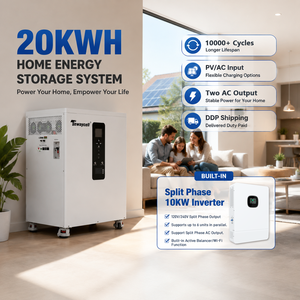
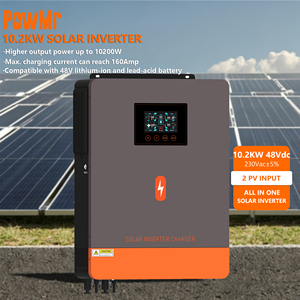
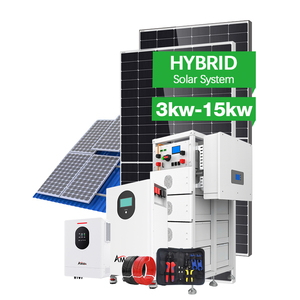
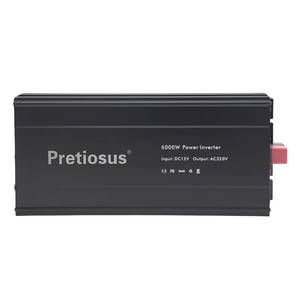
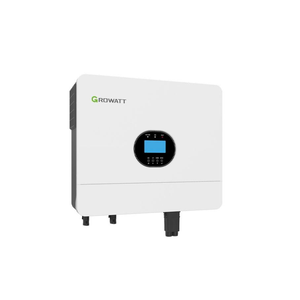
Modern industrial automation demands precise motion control, robust torque dynamic response, and peak energy efficiency. As a leading China wholesale vector drive manufacturer and OEM factory, our engineering standard focuses on bridging high-speed processing algorithms with heavy-duty power hardware. Industrial variable frequency drives (VFDs) utilizing advanced Vector Control (Field-Oriented Control or FOC) decouple magnetic flux and torque-producing current vectors, enabling asynchronous AC induction motors and permanent magnet synchronous motors (PMSM) to exhibit dynamic characteristics comparable to DC servo systems.
Global procurement teams, system integrators, and OEM equipment builders face increasing pressures to source reliable frequency inverters that operate continuously under demanding environmental stressors: wide input voltage fluctuations, elevated ambient operating temperatures, conductive dust, high humidity, and severe vibration. Sourcing directly from verified Chinese manufacturing facilities allows procurement managers to obtain custom-engineered drive topologies, specialized firmware adaptations, and cost-effective volume manufacturing without compromising design longevity or compliance with international electrical safety standards.
Information Gain Insight: Unlike standard scalar (V/f) drives that merely regulate output voltage proportional to frequency, true dynamic vector drives compute flux space vectors in real-time. This yields instantaneous torque correction (<10 ms), zero-speed hold capabilities, and up to 20% energy savings in variable torque pump and fan installations.
To assist technical procurement engineers in specifying the appropriate drive topology for their operational envelopes, the comparative architectural matrix below outlines performance metrics across standard control modalities:
| Control Topology | Speed Accuracy | Low-Frequency Torque (0.5Hz) | Dynamic Response | Primary Industrial Applications |
|---|---|---|---|---|
| Scalar Control (V/f) | ± 0.5% of Base Speed | 100% Rated Torque | > 100 ms Torque Loop | HVAC fans, centrifugal pumps, basic conveyors, blowers |
| Sensorless Vector Control (SVC) | ± 0.2% of Base Speed | 150% - 180% Rated Torque | < 20 ms Torque Loop | Extruders, crushers, CNC spindles, plastic machinery |
| Closed-Loop Vector Control (FOC) | ± 0.02% with Encoder | 200% Holding Torque at 0Hz | < 5 ms Torque Loop | Hoists, high-speed winders, elevators, paper mills, robotics |
| Direct Torque Control (DTC) | ± 0.1% Sensorless | 200% Dynamic Torque Limit | < 2 ms Torque Loop | Mining shovels, heavy metallurgy, electric propulsion |
The global market for industrial frequency drives and vector controllers is experiencing structural transformations driven by strict energy mandates, decentralized renewable integration, and smart manufacturing initiatives. B2B buyers evaluating Chinese manufacturing partners must align their procurement strategies with four key industry evolutions:
Transitioning from traditional Silicon IGBTs to Silicon Carbide (SiC) MOSFETs dramatically reduces switching losses, allowing higher carrier frequencies (up to 32kHz), reduced motor acoustic noise, and ultra-compact drive footprints.
Global regulations like EU Ecodesign Directive (Tier 2/3) necessitate drive-motor system efficiencies exceeding IES2 ratings. Modern vector drives incorporate loss-minimization algorithms to optimize magnetic core magnetisation during light load duty cycles.
Next-generation vector drives act as smart edge nodes. Integrated Ethernet/IP, Modbus-TCP, and PROFINET interfaces stream vibration, current signature, and thermal analytics to cloud predictive maintenance engines.
Furthermore, the convergence of renewable energy microgrids and battery storage systems has elevated demand for hybrid bidirectional inverters and dynamic DC-bus sharing vector drives. In automated manufacturing setups, linking multiple vector drives to a common DC-bus allows regenerative braking energy from deceleration cycles to power adjacent accelerating drives, reducing facility net power consumption by up to 35%.
Engineers specifying custom vector drives must look beyond rated kilowatt output and evaluate the thermal and algorithm architecture of the power module. Key innovation pillars implemented across our OEM production lines include:
Traditional Sensorless Vector Control relies on Back-EMF estimation, which degrades at speeds below 3 Hz where signal-to-noise ratios deteriorate. Our proprietary algorithm injects high-frequency carrier signals into the stator voltage vector to track rotor magnetic saliency. This achieves 180% starting torque at 0.25 Hz without requiring physical shaft encoders, eliminating encoder cable failure points in dirty industrial mining environments.
Drive field failures are predominantly caused by electrolytic capacitor degradation, thermal stress on gate drivers, and optocoupler aging in isolated feedback paths. Our heavy-duty industrial drive designs utilize metalized polypropylene film capacitors where feasible, coupled with magnetic transformer isolation or optical fiber feedback channels. Eliminating optocouplers extends expected drive lifespan up to 30 years in continuous 40°C ambient operating environments.
Variable frequency switching generates high-frequency dV/dt voltage spikes and harmonic distortion (THD) on utility distribution lines. Our integrated drive solutions feature built-in Class C2/C3 EMC filters, dual DC bus chokes, and optional Active Front End (AFE) regenerative bridge modules. AFE technology lowers current total harmonic distortion ($THDi$) to under 5%, complying with IEEE 519-2014 grid connection standards.
Drawing on decades of power conversion engineering expertise, our 80,000 sq ft manufacturing facility in Ottawa, Canada and direct global supply facilities produce custom and semi-custom power products tailored to rigorous operational parameters. We do not merely stock off-the-shelf catalogues—we adapt proven topologies to your exact mechanical, electrical, and environmental specifications.
From custom magnetics winding to SMT assembly and automated conformal coating, production remains 100% traceable.
IP66 die-cast aluminum and fully encapsulated modules resistant to washdown water, salt spray, sand, and metallic dust.
Components are derated up to 40% against maximum voltage and current stress, optimizing MTBF for continuous 24/7 duty.
Direct technical collaboration with engineering managers, eliminating middleman distributor markup and communication delay.
Below are critical technical questions resolved by our engineering team to assist purchasing managers, electrical engineers, and equipment builders during vendor evaluation:
Answer: A standard VFD adjusts output frequency and voltage simultaneously according to a fixed ratio (V/f control), which can cause motor slip and reduced torque at lower RPMs. A Vector Drive independently controls motor magnetizing current and torque-producing current vectors using dynamic mathematical transformation matrices (Park & Clarke transformations). This provides instantaneous torque response, precise speed regulation (within ±0.02%), and high low-end torque performance.
Answer: Yes. Our heavy-duty vector drives are rated for dual duty cycles: Light Duty (120% overload for 60 seconds, suitable for variable torque pumps/fans) and Heavy Duty (150% to 200% overload for 60 seconds / 3 seconds peak, designed for high-inertia crushers, hoists, extruders, and stamping presses).
Answer: All printed circuit boards undergo automated dual-layer conformal coating compliant with IEC 60721-3-3 Class 3C3 for chemical gas resistance (H2S, SO2). For extreme environments such as underground mining, marine decks, or chemical washdown zones, we engineer IP66 fully encapsulated die-cast aluminum chassis modules.
Answer: In multi-drive installations (e.g., continuous textile lines, paper mills, or packaging automation), connecting multiple vector drives to a centralized DC bus rectifies AC power once and distributes DC power to all drive units. Decelerating/braking drives feed energy back onto the shared DC bus for accelerating drives to consume, significantly cutting total kWh draw and reducing braking resistor heat generation.
Answer: We engineer vector drives and power converters across broad global low-voltage ranges: 1-phase 110V/220V/240Vac, 3-phase 208V/380V/415V/480V/690Vac, as well as wide DC input rails (24V, 48V, 110V, 250V, 600Vdc). Output frequencies span standard 0–590 Hz, with special high-speed spindle variants delivering up to 2,000 Hz.
Answer: Customers submit their mechanical constraints, target thermal budget, electrical input/output specifications, and required industrial communication stacks (EtherCAT, CANopen, Modbus, Profibus). Our engineering team adapts our field-proven platform topologies, delivers 3D CAD mechanical models and prototype test reports, and validates units prior to batch manufacturing.
Before issuing a Purchase Order (PO) or Request for Quote (RFQ) to a China vector drive factory, technical procurement officers should evaluate vendors against these foundational criteria:
Speak directly with our technical support team and application engineers to configure the optimal vector drive, power converter, or custom inverter system for your industrial project.