
Engineering Support +1-613-836-3511
Explore our top-rated industrial AC-DC conversion systems, hybrid storage inverters, and heavy-duty switch-mode power rectifiers built for rugged operational longevity.
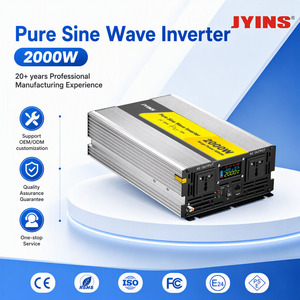
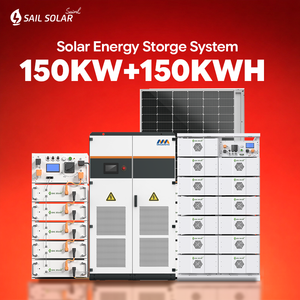
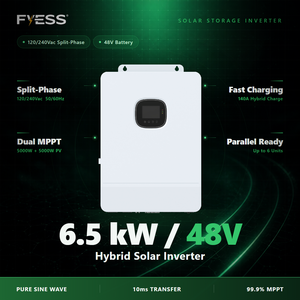
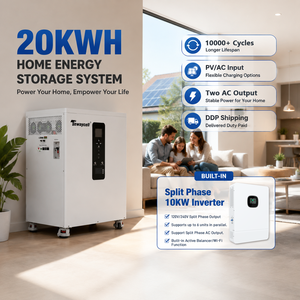
In modern industrial infrastructure, the conversion of alternating current (AC) to direct current (DC) via high-performance silicon rectifiers forms the foundational backbone for applications spanning electroplating, green hydrogen electrolysis, battery energy storage systems (BESS), underground mining equipment, subsea ROV power delivery, and high-voltage traction substations. As global industry shifts toward electrification and microgrid integration, sourcing silicon rectifiers directly from premier OEM factories in China has evolved from a simple cost-reduction tactic into a strategic supply chain decision centered around custom topology engineering, manufacturing agility, and rigorous compliance standards.
Industrial silicon rectifiers are no longer static diode bridges. Today’s state-of-the-art power conversion systems incorporate active Power Factor Correction (PFC), silicon carbide (SiC) hybrid topologies, micro-processor-controlled switching algorithms, and modular N+1 redundancy. When procuring from China wholesale manufacturing hubs, global engineering leads and procurement directors must evaluate technical parameters well beyond initial voltage and current specs—prioritizing thermal management, total harmonic distortion (THD), Mean Time Between Failures (MTBF), and environmental sealing such as IP66 enclosure ratings.
Information Gain Insight: Modern switch-mode industrial silicon rectifiers cut energy conversion losses by up to 35% compared to legacy thyristor/SCR phase-controlled designs, while offering a footprint reduction of over 50% through high-frequency switching and advanced forced-air or conduction heat sinking.
Selecting the optimal power rectifier requires matching circuit topology with operational environmental stresses. The operational spectrum spans basic silicon diode assemblies to complex silicon-controlled rectifiers (SCR/Thyristor systems) and modern switch-mode power supplies (SMPS) utilizing active power factor correction.
| Topology Type | Efficiency Rating | Harmonic Distortion (THD) | Typical Applications | Cooling & Protection |
|---|---|---|---|---|
| Silicon Diode Bridge Rectifiers | 92% - 95% | High (>30% without filters) | Fixed DC rails, bulk raw power conversion | Convection, heatsink assembly |
| Thyristor / SCR Rectifiers | 90% - 94% | Medium to High (15% - 25%) | Heavy electroplating, arc furnaces, DC motor drives | Water-cooled, forced-air chassis |
| High-Frequency Switch-Mode Rectifiers | 95% - 98.5% | Ultra-Low (<5% with active PFC) | Telecom microgrids, precision plating, BESS charging | Conduction baseplate, IP66 fully potted |
| SiC Hybrid Smart Rectifiers | > 98.5% | Negligible (<3%) | EV fast charging, green hydrogen electrolyzers, subsea | Liquid cooling, encapsulated Eurocard |
When issuing RFQs to China silicon rectifier manufacturers, engineering specifications should explicitly govern the following parameters to ensure industrial-grade performance:
China’s power electronics manufacturing ecosystem offers unmatched technical capabilities, rapid custom prototyping, and vertical integration. Leading factories maintain comprehensive in-house facilities spanning automated Surface Mount Technology (SMT) lines, custom magnetics winding, vacuum potting, climatic environmental chamber testing, and full-load burn-in testing.
In-house R&D teams adapt proven topology platforms to custom input/output voltages, transient suppression profiles, and mechanical form factors without long NRE lead times.
Potting compounds, conformal coating, fan-free conduction heat sinking, and shock/vibration compliance according to IEC 61373 and MIL-STD-810G standards.
From component-level incoming screening to 100% full-power burn-in at elevated ambient temperatures, ensuring zero-defect delivery for critical infrastructure.
The industrial power conversion market is undergoing a seismic shift driven by energy transition mandates, wide-bandgap (WBG) semiconductors, and digital telematics:
Silicon Carbide (SiC) and Gallium Nitride (GaN) devices are replacing traditional silicon MOSFETs and IGBTs in high-power rectifiers. By operating at switching frequencies up to 10 times higher, these devices reduce magnetic component size by 60% while elevating system efficiency beyond 98.5%. China OEM manufacturers are at the forefront of scaling SiC rectifier mass production for commercial solar storage and hydrogen plants.
To eliminate single-point failures in critical operations such as data centers and telecommunication hubs, modern rectifiers utilize 19-inch or 23-inch rack-mounted Eurocard modules. If a single module fails, active load sharing automatically redistributes power across remaining units while field engineers replace the faulty module without powering down the system.
Industry 4.0 integration demands digital communication interfaces including CANbus, MODBUS-RTU, SNMP, and Ethernet/IP. Modern silicon rectifier systems continually stream internal temperature metrics, capacitor ripple voltage, and operational hours to cloud analytics engines, predicting component degradation before unscheduled downtime occurs.
Key technical and commercial considerations when buying silicon rectifiers and custom power supplies directly from China wholesale factories.
Speak directly with our senior application engineers to review your electrical specifications, request technical datasheets, or obtain a factory-direct OEM wholesale quotation.
Send an Inquiry