
Engineering Support +1-613-836-3511
Explore our wholesale-ready, high-efficiency hybrid inverters, DC rectifiers, and industrial ESS platforms.
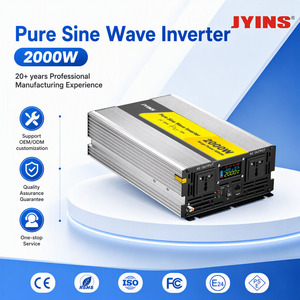
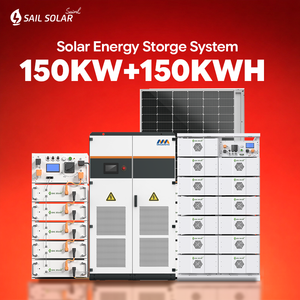
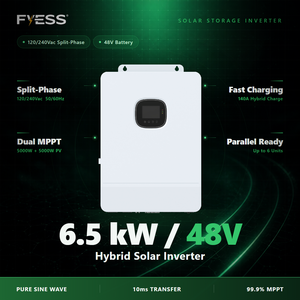
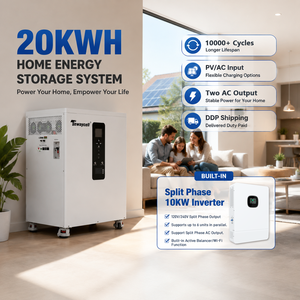
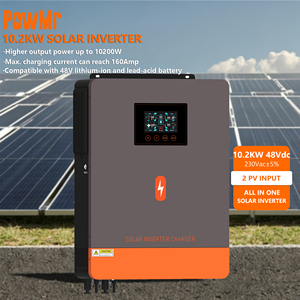
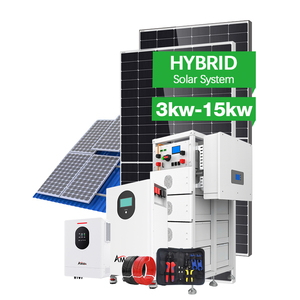
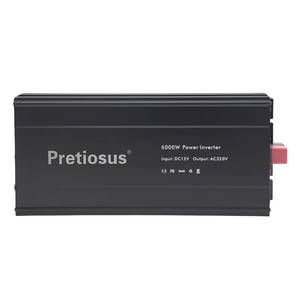
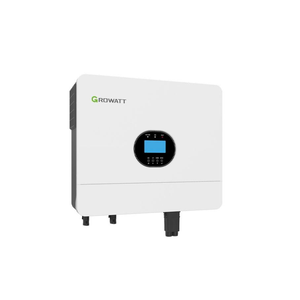
Combining heavy-duty engineering discipline with high-volume industrial output.
Engineered for mission-critical operations where failure is not an option. By eliminating optocouplers from feedback loops, utilizing ultra-conservative component derating, and deploying robust magnetics, our rectifiers and power modules target an operational life of up to 30 years in extreme industrial conditions.
Full-spectrum internal manufacturing. From PCB surface mounting and custom magnetics winding to vacuum encapsulation, automated burn-in testing, and final electrical verification—all processes take place under a unified quality management framework for complete production traceability.
Designed to survive severe industrial environments. We deliver fully potted, encapsulated assemblies and heavy-duty IP66 die-cast aluminum enclosures immune to conductive metallic dust, continuous vibration, high ambient heat, salt fog, and aggressive washdown procedures.
Factory Procurement Insight: Unlike standard commercial-grade power supply suppliers, our industrial rectifiers are semi-customized or built-to-spec from field-proven modular topologies. We adapt input voltage ranges, cooling dynamics, mechanical footprints, and output protections to fit your exact operational envelope without compromising design turnaround times.
Industrial rectifiers serve as the foundational backbone of global heavy infrastructure, powering everything from municipal traction systems, electro-chemical refining, and subsea robotics to telecom data hubs and utility-scale energy storage systems (ESS). As global energy markets transition toward electrification and higher energy densities, the demand for industrial AC-DC rectifiers and DC-DC converters has shifted from legacy Silicon-Controlled Rectifier (SCR) thyristor units to high-frequency switch-mode power supplies (SMPS) utilizing Wide Bandgap (WBG) semiconductors like Silicon Carbide (SiC) and Gallium Nitride (GaN).
Procurement directors and systems engineers facing heavy-duty applications must evaluate power equipment not merely on initial capital expenditure (CAPEX), but through the rigorous lens of Total Cost of Ownership (TCO), Mean Time Between Failures (MTBF), thermal efficiency metrics, and harmonic pollution (THDi) compliance. This document outlines the technological trajectories, procurement dynamics, and engineering design considerations governing high-power industrial rectifiers over the next decade.
The industrial rectification landscape is undergoing a massive architectural shift driven by power electronics innovations. Procurement strategies must align with these four key technological developments:
Understanding the operational trade-offs between traditional thyristor-based SCR rectifiers and modern switch-mode platforms is vital for procurement validation:
| Performance Parameter | Legacy SCR / Thyristor Rectifier | Modern Switch-Mode (SMPS) Rectifier | Next-Gen SiC High-Frequency Rectifier |
|---|---|---|---|
| Typical Conversion Efficiency | 82% – 88% | 92% – 95% | 97.5% – 98.8% |
| Power Factor (PF) | 0.70 – 0.85 (Varies with load) | > 0.95 (Active PFC) | > 0.99 (Active PFC) |
| Total Harmonic Distortion (THDi) | 28% – 35% (High harmonic strain) | < 5% | < 2.5% |
| Output DC Ripple | High (Requires large LC filters) | Low (< 1% RMS) | Ultra-Low (< 0.2% RMS) |
| Power Density (W/in³) | Low (Heavy, bulky magnetics) | Medium (Standard 19" Rack) | Ultra-High (Compact Chassis) |
| Cooling Requirements | Forced Air / Heavy Water Cooled | Forced Air / Convection Options | Pure Convection / Conduction / IP66 Sealed |
Purchasing agents sourcing industrial rectifiers, DC power conversion modules, and enterprise battery chargers from China wholesale manufacturers must account for evolving global procurement dynamics:
Addressing key technical and sourcing questions for design engineers and buyers.
Our industrial switch-mode rectifiers, AC-DC power supplies, and battery chargers span from single-module output ratings of 50W to over 10kW per unit. For high-capacity installations (substations, electro-chemical, or green energy generation), modular units can be parallel-connected with active load sharing inside 19-inch or 23-inch rack enclosures to scale systems into the hundreds of kilowatts range. Input ranges accommodate universal single-phase (95–264Vac), three-phase industrial mains (380V/400V/480V/600Vac), and high-voltage DC input source rails.
Long operational lifespans are achieved through rigorous component derating (operating switching elements and capacitors well below their maximum thermal and voltage ratings), utilizing long-life industrial electrolytic or film capacitors, and completely eliminating optocouplers from feedback loops where temperature degradation causes drift over time. Furthermore, we offer conduction-cooled baseplates, convection-cooled heatsink assemblies, and fully encapsulated IP66 die-cast aluminum chassis that isolate electronics from dust, moisture, and chemical corrosion.
Yes. Custom and semi-custom engineering is our primary capability. We adapt our field-proven topology platforms to meet specific input/output voltage requirements, non-standard mechanical mounting envelopes, specialized connector types, custom shock and vibration profiles, dynamic transient load responses, and strict ripple or EMI requirements without requiring excessive engineering lead times.
Standard convection-cooled rectifiers rely on natural ambient airflow through vented enclosures to dissipate heat, making them suitable for indoor, dust-controlled industrial cabinets. IP66-rated rectifiers are housed inside fully sealed die-cast aluminum or heavy-gauge enclosures that prevent any ingress of dust, oil spray, salt fog, insects, or high-pressure water jets. Heat is extracted via external cooling fins or conduction baseplates, allowing operation in washdown environments, mines, or outdoor substations.
Every industrial rectifier module manufactured in our facility undergoes multi-stage quality checks. This includes Automated Optical Inspection (AOI) of PCB assemblies, high-potential (Hi-Pot) galvanic isolation testing, full automated burn-in under thermal load, and full electrical parameter testing (ripple, regulation, line transient response, thermal image validation) prior to dispatch. Complete serial-number level traceability documentation is preserved for every unit built.
To expedite the engineering review process, buyers should provide: (1) Input voltage range and frequency, (2) Nominal output voltage, current, and regulation tolerances, (3) Preferred cooling method (convection, forced air, cold plate, IP66 sealed), (4) Physical space limits or rack height constraints, (5) Operating ambient temperature range, (6) Applicable industry standards (e.g., railway, marine, utility compliance), and (7) Estimated initial sample and annual production volumes.
Speak directly with our senior power conversion engineering team to discuss technical specifications, evaluate prototype timelines, or request custom factory pricing.
Send an Inquiry