1. Technical Executive Overview: Sourcing High-Reliability DC-DC Converters from China Wholesale Manufacturers
In modern power electronics design, the demand for high-efficiency, high-power-density DC-DC converters and power conversion systems has experienced explosive growth. Global OEM engineering teams, system integrators, and procurement officers searching for a trusted China wholesale DC-DC converter manufacturer & suppliers require far more than off-the-shelf commodities. They need rigorous design validation, superior Mean Time Between Failures (MTBF), adherence to international regulatory certifications (such as EN 50155 for railway, IEC/EN 62368-1 for IT/industrial equipment, and UL 1741 for energy storage systems), and bespoke OEM/ODM adaptation capabilities.
Directing electrical energy effectively across variable direct-current busses—whether stepping down 800V EV traction battery voltages to 24V auxiliary power, stepping up 12V automotive battery supplies to 48V telecommunication rails, or managing wide-range inputs in rugged mining equipment—demands top-tier switch-mode power supply (SMPS) topologies. China's manufacturing ecosystem, integrated with global design parameters developed over four decades of OEM experience, provides an unparalleled balance of manufacturing scale, component traceability, and cost efficiency.
Engineering Insight: Choosing an industrial DC-DC converter supplier requires evaluating not just rated output wattage, but transient surge voltage handling, zero-optocoupler feedback loop topologies, thermal derating curves, and potting encapsulation quality.
1.1 Understanding Semantic Intent in Industrial DC-DC Conversion Sourcing
When searching for wholesale DC-DC power conversion partners, engineering intent breaks down into four essential evaluation vectors:
- Electrical Isolation Requirements: Determining whether galvanically isolated topologies (flyback, forward, push-pull, half-bridge, LLC resonant) are necessary to safeguard delicate logic controllers from high-voltage DC transients, or if non-isolated buck/boost topologies suffice for compact board-level regulation.
- Thermal Management Architecture: Evaluating pure convection cooling (fin-heatsink HSA designs), conduction plate cooling against customer chassis, forced-air cooling with heavy-duty replaceable filters, or fully encapsulated IP66/IP67 die-cast enclosures designed for subsea, underground mining, or marine washdown environments.
- Transient Resilience & Wide Input Ratios: Standard commercial units fail when exposed to continuous wide-range input fluctuations (e.g., 4:1 or 10:1 ultra-wide input ranges). Industrial-grade manufacturers build active surge suppression circuits to absorb EN 50155 railway surges (up to 1.4x continuous input voltage) without degrading internal switching FETs.
- Component Derating Philosophy: Industrial power converters targeting a 30-year operational life eliminate high-failure optocouplers from feedback loops and conservatively derate electrolytic capacitors, planar magnetics, and switching MOSFETs/IGBTs by at least 30-50% below maximum semiconductor ratings.
Wide Bandgap Semiconductor Integration
Incorporating Gallium Nitride (GaN) and Silicon Carbide (SiC) power switches to achieve ultra-high switching frequencies, drastically reducing planar magnetics footprint while achieving peak conversion efficiencies above 98.5%.
Harsh Environment IP66 & Potting
Fully encapsulated thermally conductive polyurethane and silicone compounds inside rugged die-cast aluminum enclosures deliver immune performance against salt spray, high humidity, shock, vibration, and conductive dust.
80,000 Sq. Ft. Integrated Production
Complete control over the manufacturing lifecycle: automated SMT line placement, custom transformer winding, conformal coating, environmental chamber stress testing, and 100% full-load burn-in testing under one roof.
2. High-Density Power Conversion Topologies: Technical Comparison
To assist power design engineers in shortlisting the appropriate DC-DC converter platform from China wholesale suppliers, the table below outlines core topologies, typical voltage ranges, conversion efficiencies, and targeted industrial applications.
| Converter Topology |
Typical Input Range |
Peak Efficiency |
Galvanic Isolation |
Primary Industrial Applications |
| Isolated LLC Resonant |
36Vdc – 800Vdc (Wide 4:1) |
96.5% – 98.5% |
Yes (Up to 4300Vdc) |
EV Charging Infrastructure, Battery Storage (ESS), Railway Auxiliary |
| Phase-Shifted Full Bridge |
200Vdc – 1000Vdc |
94.0% – 97.2% |
Yes (3000Vrms) |
Commercial Solar Systems, Industrial DC Microgrids, Telecommunication Substation |
| Step-Up Boost (Synchronous) |
10.5Vdc – 30Vdc (12V/24V) |
95.0% – 97.8% |
No (Common Ground) |
Automotive Fleet Auxiliary, Battery Hold-up Charging, Solar Boost Modules |
| Fully Encapsulated Buck-Boost |
9Vdc – 150Vdc (Ultra-Wide) |
92.0% – 95.5% |
Optional Isolation |
Underground Mining Vehicles, ROV Subsea Equipment, Heavy Industrial Automation |
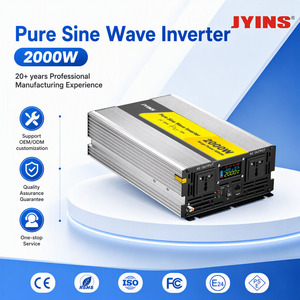
| Pure Sine Wave Inverter/Charger |
12V/24V/48V/51.2V DC |
93.0% – 96.0% |
Yes (Transformer Isolated) |
Off-Grid Commercial Storage, Home Energy ESS, Mobile Command Post UPS |
3. Strategic B2B Procurement Trends in China DC-DC Converter Manufacturing (2025–2030)
As global energy infrastructure transitions toward decarbonization, electrification, and microgrid autonomy, the requirements placed on DC-DC converter suppliers are rapidly evolving. Procurement directors must anticipate several macro-technological trends when finalizing long-term wholesale supply contracts:
3.1 Migration to Bi-Directional DC-DC Conversion Architecture
Traditional unidirectional power flow (converting DC source to DC load) is increasingly being superseded by bi-directional converter topologies. In Electric Vehicle (EV) vehicle-to-grid (V2G) systems, battery energy storage systems (BESS), and regenerative braking recovery in rail transportation, converters must dynamically shift power direction in microseconds while maintaining tight voltage regulation. China manufacturers leading in bi-directional DSP (Digital Signal Processor) control algorithms offer significant technological advantages to B2B buyers.
3.2 Adoption of Wide-Bandgap (WBG) Semiconductors (GaN & SiC)
Silicon-based MOSFETs are reaching theoretical thermal and switching speed limitations. The wholesale power supply market is rapidly adopting Silicon Carbide (SiC) devices for high-voltage applications (>400V) and Gallium Nitride (GaN) devices for lower-voltage, high-frequency applications (<200V). Sourcing converters equipped with WBG devices translates to:
- Up to 50% Reduction in System Volume: High switching frequencies (200kHz – 1MHz) permit drastically smaller inductors, transformers, and filter capacitors.
- Substantial Thermal Savings: Reduced switching losses lower cooling demands, permitting fanless convection operation in ambient environments reaching +70°C.
- Total Cost of Ownership (TCO) Optimization: Higher initial semiconductor costs are offset by reduced enclosure size, eliminated fans, and lower shipping weights.
3.3 Digital Power Management & Telemetry (PMBus / CANbus Integration)
Modern industrial sites require continuous health monitoring to achieve zero unscheduled downtime. Wholesale DC-DC converters are now increasingly integrated with digital microcontrollers capable of transmitting real-time operational telemetry over PMBus, CANbus, or Modbus protocols. Purchasing managers should prioritize suppliers offering programmable output voltages, dynamic current limits, temperature logging, and predictive failure diagnostics integrated directly into the converter control board.
Information Gain Note for OEM Engineering Procurement
When auditing a wholesale manufacturer's facility in China, request detailed documentation regarding their magnetics manufacturing. Custom transformer winding with triple-insulated Litz wire, automated vacuum pressure impregnation (VPI), and automated optical inspection (AOI) are key indicators of high-grade industrial reliability versus cheap commercial-grade assembly.
4. Engineering & Manufacturing Capabilities of Our Partner Operations
Building upon a rich design pedigree established since 1982, our specialized manufacturing ecosystem combines North American/European quality control protocols with the competitive scale of Chinese manufacturing facilities. We specialize in custom, semi-custom, and standard heavy-duty power conversion platforms.
Custom & Semi-Custom Topology Flexibility
Rather than forcing standard catalogue dimensions onto your design, our engineering team modifies parent platforms to match exact input/output rails, mechanical envelopes, connector interfaces, and thermal mounting boundaries.
Severe Environment Engineering
Units are engineered to withstand continuous operating temperatures ranging from -40°C to +70°C without forced-air derating. Fully encapsulated IP66 die-cast aluminum units survive complete submersion, salt spray, and extreme mechanical shock.
Zero-Optocoupler Long-Life Topology
By eliminating optically coupled feedback components—a primary failure point in conventional power supplies under elevated temperatures—our designs target an operating service life of up to 30 years in continuous industrial operation.
Buyer Resource & Insights
Frequently Asked Questions (FAQ) for B2B Procurement
Comprehensive technical and commercial answers for purchasing managers, electrical engineers, and global distributors.
What power rating and input voltage ranges do your DC-DC converters cover?
Our manufacturing capabilities cover single DC-DC converter units from 5 Watts to over 10kW, with parallel-connection capabilities for multi-kilowatt power racks up to 50kW+. Input voltage ranges include standard industrial DC rails (12V, 24V, 48V, 72V, 110V/125V, 250Vdc) as well as ultra-wide 4:1 and 10:1 input ranges engineered specifically for railway and renewable energy storage applications.
Can you engineer a completely custom DC-DC converter for non-standard mechanical spaces?
Yes. Custom and semi-custom power conversion is our core specialty. Our engineering team routinely adapts proven topology platforms to fit unique chassis profiles, custom Eurocard plug-in formats, 19-inch/23-inch rack mounts, or low-profile IP66 sealed die-cast enclosures to meet strict space constraints.
What design methods ensure a 30-year design life target in industrial power supplies?
To achieve an extended operating life up to 30 years, our engineering team eliminates optocouplers from the feedback control loop, utilizes conservative component electrical and thermal derating (minimum 30-50% safety margins), selects 105°C long-life industrial electrolytic or ceramic capacitors, and employs heavy-duty heatsink assemblies for convection or conduction cooling.
Are IP66-rated encapsulated DC-DC converters available for harsh environments?
Yes. We supply fully encapsulated IP66-rated power solutions built inside rugged die-cast aluminum enclosures. These units are completely impervious to high-pressure water jets, conductive metallic dust, oil fumes, salt spray, sand, and insect ingress, making them ideal for mining, marine, subsea ROVs, and outdoor infrastructure installations.
What compliance and safety standards do your wholesale power converters satisfy?
Our products are engineered to comply with major global standards, including EN 50155 / EN 50121-3-2 (Railway Applications), IEC/EN 62368-1 (Audio/Video, Information & Communication Technology Equipment), UL 1741 & IEEE 1547 (Inverters and Interconnected Energy Resources), MIL-STD-810G (Vibration/Shock), and CE/FCC Class A or B EMI/EMC radiation limits.
How do you handle sample prototyping, Minimum Order Quantities (MOQ), and volume production lead times?
We support both low-volume specialized OEM runs and high-volume wholesale production. Prototyping lead times typically range from 3 to 5 weeks depending on custom mechanical requirements. Standard production batch lead times are 6 to 8 weeks. We offer flexible MOQs tailored to industrial OEM project phases.
Do your pure sine wave inverters support combined DC-DC charging and UPS functions?
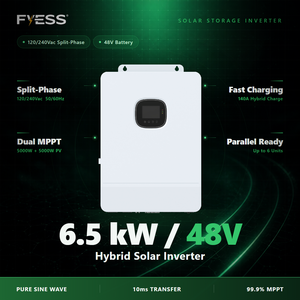
Yes. Our advanced DC-AC pure sine wave inverter systems (ranging from 300W to 250kW hybrid systems) feature integrated multi-stage battery chargers and ultra-fast automatic transfer switches (ATS) for true uninterruptible power supply (UPS) functionality across residential, commercial, and telecommunication deployments.