
Engineering Support +1-613-836-3511
Discover our engineering-grade power conversion equipment designed for harsh environments, off-grid systems, and commercial energy management.
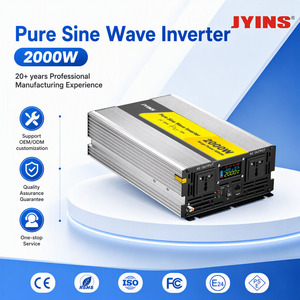
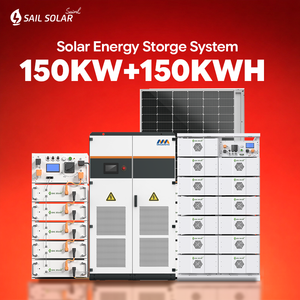
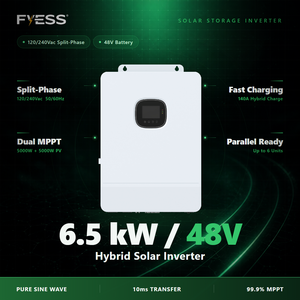
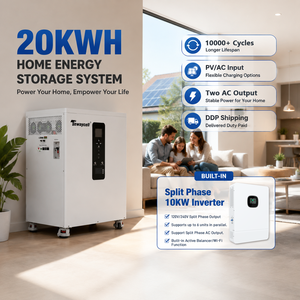
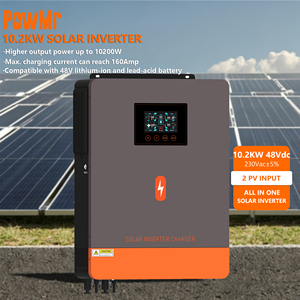
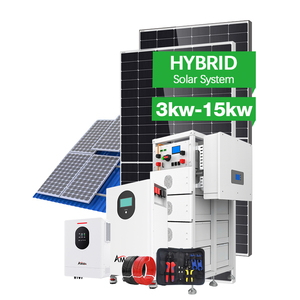
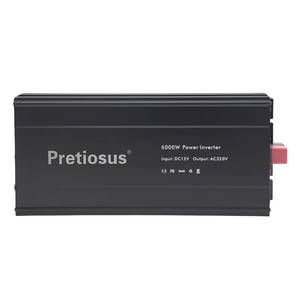
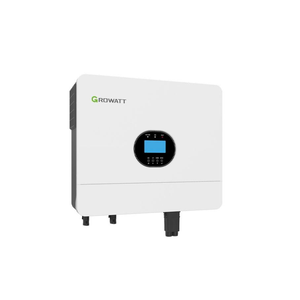
In modern electrical engineering, the demand for high-density, ultra-reliable DC-DC step-up (boost) converters, switch-mode power supplies, and pure sine wave hybrid inverters has accelerated rapidly. Operating across industrial automation, utility scale power grids, railway infrastructure, subsea exploration, and commercial solar-plus-storage microgrids requires power electronics designed to survive extraordinary electrical and environmental stress.
As a leading China step-up converter factory and global exporter, our OEM manufacturing framework bridges the gap between cost-optimized volume production and stringent industrial quality standards. By integrating field-proven circuit topologies—such as Zero-Voltage Switching (ZVS), active power factor correction (PFC), and Wide Bandgap (WBG) silicon carbide (SiC) MOSFETs—our custom and semi-custom power modules deliver sustained efficiency up to 98.8% across extreme operating temperatures (-40°C to +85°C).
Elimination of optocouplers in feedback loops, heavy component derating, conformal coating, and full potting ensure up to 30-year operational lifespans under intense shock and vibration.
Wide-range input voltage envelopes (e.g., 10.5V–16V up to 48V boost; 24V/48V/110V rails step-up to high voltage DC buses) with sub-millisecond dynamic transient response.
IP66-rated die-cast aluminum enclosures and fan-free conduction heat-sink assemblies designed to withstand salt spray, metallic dust, water jets, and subsea pressures.
A comprehensive comparison of core power conversion architectures custom-manufactured in our China OEM facilities for global distribution.
| Converter / Inverter Architecture | Typical Input Rails | Output Voltage Envelopes | Thermal & Cooling Options | Primary Industrial Applications |
|---|---|---|---|---|
| Non-Isolated DC-DC Boost Converters | 12V, 24V, 48Vdc (Wide 2:1 / 4:1) | 24V, 48V, 125V, 250Vdc Regulated | Convection, Heatsink Plate, Fan-Cooled | Heavy Machinery, Battery Voltage Boosting, Telecom Rails |
| Galvanically Isolated Step-Up Converters | 110V, 125V, 250Vdc Substation Feeders | 300V to 800V High Voltage DC (HVDC) | Potting Encapsulated, IP66 Die-Cast | Railway Rolling Stock, Subsea ROVs, Mining Vehicles |
| Hybrid Split-Phase Solar Inverters | 48Vdc Battery / 120V–500V PV Input | 120V/240V AC Split-Phase Pure Sine Wave | Intelligent Silent Forced Air, Conduction | Residential ESS, Off-Grid Commercial Microgrids |
| Commercial Megawatt Peak-Cut Systems | 300V–850V Wide Lithium Battery Banks | 400V/480V 3-Phase Grid Synchronized | Liquid Cooling / Closed Loop Heat Exchanger | Industrial Peak Shaving, Microgrid Battery Energy Storage |
The global power conversion industry is undergoing a structural transition from legacy Silicon (Si) IGBTs to Silicon Carbide (SiC) and Gallium Nitride (GaN) power transistors. WBG semiconductors allow step-up converters to operate at switching frequencies exceeding 500 kHz while cutting switching losses by over 60%. For international procurement officers, sourcing SiC-based boost converters from top Chinese factories translates directly to reduced magnetics size, lighter chassis envelopes, and elevated efficiency curves at partial load.
Industrial facility electrification and renewable integration are rapidly migrating from conventional AC distribution to 380V/800V DC microgrids. Step-up converters act as the critical power node, stepping up low-voltage battery banks (24V/48V/51.2V) to high-voltage DC buses. Future-proof procurement strategies prioritize modular Eurocard 19-inch rack-mount architectures that allow N+1 hot-swappable redundancy and dynamic load balancing.
Modern off-grid and hybrid inverters are evolving beyond simple unidirectional energy transformation. The rapid adoption of Vehicle-to-Grid (V2G) and commercial Energy Storage Systems (ESS) demands bidirectional step-up/step-down (Buck-Boost) topologies capable of shifting between charge and discharge states within 4 milliseconds, integrated with advanced Modbus RTU, CAN-Bus, and IoT cloud telemetry protocols.
Sourcing power conversion systems globally requires absolute confidence in supplier quality management, component origin, and long-term technical support. Our integrated manufacturing eco-system combines an 80,000 sq ft state-of-the-art facility with strict quality control regimes derived from four decades of industrial power design experience.
We wind our own planar transformers, high-frequency inductors, and manufacture custom enclosures in-house. This internal control guarantees consistent permeability, minimal leakage inductance, and zero reliance on vulnerable component supply chains.
Every converter, inverter, and power supply undergoes rigorous thermal chamber burn-in at maximum rated load and elevated ambient temperatures. Electrical isolation testing (Hi-Pot) up to 4300Vdc is standard across all isolated product lines.
We offer complete DDP (Delivered Duty Paid) shipping solutions across North America, Europe, Southeast Asia, and the Middle East, managing customs clearance, tariff compliance, and overseas warehouse storage directly.
Consult directly with our power electronics application engineers to review your input/output rails, thermal envelope, ingress specifications, and annual manufacturing volume requirements.