
Engineering Support +1-613-836-3511
Engineered for extreme oceanographic conditions, ROV tethered power distribution, subsea control modules (SCM), and harsh offshore energy storage infrastructure.
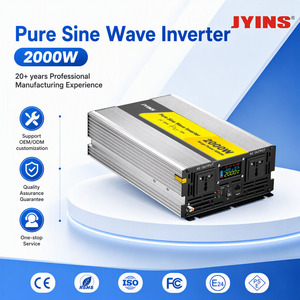
Ultra-low THD output designed for marine surface vessels, offshore rigs, and auxiliary subsea telemetry equipment. Features industrial-grade galvanically isolated DC-AC topology.
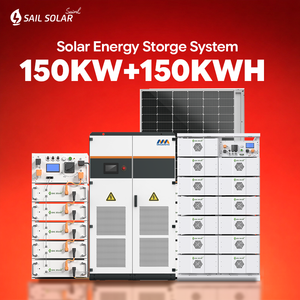
High-capacity power conversion system engineered for offshore platform microgrids, high-voltage battery storage, and dynamic peak-shaving applications under continuous heavy load.
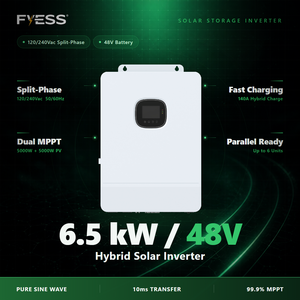
Optimized for marine research stations and floating production storage (FPSO) units. Delivers dual 120V/240V split-phase power with high surge immunity and remote CANbus monitoring.
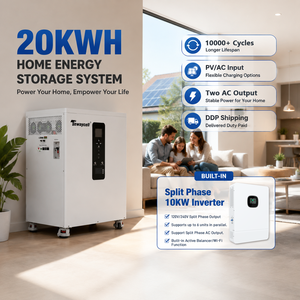
Integrated mobile subsea exploration power pack. Combines built-in split-phase power conversion with high-density lithium storage inside a vibration-damped, shock-resistant chassis.
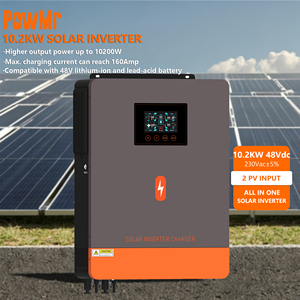
High-power density 48Vdc to 220V/230Vac inverter for subsea umbilical supply and heavy offshore actuators. Features wide input range, transient suppression, and thermal derating protection.
Designed for quiet acoustic hydro-survey vessels and sensitive offshore equipment. Low magnetic signature, fanless conduction cooling options, and high energy conversion efficiency.
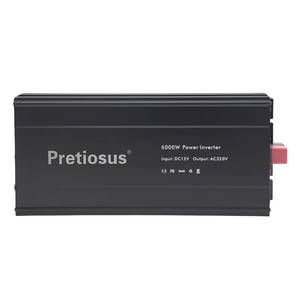
Seamless transfer uninterruptible power supply (UPS) for critical subsea telemetry, control room electronics, and emergency life-support backplane systems in maritime vessels.
Robust 51.2Vdc input system optimized for continuous subsea battery charging and underwater equipment power distribution. Built with derated long-life power components.
Operating electrical equipment in subsea environments—ranging from shallow continental shelf installations down to abyssal ocean depths exceeding 3,000 meters—demands power electronics engineered with uncompromising reliability. As a globally recognized original equipment manufacturer (OEM) operating from an expansive 80,000 sq ft purpose-built facility, our engineering division combines decades of switch-mode power conversion expertise with cutting-edge subsea ruggedization technologies.
Our subsea DC-DC converters and AC power supplies utilize silicone gel, epoxy resin, or dielectric oil pressure-compensated enclosures. This eliminates internal voids and air bubbles, enabling continuous operation under 30 MPa (300 bar) hydrostatic strain.
To guarantee an operational life of up to 30 years in non-accessible subsea installations, our long-life designs replace optocouplers (which suffer from CTR degradation) with magnetic feedback transformers and heavily derated industrial semiconductors.
Housed in hard-anodized marine-grade aluminium or 316L stainless steel enclosures, our units resist high-pressure salt spray, bio-fouling, metallic conductive dust, and harsh ocean thermal cycling (-40°C to +70°C).
Every subsea power unit manufactured in our facility undergoes rigorous verification protocol: thermal shock cycling, hydrostatic pressure immersion testing, burn-in under full electrical load, and 100% automated magnetic characterization. This end-to-end quality control makes our products the preferred choice for marine system integrators, ROV/AUV manufacturers, subsea oil & gas operators, and offshore wind developers worldwide.
The subsea sector is undergoing a massive transformation driven by deep-water field electrification, autonomous ocean survey systems, and offshore wind power integration. Understanding where subsea power supply technology is heading allows procurement directors and systems engineers to future-proof their supply chains and capital expenditure.
As Remotely Operated Vehicles (ROVs) and ocean-floor processing units operate at deeper depths and over longer umbilical cables, copper losses present a major constraint. Future subsea power procurement is leaning heavily toward High-Voltage DC (HVDC) step-down architectures (1000V–3000V DC input to 24V/48V DC load output). High-voltage transmission reduces cable cross-sectional area, minimizing umbilical drag and enabling tethered systems to reach deep-sea trenches without power drop-off.
Traditional subsea electronics rely on heavy 1-atmosphere steel or titanium pressure vessels to protect standard power supplies. However, pressure vessels add weight, cost, and thermal dissipation challenges. Procurement trends show rapid adoption of pressure-neutral power converters, where components are encased directly in dielectric fluids or specialized potting materials. This allows power units to shrink in size by up to 60% while tolerating ambient pressure at any ocean depth.
Subsea microgrids supplying subsea trees, wellhead pumps, and Autonomous Underwater Vehicle (AUV) docking stations require localized energy buffer systems. Modern subsea power exporters are integrating long-cycle LiFePO4 battery modules directly with smart hybrid inverters, providing localized load buffering, zero-break UPS backup, and renewable offshore energy integration.
Next-generation subsea power supplies are moving beyond passive conversion. Incorporating localized microcontrollers, advanced power units measure real-time ripple voltage, thermal gradients, isolation resistance, and component health. Diagnostic data is communicated via subsea Modbus, CANbus, or acoustic modems to surface operators, preventing catastrophic failure through predictive maintenance algorithms.
A technical side-by-side comparison illustrating why standard commercial power units cannot replace subsea-rated power systems.
| Design Parameter | Standard Commercial / Industrial | Marine Shipboard Grade | Subsea Deep-Water Grade |
|---|---|---|---|
| Ingress Protection | IP20 – IP44 (Ventilated) | IP65 – IP66 (Sealed / Gasketed) | IP68 / Submersible (300 Bar Pressure-Tolerant) |
| Cooling Method | Internal Air Fans | Convection / Heatsink Assembly | Conduction to Liquid / Pressure-Neutral Oil |
| Feedback Loop Topology | Standard Optocouplers | Derated Optocouplers | Optocoupler-Free Magnetic Feedback Transformer |
| Target Service Life | 5 – 7 Years | 10 – 15 Years | Up to 30 Years (Continuous Subsea Deployment) |
| Input Voltage Range | Narrow AC (110/220V) | Wide AC/DC (95-264V AC, 24-125V DC) | High-Voltage DC Umbilical (500V - 3000V DC) |
| Potting & Encapsulation | None or Partial Conformal Coating | Full Conformal Coating | Vacuum Dielectric Potting / Hydrostatic Gel |
Clear engineering insights to assist buyers, consulting engineers, and marine project managers during specification and supplier evaluation.
Leading Chinese OEMs utilize custom vacuum impregnation and pressure-neutral potting techniques. Electronics are encapsulated in solid-state dielectric compounds or housed in oil-filled, pressure-compensated chambers. This ensures internal and external pressures remain equalized, preventing mechanical component crushing even at depths exceeding 3,000 meters.
Yes. We specialize in semi-custom power conversion designs. Our engineering team modifies proven industrial circuit topologies—adjusting input/output voltage rails, adding high-voltage isolation, replacing fans with cold-plate conduction plates, and applying IP66/IP68 enclosures to fit custom subsea ROV payload envelopes.
Our subsea and marine power supplies are engineered in compliance with key international standards including ISO 13628-6 (Subsea Production Control Systems), IEC 60068 (Environmental Testing), DNVGL-CG-0339 (Environmental Test Specification for Electrical Equipment), and IEEE 1588 for precise synchronization across marine networks.
Because fans cannot operate inside sealed subsea enclosures, thermal dissipating is achieved via pure conduction cooling through heavy-duty aluminum baseplates, outer heatsink assembly fins, or direct liquid-to-chassis thermal interface paths. This fanless design completely removes mechanical moving parts, dramatically increasing MTBF.
To receive an accurate engineering proposal and technical quote, please provide: nominal input voltage range (e.g., 24Vdc, 110Vdc, or 1000Vdc umbilical), required output voltages and continuous/peak currents, deployment depth/pressure rating, thermal environment limits, dimensional constraints, and target environmental standards.
Standard semi-custom modifications typically require 4 to 6 weeks for engineering design and prototype fabrication. Volume manufacturing and fully customized subsea power systems generally ship within 8 to 12 weeks, supported by complete factory acceptance testing (FAT) documentation.
Whether you require pressure-neutral DC-DC converters for deep-water ROVs, high-voltage tether power systems, or ruggedized marine sine wave inverters, our engineering team is ready to review your exact specifications.