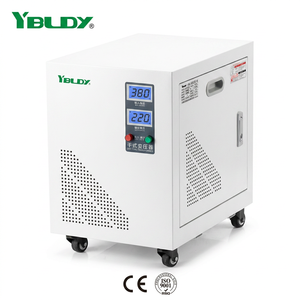
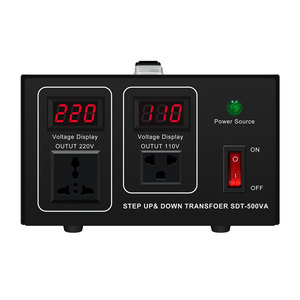
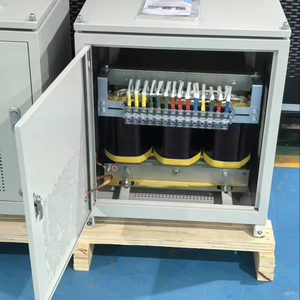
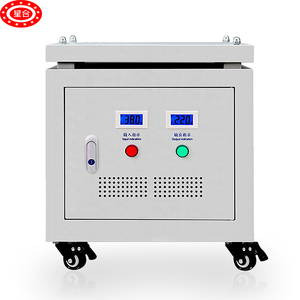
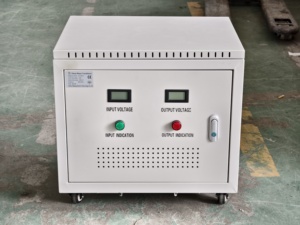
Step Up Transformer 240v To 600v 40kva 45kva 50kva 3 Phase Ac Dry Type Step Down Distribution Transformer 400v To 230v
Contact Us
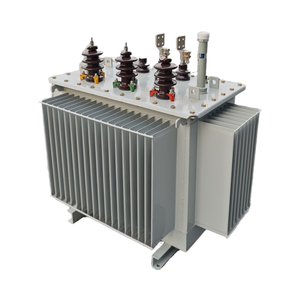
Three Phase Oil Immersed Transformer Step Up Step Down Electrical Power Transformer for Substation Use
Contact Us
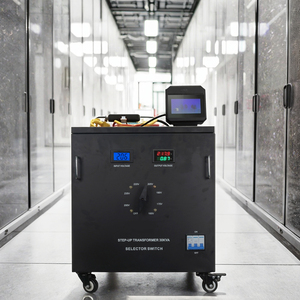
Wholesale Single-phase Transformer 20KVA Manually Adjust Voltage 110V 220V Step-up Step-down Transformer for Audio Adjuster
Contact Us
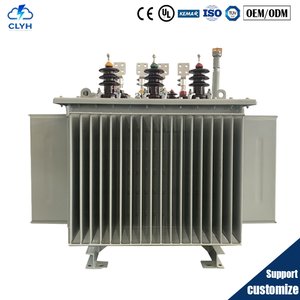
10kV 400V Step Down Distribution Transformer 100kVA Oil Immersed Three Phase Copper Winding for Rural Substation IEC CE 50Hz
Contact Us
SDT-500W 1000W 2000W 3000W Step Down Up Transformer 220v To 110v Or 100v To 220v Voltage Converter
Contact Us
50kVA Step Down/Up 3 Phase Dry Type Isolation Transformer 480V 220V 50/60Hz ISO CE Certified IEC60076 Standard
Contact Us
Step Up Step Down 3 Phase 1KVA 2KVA 3KVA 4KVA 5KVA 10KVA Isolation Transformer 110V To 380V 220V Voltage Transformer
Contact Us
5kva 10kva 15kva 20kva 30kva 50kva 60kva 100kva 150kva 600v 480v 440v 400v 380v 220v 208v 3 Phase Step up Step Down Transformer
Contact Us
Engineering Excellence in Step-Down Transformer Manufacturing
When selecting step-down transformers for utility substations, commercial distribution systems, or heavy industrial automation, engineering leadership demands complete clarity regarding core design topologies, insulation thresholds, and stray-loss prevention. As a premier China-based manufacturer, our facility engineers step-down transformers capable of converting high transmission voltages (such as 10kV, 600V, or 480V) into precisely regulated load voltages (400V, 230V, 220V, or 110V) across varying duty cycles.
Modern electrical grids present severe challenges: harmonic distortions, high transient voltage surges, phase imbalances, and aggressive ambient environments. To mitigate these risks, our step-down power distribution transformers incorporate high-grade grain-oriented silicon steel cores (or optional amorphous alloy cores) paired with 100% electrolytic copper or high-conductivity aluminum windings.
Comparative Technology Matrix: Dry-Type vs. Oil-Immersed Step-Down Systems
| Design Parameter |
Dry-Type VPI / Cast Resin Transformer |
Oil-Immersed Substation Transformer |
| Typical Voltage Range |
Up to 35kV Primary / 110V-600V Secondary |
10kV up to 110kV Primary / 400V Distribution |
| Cooling Mechanism |
Air Natural (AN) / Air Forced (AF) |
ONAN (Oil Natural Air Natural) / ONAF |
| Insulation Class |
Class F (155°C) / Class H (180°C) |
Class A (Mineral Oil / Synthetic Ester) |
| Environmental Suitability |
Indoor commercial, cleanrooms, high-rise buildings |
Outdoor substations, heavy industrial plants, mining |
| Fire Safety Rating |
F1 Flame Retardant / Self-Extinguishing |
Requires oil catch basins & fire suppression |
| Maintenance Requirement |
Minimal (dust inspection & connection torque checks) |
Periodic DGA (Dissolved Gas Analysis) & oil testing |
By leveraging advanced Vacuum Pressure Impregnation (VPI) technologies and precision automated coil winding machines, our step-down transformers achieve exceptional mechanical strength during external short-circuit events while maintaining ultra-low partial discharge levels (< 10 pC).
Future Procurement Trends in Industrial Step-Down Transformers
The global energy landscape is undergoing a structural shift driven by decarbonization, grid edge integration, and the rapid deployment of high-power industrial automation. Strategic procurement teams are moving beyond initial Capital Expenditure (CapEx) metrics to prioritize total life-cycle cost, energy efficiency standards, and dynamic adaptability.
1. Total Cost of Ownership (TCO) & Eco-Design Directives
Traditional procurement favored low initial purchase prices. However, operating a step-down transformer continuously for 20 to 30 years means that no-load losses (core losses) and load losses (copper losses) dominate total expenditure. Global procurement directors are now mandating compliance with strict eco-design standards, such as Tier 2 EU Efficiency Regulations and IEEE C57.12 standards, demanding loss reductions of up to 20% compared to legacy installations.
2. Demand for Multi-Tap & Dual-Voltage Flexibility
International industrial projects frequently demand machinery relocation across regions with differing supply voltages (e.g., 480V in North America vs. 400V/380V in Europe and Asia). Contemporary step-down transformers feature multi-tap primary windings (e.g., ±2.5%, ±5% off-load tap changers) and dual secondary outputs (220V/110V), allowing global OEMs to standardize their panel builds while adapting to local power conditions seamlessley.
3. Integration of Smart Monitoring & IoT Sensors
Industrial transformer procurement in 2025 and beyond heavily emphasizes predictive maintenance capabilities. Step-down units destined for critical infrastructure now regularly feature integrated PT100 temperature sensors, RS485 Modbus communications, and real-time vibration analytics to monitor transformer health continuously, eliminating unscheduled downtime.
Key Industry & Technological Development Trends
Step-down transformer engineering is no longer static. Emerging material sciences and manufacturing processes are yielding unprecedented power densities, superior thermal management, and enhanced environmental protection.
- High-Frequency & Hybrid Solid-State Transformers (SST): Integration of wide-bandgap semiconductors with traditional magnetic cores allows for compact hybrid voltage regulation in renewable microgrids.
- Amorphous Metal Cores: Replacing silicon steel with amorphous alloys drops no-load core losses by up to 70-80%, dramatically cutting standby energy consumption in low-duty-cycle industrial operations.
- Environmentally Friendly Dielectric Liquids: Transitioning from mineral oil to high-fire-point natural and synthetic esters enhances fire safety while ensuring 100% biodegradability in sensitive ecosystems.
- K-Factor Rated Harmonic Mitigation Winding: Modern non-linear loads (such as variable frequency drives, UPS systems, and LED drivers) induce high harmonic currents. Step-down transformers designed with specialized neutral conductor sizing (200% rated) and electrostatic shielding comfortably handle K-13 and K-20 harmonic profiles without overheating.
Why Partner with Our China Manufacturing Operations?
As a leading Chinese OEM/ODM transformer manufacturer, our facility combines state-of-the-art automated manufacturing with rigorous international quality assurance protocols. We specialize in custom-engineered magnetic solutions tailored to exact client specifications, backed by decades of proven field performance.
80,000+ m²
Advanced Manufacturing Facility
100%
Full Factory Burn-in & Testing
ISO 9001/14001
Certified Quality Management
Custom OEM
Voltage, Vector Group & Enclosure
Uncompromising Quality Assurance & Testing Standards
Every step-down transformer engineered in our factory undergoes exhaustive routine, type, and special testing in accordance with IEC 60076 and ANSI/IEEE standards before dispatch:
- Winding Resistance & Voltage Ratio Measurements: Validates precise turn ratios across all tap positions.
- Applied Potential & Induced Overvoltage Withstand Tests: Verifies dielectric strength between windings and core ground.
- Partial Discharge Verification: Ensures dry-type cast resin units maintain insulation integrity under continuous operating stress.
- Temperature Rise Testing: Verifies thermal performance under full rated load conditions in dedicated environmental chambers.
- Enclosure Protection Verification: Custom enclosures rated from IP20 indoor up to IP66 NEMA 4X outdoor weather-proof builds.
Frequently Asked Questions (FAQ) for Step-Down Transformer Procurement
?
What is the primary technical difference between an Isolation Step-Down Transformer and an Auto-Transformer?
An Isolation Step-Down Transformer features galvanically isolated primary and secondary windings, completely separating the load circuit from the supply grid. This suppresses common-mode electrical noise, protects sensitive electronics, and enhances safety. An Auto-Transformer shares a single continuous winding for primary and secondary taps; while lighter, smaller, and more economical, it provides zero galvanic isolation between primary and secondary circuits.
?
How do I properly size a 3-phase step-down transformer for motor starting loads?
Electric motors draw a high inrush current (typically 5 to 7 times the full-load running current) during direct-on-line (DOL) starting. To prevent excessive voltage dip (which should remain under 10%), the step-down transformer kVA rating must account for this starting kVA. As a rule of thumb, multiply the running kVA by 1.5 to 2.5 depending on starting frequency, or utilize Soft Starters / Variable Frequency Drives (VFDs) to allow 1:1 nominal sizing.
?
Can a 50Hz rated step-down transformer be operated safely on a 60Hz power grid?
Yes, operating a 50Hz transformer on a 60Hz supply at the same voltage is generally safe and results in reduced magnetic flux density, lower core losses, and cooler operation. However, operating a 60Hz transformer on a 50Hz grid requires careful voltage derating (by ~16.7%) to prevent magnetic core saturation, high excitation current, and severe overheating.
?
What vector group connection (e.g., Dyn11 vs. Yyn0) should be specified for distribution systems?
The Dyn11 vector group (Delta primary, Star/Wye secondary with neutral shifted by +30°) is widely preferred for step-down distribution transformers because the primary delta connection traps 3rd harmonic currents, while the secondary star connection with neutral provides a stable 4-wire neutral reference capable of handling 100% unbalanced single-phase loads without causing neutral point displacement.
?
What thermal derating factors apply when installing dry-type transformers at high altitudes?
At altitudes exceeding 1,000 meters (3,300 feet) above sea level, the decreased air density reduces the cooling effectiveness of natural or forced air systems. Per IEC standards, for every 500 meters above 1,000m, the allowable temperature rise limit must be derated by approximately 2.5%, or the transformer's continuous kVA capacity must be derated accordingly.
?
What documentation and international standard certifications accompany export orders?
Every shipment includes comprehensive Factory Acceptance Test (FAT) reports, dimensional outline drawings, terminal connection schematics, and operating/maintenance manuals. Full certification compliance includes CE, IEC 60076, ISO 9001, ISO 14001, and UL/CSA insulation system compliances upon engineering request.