Engineering Support +1-613-836-3511
Explore our core OEM product lines engineered for heavy-duty industrial, commercial peak-shaving, off-grid storage, and microgrid infrastructure applications.
The global energy landscape is undergoing a paradigm shift towards ultra-high efficiency, high power density, and resilient electrification systems. B2B buyers, procurement executives, and system integration engineers seeking China Best Fast Charger Manufacturers & Factory partners require far more than off-the-shelf consumer adapters. Demanding applications—ranging from commercial EV fleets, heavy-duty mining machinery, marine vessels, and rail transport to high-capacity battery energy storage systems (BESS)—demand power conversion topologies engineered for rugged thermal endurance, low total harmonic distortion (THD), zero-downtime N+1 redundancy, and long operating lifetimes.
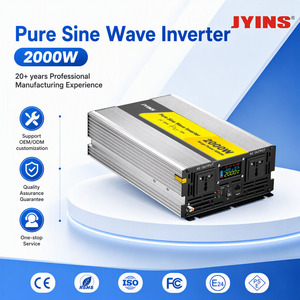
As a global leader in heavy-duty switch-mode power supply design and manufacturing, our engineering philosophy blends decades of North American ruggedization methodologies (targeting service lifetimes up to 30 years) with China's ultra-scalable high-tech power electronic manufacturing ecosystem. Operating out of advanced, quality-certified production hubs spanning over 80,000 square feet, our factories deliver fully custom, semi-custom, and standardized AC-DC chargers, DC-DC fast charging converters, pure sine wave inverters, and hybrid energy storage power conversion systems (PCS).
Modern fast charging technology relies heavily on advanced power topologies. By replacing legacy silicon switches with Wide Bandgap (WBG) semiconductors—specifically Silicon Carbide (SiC) MOSFETs and Gallium Nitride (GaN) high-electron-mobility transistors—our latest generation of industrial fast chargers achieves conversion efficiencies surpassing 98.4%. This drastic reduction in internal switching losses allows for compact, fan-free conduction/convection-cooled footprints or fully sealed IP66 die-cast enclosures built for harsh, dusty, or washdown industrial operations.
Combining proprietary topologies, rigorous component derating, and vertical in-house manufacturing control.
We do not lock buyers into static catalogs. Our engineering team modifies proven switch-mode platforms to match non-standard DC rails (12V, 24V, 48V, 72V, 110V, 250V, up to 800V DC) and AC grid inputs (95V–264V universal, 120V/240V split-phase, or 3-phase 400V/600V industrial grids).
For washdown environments, subsea applications, surface/underground mining, and marine installations, we supply fully encapsulated assemblies and IP66-rated die-cast aluminium enclosures immune to metallic dust, salt spray, sand, oil, and moisture ingress.
To eliminate the single most common failure point in conventional power supplies—optical isolation decay over time—our long-life design series removes optocouplers from feedback loops, utilizing magnetic feedback and conservative component derating to target a 30-year operational lifecycle.
From automated SMT placement and transformer coil winding to vacuum potting, burn-in chamber testing, and final automated electrical characterization, all production processes take place in-house. This centralized control guarantees component traceability, rapid ECO implementation, and consistent batch-to-batch build quality.
Our fast chargers integrate active Power Factor Correction (PFC > 0.98) to minimize reactive power draw, meet stringent harmonic limits (IEC 61000-3-2), and preserve utility grid integrity during high-wattage fast-charging sequences.
Procurement teams navigating the global transition towards electrification must account for rapid technological evolution. Sourcing fast chargers requires looking beyond current system requirements to ensure capital equipment remains compatible with next-generation grid standards, battery chemistries, and operational demands. Below are the macro-trends defining industrial power procurement over the next decade:
Commercial fleets, heavy EV machinery, and grid-scale ESS are rapidly migrating from 400V architectures to 800V and 1000V DC bus standards. High-voltage architecture reduces current amperage for equivalent power delivery, allowing for thinner interconnect cabling, lower conductive copper thermal losses ($I^2R$), and substantially reduced charging times. Factory sourcing must prioritize suppliers capable of delivering wide DC voltage range converters with high galvanic isolation ratings (minimum 3kVAC to 4kVAC insulation strength).
Fast chargers are transitioning from unidirectional power receivers to dynamic bidirectional energy hubs. Vehicle-to-Grid (V2G) and Vehicle-to-Everything (V2X) capabilities enable mobile battery fleets and stationary energy storage systems to inject stored energy back into microgrids during peak demand hours. OEMs and industrial buyers are increasingly specifying bidirectional DC-DC rectifiers and active front-end (AFE) inverters capable of seamless four-quadrant operation.
In critical infrastructure—such as telecom stations, hospital backup power, subsea ROV power units, and automated mining fleets—system failure results in catastrophic downtime costs. Modern procurement specifications demand modular sub-rack systems (such as 19-inch Eurocard form factors) configured in N+1 or N+2 hot-swappable arrays. If an individual 3kW or 10kW charging module experiences a fault, adjacent modules automatically scale current draw to maintain load continuity while technical staff replace the faulty unit without interrupting power delivery.
As power densities increase beyond 1kW per kilogram, traditional fan forced-air cooling faces severe physical limitations—especially when deployed in high-ambient, dusty, or corrosive environments where cooling fans clog and fail. High-end procurement trends favor closed-loop liquid-cooled cold plate designs or heavy-duty convection/conduction heatsink-assembly structures that eliminate moving mechanical parts completely.
Understanding the underlying engineering advances enables buyers to properly evaluate vendor technical proposals and audited factory capabilities.
Silicon Carbide (SiC) MOSFETs exhibit breakdown field strengths 10 times higher and thermal conductivity 3 times greater than legacy Silicon. Integrating SiC devices into our fast-charger power stages reduces reverse recovery losses to near zero, enabling switching frequencies in excess of 100kHz to 300kHz. This frequency elevation drastically shrinks the physical volume of passive magnetic components (transformers and inductors), leading to power densities over 40W/in³.
Modern battery chemistries—including Lithium Iron Phosphate ($LiFePO_4$), Nickel Manganese Cobalt (NMC), Solid-State, and Industrial Lead-Acid/NiCd—require tailored multi-stage charging algorithms (CC/CV, dynamic float, boost, equalization, and temperature-compensated trickle charging). Our fast chargers feature embedded 32-bit DSP microcontrollers capable of real-time CAN-bus, Modbus RTU, or Ethernet communication with Battery Management Systems (BMS).
Use the matrix below to reference typical design parameters across our core power conversion platforms. Custom inputs, outputs, enclosure styles, and cooling methods are engineered upon request.
| Platform Category | Power Output Range | Input Voltage Scope | Output Voltage / Rail | Cooling & Enclosure Rating | Typical Applications |
|---|---|---|---|---|---|
| DC Fast Charging Rectifiers | 1kW – 10kW+ (Scalable) | Universal AC (95-264V) or 3-Phase 400V/600V | 24V, 48V, 125V, 400V, 800V DC Adjustable | Conduction Baseplate / Forced Air / IP66 Option | Commercial EV Fleets, Industrial Forklifts, AGVs |
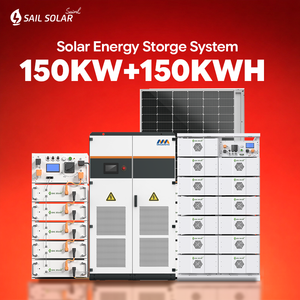
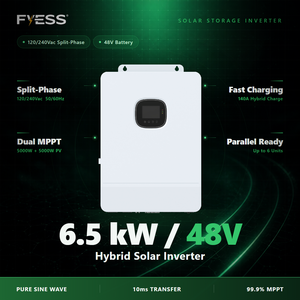
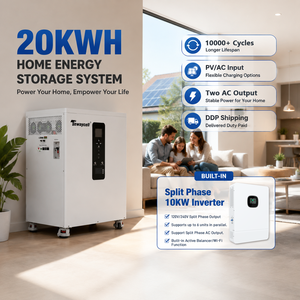
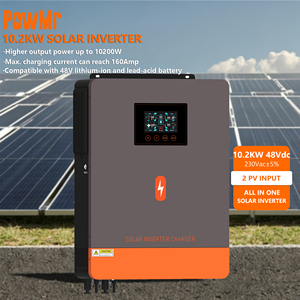
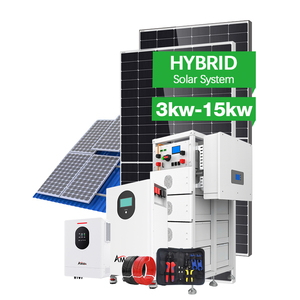
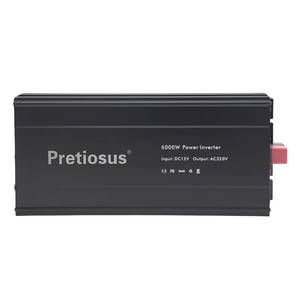
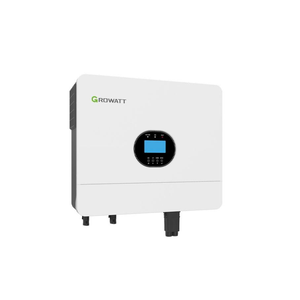
| Hybrid Inverter Fast Chargers | 3kW – 250kW | Single-Phase 120/240V or 3-Phase Solar/Grid | 110V/220V/230V/400V AC Pure Sine Wave | Heavy-Duty NEMA/IP21/IP54 Metal Chassis | Commercial Peak-Shaving, Microgrids, Solar ESS |
| Isolated DC-DC Converters | 50W – 10kW+ | 12V, 24V, 48V, 72V, 110V DC Wide Range | 5V to 125V DC Single/Dual Regulated Rails | Convection Heatsink / Fully Encapsulated (IP66) | Railway Rolling Stock, Subsea ROVs, Mining Vehicles |
| Modular Rack-Mount Systems | Up to 50kW per Rack | Dual-Feed AC/DC Utility Mains | Hot-Swappable 24V, 48V, 125V DC Rails | 19"/23" Eurocard Sub-rack, N+1 Redundant | Telecom Central Offices, Substations, Data Infrastructure |
Direct technical and commercial answers for purchasing managers, system integrators, and design engineers.
Contact our senior power electronics engineering team today to discuss your technical specifications, request detailed generic data sheets, or receive a fast-turnaround OEM custom quote.
Get Catalog