
Engineering Support +1-613-836-3511
Explore our CE-certified switch-mode power rectifiers, solar hybrid inverters, and heavy-duty industrial DC-DC/AC-DC energy conversion modules designed for critical infrastructure.
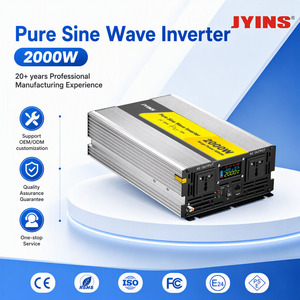

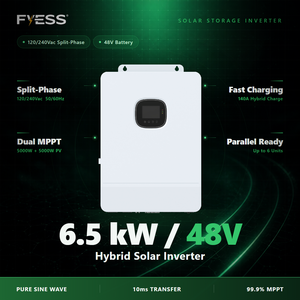
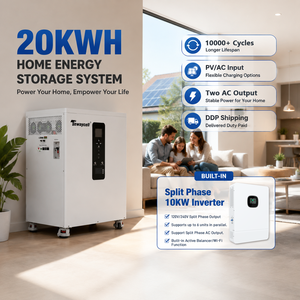
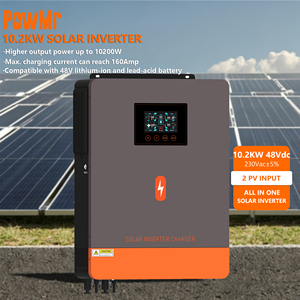

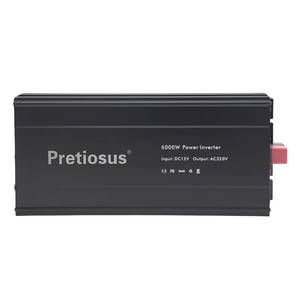
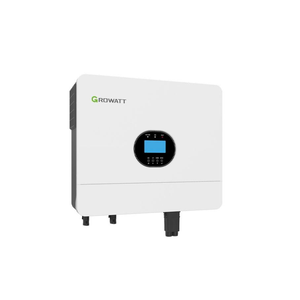
Modern telecommunications networks—spanning 5GNR macro stations, outdoor small cells, remote radio heads (RRH), and central offices—demand absolute power resilience. A single failure in DC power conversion can compromise mission-critical communication links, leading to costly network downtime and service level agreement (SLA) breaches. As a premier original equipment manufacturer (OEM) specializing in heavy-duty switch-mode power conversion, our factory delivers CE-certified telecom rectifiers engineered to operate flawlessly under extreme environmental and electrical stress.
Our engineering architecture centers around high-efficiency, high-power-density AC-DC switch-mode rectifiers (SMR). By translating incoming single-phase or three-phase AC utility grids into stable, low-noise -48V DC bus power (adjustable from 42Vdc to 58Vdc), our systems provide reliable direct current to sensitive wireless transmitters while maintaining optimized float and boost charging profiles for energy storage batteries. Every unit produced within our 80,000 sq ft manufacturing plant undergoes rigorous environmental stress screening (ESS), full-load thermal burn-in, and strict electromagnetic compatibility (EMC) testing.
CE Certification for industrial telecom rectifiers is not merely a legal stamp; it is a rigorous verification of low-voltage directive compliance (LVD 2014/35/EU) and electromagnetic compatibility directive compliance (EMC 2014/30/EU). In telecom deployments, non-compliant rectifiers introduce high frequency ripple and electromagnetic interference (EMI) back into the DC bus, degrading RF transmission signal-to-noise ratios (SNR). Our CE-certified switch-mode rectifiers feature integrated active power factor correction (PFC > 0.99) and ultra-low Total Harmonic Distortion (THD < 3%), guaranteeing compliance with EN 300 132-2 and ETSI telecom standards.
Our factory bypasses commercial consumer-grade shortcuts. Instead of standard topology, our telecom rectifiers utilize zero-voltage switching (ZVS) resonant topologies, planar transformer magnetics, and long-life component derating. By eliminating optocouplers from primary feedback loops—which degrade over time due to heat exposure—our designs achieve an operational service life target of up to 30 years in harsh environments.
Features active Power Factor Correction achieving > 0.99 power factor from 90Vac to 295Vac input. High power density up to 45W/in³ allows rack-mount space savings in 19-inch and 23-inch enclosures.
Designed for severe outdoor installations. Available in IP66-rated die-cast aluminum enclosures or fully encapsulated potting options to resist metallic dust, high humidity, salt spray, and corrosive atmospheres.
Modular architecture enables seamless parallel connection. Integrated active current sharing cards allow modules to be hot-swapped without interrupting power to operating wireless base stations.
System integrators upgrading legacy infrastructure to modern green energy standards require granular comparative performance metrics. Below is an engineering evaluation contrasting legacy phase-controlled rectifiers with our advanced CE-certified switch-mode rectifiers.
| Electrical Parameter | Legacy Phase-Controlled Rectifiers | Advanced CE Certified Switch-Mode Rectifier (Our Factory) | System Operational Benefit |
|---|---|---|---|
| Peak Efficiency | 82% – 88% | 95.5% – 96.8% (Titanium Class) | Drastically reduced thermal dissipation, cutting air conditioning power demands by up to 40%. |
| Power Factor (PFC) | 0.70 – 0.82 (Causes grid distortion) | > 0.99 across wide operating range | Prevents utility line penalty charges; optimizes generator sizing for backup sites. |
| Total Harmonic Distortion (THD) | 25% – 35% | < 3% at rated nominal load | Protects adjacent sensitive communications electronics from harmonic noise interference. |
| Mean Time Between Failures (MTBF) | < 100,000 Hours | > 500,000 Hours (MIL-HDBK-217F) | Extremely low total cost of ownership (TCO) with minimal site maintenance visits. |
| Cooling Strategy | High-volume noisy forced fans | Convection HSA / Intelligent Variable Fans | Silent operation, reduced particulate ingress, and immunity to fan mechanical locks. |
As telecom networks transition toward high-density 5G-Advanced and early 6G wireless architectures, global procurement teams are drastically shifting their power hardware specifications. Procurement managers are no longer evaluating rectifiers on upfront capital expenditure (CAPEX) alone; operational expenditure (OPEX), carbon offset performance, and modular flexibility now govern procurement decisions.
Next-generation telecom power shelters utilize intelligent rectifiers capable of switching into dynamic dormant standby modes during off-peak network traffic hours. When traffic surges, rectifiers wake up within milliseconds. Furthermore, rectifiers must now integrate natively with hybrid solar-PV and fuel cell inputs to maximize renewable self-consumption.
Traditional lead-acid float charging profile parameters are being replaced by high-speed digital communications protocols (RS485, CAN bus, Modbus) between the switch-mode rectifier rack and Lithium Iron Phosphate (LiFePO4) Battery Management Systems (BMS). Rectifiers must support adaptive multi-stage lithium charging curves to prevent thermal runaway.
With cloud-RAN (C-RAN) and edge computing proliferating, rectifiers are moving out of centralized control rooms into decentralized, compact outdoor cabinets. This trend demands micro-rectifier modules capable of delivering stable 48V/12V dual DC outputs in ultra-compact 1U rack envelopes while tolerating ambient temperatures ranging from -40°C to +75°C.
Procurement mandates now stipulate smart controller interfaces (SNMP v3, IPv6, MQTT) embedded directly into rectifier shelves. Remote network operations centers (NOC) leverage AI analytics to monitor component degradation, ripple voltage escalation, and ambient thermal curves, transitioning maintenance from reactive fixing to predictive replacement.
The global power conversion industry is experiencing a material revolution driven by wide-bandgap (WBG) semiconductors. Silicon MOSFETs and IGBTs are approaching their physical operational limits regarding switching frequency and conduction losses. Our OEM factory R&D team is actively deploying Gallium Nitride (GaN) and Silicon Carbide (SiC) power switches into our newest tier of CE-certified telecom rectifiers.
By leveraging GaN switches, our rectifier topologies operate at switching frequencies exceeding 500 kHz—nearly five times faster than traditional silicon-based rectifiers. This dramatically reduces the physical volume of passive magnetic components (transformers and inductors), reducing overall module weight by up to 45% while boosting peak energy efficiency beyond 97%. Additionally, high-frequency operation yields near-instantaneous transient recovery times during sudden 50% load steps, ensuring zero line drop for mission-critical optical transmission gear.
In dust-prone mining operations, coastal marine stations, and desert base towers, cooling fans represent the highest single point of mechanical failure. Our factory specializes in natural convection-cooled rectifiers featuring extruded aluminum Heatsink Assemblies (HSA). By conducting heat directly to heavy-duty outer fins, these rectifiers eliminate forced-air fans completely, achieving an IP65/IP66 seal that renders internal electronics immune to airborne metallic dust, salt fog, and insect infestation.
Common questions answered by our engineering team to assist purchasing managers, engineering consultants, and telecom system integrators.
Our rectifiers fully satisfy the essential requirements of the European Union Low Voltage Directive (LVD 2014/35/EU), Electromagnetic Compatibility Directive (EMC 2014/30/EU), and RoHS Directive (2011/65/EU). Specific standards include EN 62368-1 for electrical safety and EN 55032 Class B for conducted and radiated emissions.
Yes. As a direct OEM factory design house, we specialize in semi-custom and custom engineering. We can adapt generic platforms to accept 110Vdc, 250Vdc, or 400Vdc inputs, or deliver customized output rails such as 24Vdc, 60Vdc, or dual bipolar voltage configurations tailored to legacy equipment.
Modules contain internal active ORing MOSFETs and high-speed current sharing circuitry. When installed into our 19-inch rack sub-racks, modules equalize output current within ±5% deviation. If a single module encounters an internal fault, it instantly decouples from the live bus without dropping system voltage.
Our industrial-grade telecom power supplies target an operating life of up to 30 years under normal operating conditions. This is achieved by using long-life electrolytic capacitors, high-tier semiconductor derating (50% voltage/current stress reduction), fanless convection builds, and optocoupler-free feedback paths.
Our standard industrial power products operate across a full temperature envelope from -40°C to +70°C. Units feature linear thermal derating above 50°C, and can be equipped with internal cold-plate conduction blocks or external heatsink fins for sealed outdoor enclosures.
Every shipment is delivered with comprehensive documentation, including detailed Factory Acceptance Test (FAT) reports, CE Certificates of Conformity, full electrical pinout data sheets, installation manuals, and 3D STEP mechanical models for integration design.
Selecting the right power supply supplier requires evaluating manufacturing infrastructure, engineering longevity, and quality assurance workflows. Operating from our state-of-the-art 80,000 sq ft manufacturing facility, our company provides end-to-end control over the design, prototyping, magnetic coil winding, SMT assembly, and testing phases.
We wind our own high-frequency transformers and inductors in-house, ensuring absolute control over insulation class ratings, magnetic coupling, and wire shielding reliability.
Every single manufactured unit undergoes automated thermal cycling and 100% full-load burn-in testing prior to packaging, eliminating infant mortality failures in the field.
When you contact our technical sales team, you consult directly with senior power supply design engineers who assist in tailoring solution parameters to your physical envelope.