
Engineering Support +1-613-836-3511
Explore our high-performance off-grid, hybrid, and industrial power boost modules engineered for maximum conversion efficiency.
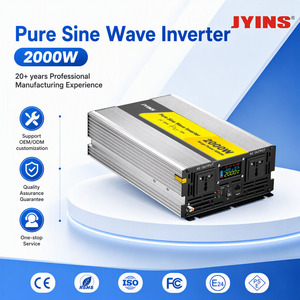
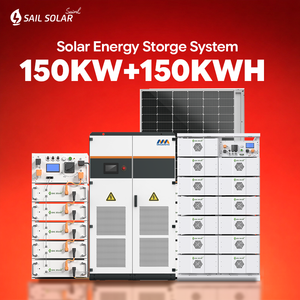
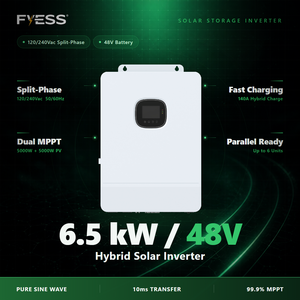
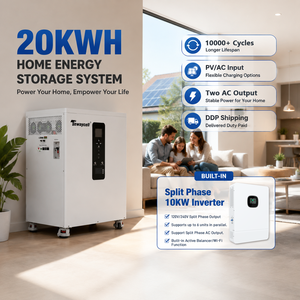
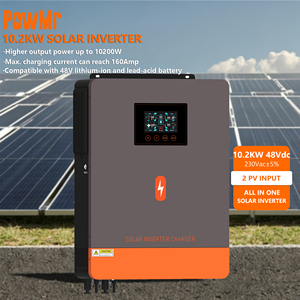
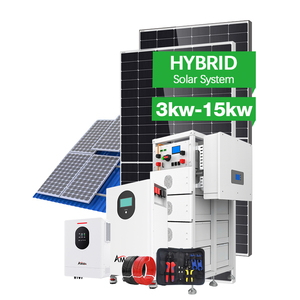
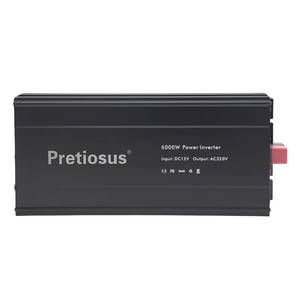
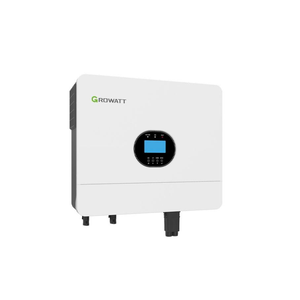
In modern industrial power generation, commercial energy storage systems (ESS), microgrid installations, and heavy-duty automation systems, electrical voltage stepping stands as a foundational pillar. A CE Certified Step-Up Transformer is a precision electromagnetic device engineered to accept a specific primary AC or converted DC voltage and elevate it to a higher secondary voltage level with minimal energy dissipation, precise galvanic isolation, and zero harmonic disruption. As global power grids transition toward decentralized renewable topologies, the demand for certified, high-reliability step-up transformers and integrated boost power conversion modules has reached unprecedented levels.
Step-up transformers function based on Faraday’s Law of Electromagnetic Induction, where the ratio of secondary winding turns ($N_s$) to primary winding turns ($N_p$) defines the voltage amplification factor:
V_s / V_p = N_s / N_p = I_p / I_s
However, industrial-grade OEM step-up transformers operating in harsh environments face strict constraints regarding core saturation, eddy current generation, and thermal dissipation. Modern designs deploy advanced core materials and custom geometry:
The CE (Conformité Européenne) mark on a step-up transformer or integrated hybrid step-up inverter signifies compliance with rigorous European Union safety, health, and environmental protection standards. Sourcing uncertified power hardware introduces severe structural liabilities, grid instability, and fire hazards. The crucial standards governing our step-up transformers include:
| Directive / Standard | Technical Scope | Engineering Compliance Requirement |
|---|---|---|
| EN 61558-1 / EN 61558-2-4 | Safety of Transformers, Power Supply Units & Isolation Units | Verifies double or reinforced insulation, dielectric breakdown immunity, and creepage distance compliance. |
| LVD 2014/35/EU | Low Voltage Directive | Mandates safe operational envelopes for equipment carrying AC voltages from 50V to 1000V and DC from 75V to 1500V. |
| EMC Directive 2014/30/EU | Electromagnetic Compatibility | Ensures emissions (conducted and radiated) do not interfere with telecommunications and adjacent control electronics. |
| RoHS Directive 2011/65/EU | Restriction of Hazardous Substances | Restricts heavy metals (Lead, Mercury, Cadmium) in magnetic wire enamels, core coatings, and solder joints. |
Heat generation within a step-up transformer stems from two main components: copper losses ($I^2R$) within primary/secondary windings and iron losses ($P_h + P_e$) within the magnetic core. Overheating degrades winding enamel insulation, eventually leading to inter-turn short circuits. To prevent catastrophic breakdown, industrial step-up transformers employ multi-tiered thermal dissipation architectures:
Windings insulated with high-temperature NOMEX® paper and polyester-imide enamels rated for continuous operation at 180°C (Class H) and 220°C (Class R).
Complete encapsulation in die-cast aluminum or heavy-duty powder-coated steel housings, preventing ingress of metallic dust, salt water, oil fog, and corrosive atmospheres.
Fan-free thermal designs utilizing integrated extruded aluminum heatsink fins. Eliminates mechanical fan failure points, ideal for maintenance-free remote mining and marine sites.
Key market vectors shaping how global enterprise buyers specify and acquire voltage stepping equipment.
The traditional low-frequency electromagnetic step-up transformer is increasingly being combined with wide-bandgap (WBG) power semiconductors like Silicon Carbide (SiC) and Gallium Nitride (GaN). Future procurement will lean heavily toward hybrid step-up architectures where high-frequency switching (100kHz+) allows transformer physical volume to shrink by up to 70% while elevating overall conversion efficiency beyond 98.8%.
Industrial facility operators can no longer tolerate extended downtime caused by power supply failure. Future procurement specifications prioritize modular, 19-inch rack-mountable step-up converter units featuring N+1 redundancy. In these configurations, faulty modules can be replaced live without interrupting critical output loads.
Enterprise procurement managers now demand built-in intelligence. Modern CE certified step-up transformers incorporate micro-sensor arrays measuring real-time winding temperature, vibration spectrums, insulation resistance, and harmonic distortion rates. Data is transmitted via Modbus RTU, CANbus, or Industrial Ethernet directly to central SCADA systems for predictive maintenance scheduling.
Breakthrough innovations in magnetic material science and power electronics packaging.
R&D is rapidly shifting from conventional silicon steel to ultra-thin nanocrystalline ribbons (18-25 microns thick), achieving near-zero magnetostriction and drastically suppressing audible transformer hum in residential and commercial energy storage applications.
Liquid-immersed step-up transformers are moving away from mineral oils toward natural and synthetic biodegradable esters. These fluids offer higher fire flashpoints (>300°C) and non-toxic biodegradability in environmentally sensitive zones.
Modern step-up systems are engineered to facilitate bidirectional energy transfer, allowing battery storage systems to seamlessly switch between stepping up stored DC voltage to AC grid levels and stepping down grid AC power during charging cycles.
Custom OEM power conversion solutions designed and manufactured under strict quality standards.
Specializing exclusively in heavy-duty power conversion, transformer engineering, and inverter design since 1982. Proven track record across thousands of demanding global projects.
Every step-up transformer, custom inductor, and power supply module is designed, wound, potted, burn-in tested, and qualified inside our 80,000 sq ft facility in Ottawa, Canada.
We re-engineer core topologies to meet exact client input/output specs, unusual mechanical footprints, IP66 enclosure needs, and extreme ambient temperature ranges (-40°C to +75°C).
Our designs eliminate short-lived optocouplers from feedback loops and conservatively derate electrical components, targeting up to 30 years of continuous duty in critical industrial sites.
Direct answers to common questions regarding step-up transformers and power converters.
Whether you require a standard CE certified step-up transformer, a custom hybrid inverter system, or a rugged IP66-rated power unit, our engineering team is ready to evaluate your specifications.