
Engineering Support +1-613-836-3511
Explore our industrial-grade pure sine wave inverters, split-phase hybrid systems, and commercial energy storage systems engineered for continuous off-grid and grid-interactive deployment.
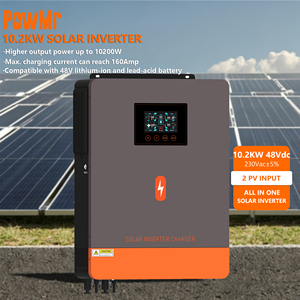
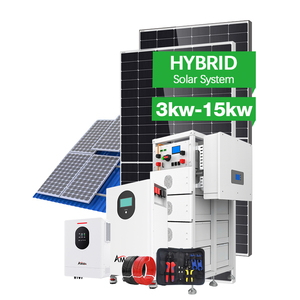
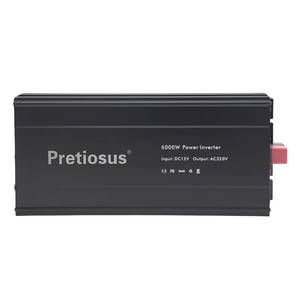
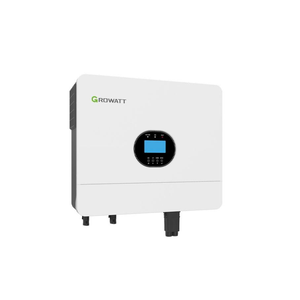
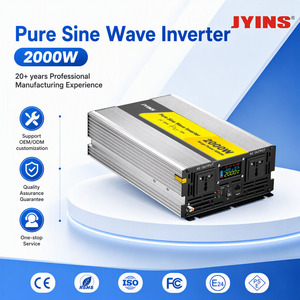
A comprehensive technical evaluation for utility engineers, EPC contractors, and OEM procurement directors on specifying CE-certified DC-AC power inverters for mission-critical infrastructure.
The global transition toward decentralized microgrids and hybrid renewable energy storage requires power conversion hardware that meets strict electromagnetic compatibility (EMC) and safety baselines. A genuine CE certified power inverter manufacturer must design systems that comply directly with European Normative standards, specifically EN 62109-1 and EN 62109-2 for electrical safety in photovoltaic power systems, alongside EN 61000-6-2 and EN 61000-6-4 for industrial EMC immunity and emission integrity.
Unlike standard consumer-grade conversion modules, industrial power inverters operate under severe electrical stress, high dv/dt switching transients, and fluctuating DC bus voltages. Achieving true CE certification demands conservative component derating, elimination of optocouplers from feedback loops to prevent thermal drift, and robust galvanic isolation rated to 3000V AC minimum between primary DC inputs and secondary AC outputs.
Technical Insight: Information Gain for B2B Buyers
Mandatory CE mark verification goes beyond basic self-declaration. For heavy-duty industrial and utility applications, procurement officers must demand third-party technical construction files (TCF) validating compliance with the Low Voltage Directive (LVD 2014/35/EU) and Electromagnetic Compatibility Directive (EMC 2014/30/EU), alongside full thermal mapping during continuous full-load operation at ambient temperatures exceeding +50°C.
| Performance Parameter | Commercial/Residential Inverters | Heavy-Duty Industrial CE Certified Inverters |
|---|---|---|
| Design Operating Life | 5 to 8 Years (Standard Electrolytic Caps) | Up to 30 Years (Derated Film Caps & Opto-Free Loop) |
| Harmonic Distortion (THD) | < 5% at Nominal Load | < 2% Pure Sine Wave under dynamic linear/non-linear loads |
| Thermal Management | High-RPM Fans (Dust Sensitive) | Pure Convection / IP66 Sealed Die-Cast Baseplate |
| Surge Capacity (10 Seconds) | 150% Nominal Power | 200% to 300% Nominal Capacity for inductive motor starting |
| Ingress Protection Rating | IP20 to IP21 (Indoor Only) | IP66 / Full Encapsulation for Mining, Marine & Utilities |
| Galvanic Isolation | Functional Isolation (1500V DC) | Reinforced Galvanic Isolation (3000V AC RMS) |
Combining 40+ years of power electronics innovation with direct-from-factory custom design, rapid prototyping, and stringent Canadian manufacturing quality control.
Every power supply, inverter, and battery charger is prototyped, assembled, vacuum-potted, burned-in, and tested in-house in Ottawa, Ontario, Canada, maintaining complete supply chain traceability and strict adherence to international quality standards.
Engineered to survive extreme environments. We manufacture fully encapsulated, die-cast aluminum power units rated to IP66 that operate flawlessly under salt fog, high humidity, conductive metallic dust, continuous vibration, and washdown cleaning.
Recognizing that catalogue units rarely fit complex industrial footprints, our engineering team modifies proven power topologies to match exact DC input windows (12V to 600Vdc), output configurations (single, split, 3-phase), and custom form-factors.
Key technological shifts and strategic sourcing imperatives reshaping the power inverter landscape over the next decade.
Procurement teams are rapidly shifting specifications toward Silicon Carbide (SiC) and Gallium Nitride (GaN) power switching devices. SiC MOSFETs allow power inverters to operate at significantly higher switching frequencies with dramatically lower switching losses. This transition delivers system efficiency gains exceeding 98.5% while reducing the physical footprint of magnetic components (chokes and transformers) by up to 40%.
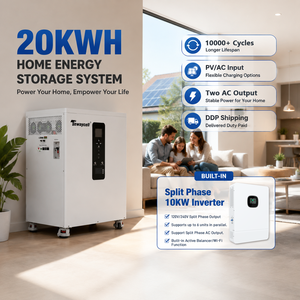
Traditional grid-following inverters require a stable grid reference voltage to operate. Modern commercial microgrids require grid-forming hybrid inverters capable of black-starting facilities, establishing voltage and frequency references independently, and dynamically balancing split-phase loads (120V/240V) during utility blackouts.
Global supply disruptions have elevated long-term supply chain viability to a core purchasing criteria. B2B buyers now prioritize working directly with established original equipment manufacturers who control in-house magnetics winding, surface-mount assembly, and final environmental burn-in testing rather than white-label distributors.
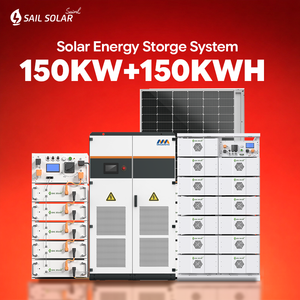
As commercial solar energy storage systems scale from 150kW to megawatt-scale peak shaving systems, battery bank operating voltages are migrating from traditional 48Vdc systems to 600Vdc–1000Vdc HVDC buses. This minimizes I²R conduction losses, lowers cabling costs, and improves overall system thermal efficiency.
Discover how modern inverter designs integrate intelligent thermal throttling, CANbus digital communication, and ultra-low THD output power.
Modern CE-certified inverters incorporate dual DSP (Digital Signal Processor) control loops. Real-time telemetry tracks component temperature, DC bus ripple voltage, and load harmonic signatures. RS485 Modbus TCP and CANbus interfaces enable industrial automation systems (SCADA) to remotely monitor operational health, predicting fan failure or capacitor degradation years before operational breakdown occurs.
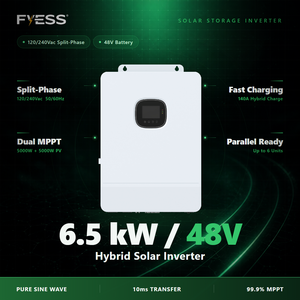
With high-efficiency N-Type TOPCon solar panels dominating modern commercial installations, hybrid inverters must handle higher short-circuit currents and wide MPPT voltage ranges. Furthermore, North American and international markets demand built-in split-phase transformers (AC 120V/240V) capable of taking unbalanced phase loads without tripping internal protection relays.
Detailed technical responses to common questions encountered during power system specification and supplier qualification.
A power inverter requires compliance with several directives to carry the CE mark legally. Safety compliance is governed by EN 62109-1 and EN 62109-2 (for solar conversion) or EN 62368-1 (for general industrial power equipment) under the Low Voltage Directive (LVD 2014/35/EU). Electromagnetic compatibility must comply with EN 61000-6-2 (industrial immunity) and EN 61000-6-4 (industrial emissions) under the EMC Directive (2014/30/EU).
Pure Sine Wave inverters deliver AC voltage with Total Harmonic Distortion (THD) under 2% to 3%, replicating grid-quality power. Modified sine wave inverters produce stepped square waves with high harmonic content that causes overheating in inductive motors, line noise in sensitive telemetry, premature failure of power supplies, and false tripping of microprocessors.
Yes. As a dedicated OEM power supply and inverter manufacturer, standard modular platforms are customized to adapt to non-standard battery banks, railway DC voltages (72V/110Vdc), utility substation battery banks (125V/250Vdc), or high-voltage solar arrays without sacrificing efficiency or thermal margins.
An IP66 rating guarantees that the inverter housing is completely dust-tight (no ingress of conductive dust or metallic particles) and protected against powerful water jets from any direction. Combined with full internal potting/encapsulation, the internal power semiconductors and magnetics are completely sealed against salt spray, high humidity, and corrosive chemical vapors.
Achieving a 30-year operational life requires eliminating component failure points. Key engineering techniques include: conservative electrical and thermal component derating (operating components at 50-70% of maximum rating), replacing short-life optocouplers with magnetic feedback loops, adopting fanless convection/conduction cooling, and utilizing long-life semiconductor switching topologies.
Speak directly with our senior power conversion engineering team to evaluate your input/output specs, CE certification requirements, or custom mechanical design needs.