
Engineering Support +1-613-836-3511
Explore our flagship heavy-duty onboard chargers, off-grid power inverters, and commercial hybrid energy storage systems tailored for OEM export worldwide.
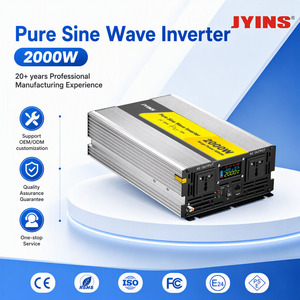
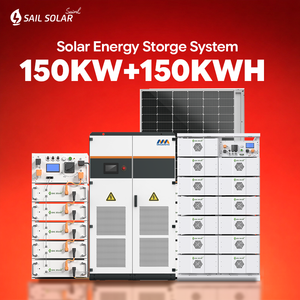
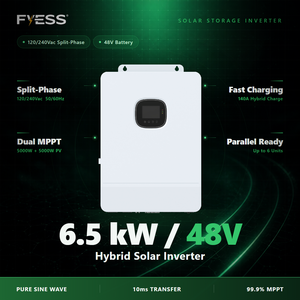
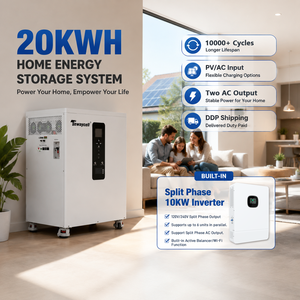
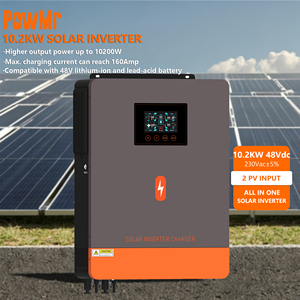
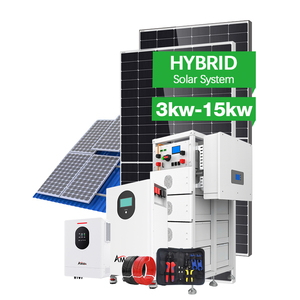
As a pioneer in custom-engineered heavy-duty switch-mode power conversion, our manufacturing facility delivers long-life, robust onboard chargers and inverters for mission-critical deployments.
Engineered for extreme operating environments. Our IP66-rated encapsulated die-cast enclosures withstand severe vibration, conductive dust, high humidity, washdown, and salt fog.
Operating from our 80,000 sq ft facility in Ottawa, Canada, we control every step—from initial topology modeling, custom magnetics winding, potting, burn-in, to final CE qualification testing.
By eliminating optocouplers from feedback loops and utilizing conservatively derated industrial components, our conversion platforms target operational life spans of up to 30 years.
Fully compliant with European CE directives, including EN 61851-1 electric vehicle conductive charging systems, EN 61000-6-2/4 industrial EMC, and ISO 26262 functional safety architecture.
We modify standard topologies to match non-standard AC/DC input ranges, custom physical footprints, liquid vs. convection cooling paths, and specialized CAN-bus telemetry protocols.
Shipping directly to automotive OEMs, heavy machinery builders, rolling stock integrators, and industrial energy storage suppliers across Europe, North America, and Asia-Pacific.
The global transition toward heavy electric mobility, commercial automated guided vehicles (AGVs), marine electrification, and utility-scale mobile battery energy storage systems (BESS) has fundamentally shifted the technical requirements for onboard battery chargers (OBCs). As a premier CE Certified Onboard Charger Exporter, our engineering organization addresses the rigorous demands placed upon power conversion hardware operating in non-stationary and environmentally harsh environments.
Modern onboard charging systems serve as the critical power bridge between the public or industrial AC power grid and high-voltage DC lithium-ion battery packs. Achieving CE certification is not merely a regulatory milestone; it represents verified compliance with stringent European Union health, safety, and environmental protection standards. For global procurement officers and system integration engineers, selecting a certified exporter ensures that onboard equipment mitigates electromagnetic interference (EMI), maintains high power factor efficiency, and guarantees galvanic isolation under dynamic vibration and thermal stress.
| Performance Metrics | Legacy Industrial Chargers | Standard Commercial OBCs | Heavy-Duty CE Certified OBCs (Our Grade) |
|---|---|---|---|
| Power Semiconductor Technology | Silicon (Si) MOSFETs / IGBTs | Silicon Carbide (SiC) First Gen | Wide-Bandgap SiC / GaN High-Frequency Topologies |
| Power Conversion Efficiency | 88% – 92% Typical | 93% – 95% Peak | > 96.5% Efficiency across 30%–100% Load Curve |
| Ingress Protection & Enclosure | IP20 – IP54 Sheet Metal | IP65 Standard Sealed Case | IP66 & IP67 Die-Cast Aluminum Fully Encapsulated |
| Design Life & MTBF | 5 to 8 Years (<100k hrs MTBF) | 8 to 10 Years (200k hrs MTBF) | Up to 30-Year Operating Life (>500k hrs MTBF) |
| EMC / EMI Compliance | Basic CISPR 11 Class A | EN 55032 Class B / Commercial | EN 61851-21-2 & EN 61000-6-4 Heavy Industrial Class B |
| Communication Interfaces | Analog / RS485 | CAN 2.0B / Basic J1939 | Isolated Dual CAN-Bus, Automotive Ethernet, UDS Diagnostic |
As international supply chains tighten and quality standards elevate, enterprise buyers are prioritizing key technological evolutions when evaluating an onboard charger exporter:
Understanding the multi-year technology roadmap for electric drive systems and power conversion equipment.
Commercial electric vehicles are shifting from 400V nominal battery buses to 800V+ architectures. This cuts copper wire harness mass, reduces I²R resistive losses, and enables ultra-fast charging capabilities while maintaining lower thermal profiles during continuous high-power transfer.
Automotive safety integrity levels (ASIL-B and ASIL-D) are becoming mandatory in export procurement RFQs. Onboard chargers must feature redundant hardware safety shutdown pathways, isolated voltage monitoring, and continuous thermal supervision over CAN communication.
Instead of redesigning chargers for every vehicle power rating, system engineers favor modular OBC units. Parallelable 3.3kW or 6.6kW power building blocks allow fleet operators to scale onboard charging capacities to 11kW, 22kW, or higher simply by adding units in master-slave configurations.
Essential answers regarding CE certification, OEM custom design, environmental rating, and export procedures.
Consult directly with our Ottawa-based senior power conversion engineers. Send us your input/output specification, enclosure constraints, and target annual volume for an immediate technical evaluation and factory-direct quote.
Send an Inquiry