
Engineering Support +1-613-836-3511
Engineered for extreme reliability, compliance with CE standards, low noise, and optimized airflow dynamics across industrial enclosures and critical contamination control environments.
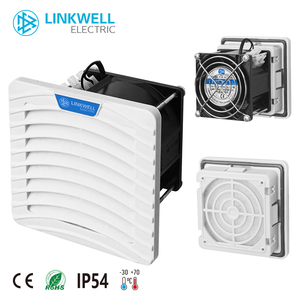
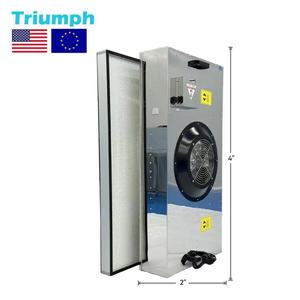
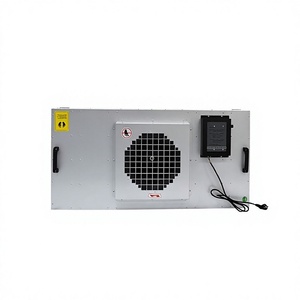
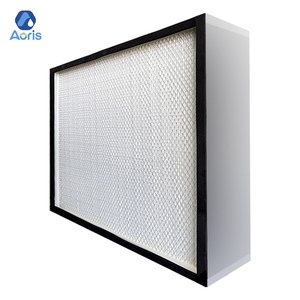
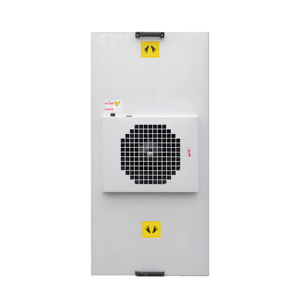
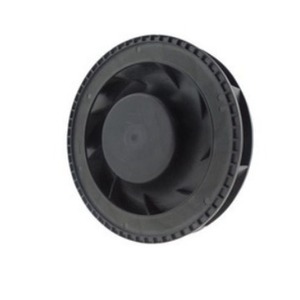
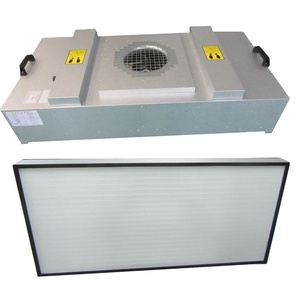
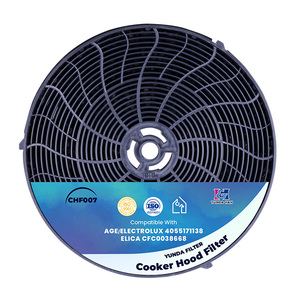
In modern automated industrial environments, thermal management and atmospheric contamination control directly dictate equipment operational life. Electrical switchgear enclosures, automation control cabinets, cleanroom facilities, and precision laboratory spaces require forced-air filtration solutions engineered to operate continuously under harsh environmental stresses. As a tier-one OEM manufacturing facility and global supplier of CE-certified fan filter units (FFU), cabinet filter fans, and specialized HEPA/ULPA filtration systems, our product architecture bridges the gap between thermal dissipation requirements and microscopic particulate containment.
A CE marking on industrial fan filters is far more than a regulatory checkbox—it serves as proof of rigorous testing against the European Union’s Electromagnetic Compatibility (EMC) Directive 2014/30/EU and Low Voltage Directive (LVD) 2014/35/EU. When fan filter units are integrated into large-scale electrical control cabinets or cleanroom ceiling grids, uncertified components can introduce harmonic noise, electrical insulation failure, thermal runaway, or catastrophic enclosure ingress. Our production facilities maintain total in-house manufacturing oversight—spanning precision injection molding of flame-retardant ABS (UL 94 V-0 rated) thermoplastics, automated polyurethane gasket dispensing, continuous aerodynamic blade balancing, and automated laser particle counter validation.
Designed with patented labyrinth deflector channels and closed-cell polyurethane foam gaskets. Protects internal electronics against splashing water, ambient dust, conductive metallic filings, and aggressive outdoor elements.
Incorporating Electronically Commutated (EC) and DC brushless fan technologies with integrated PWM speed control interfaces. Reduces electrical power consumption by up to 45% while generating minimal thermal dissipation within the fan hub.
Micro-glass fiber filter packs designed according to EN 1822 and ISO 29463 standards. Capable of capturing 99.995% of airborne particles at the Most Penetrating Particle Size (MPPS) of 0.1 to 0.3 microns.
As smart manufacturing (Industry 4.0), cleanroom expansion in semiconductor fabrication, and stringent ESG decarbonization mandates accelerate globally, the specifications for industrial fan filters are undergoing a structural shift.
Legacy maintenance schedules relying on fixed calendar replacements are rapidly being replaced by dynamic sensor-driven telemetry. Modern CE certified fan filter units are increasingly equipped with embedded differential pressure sensors (dP), digital Modbus/BACnet communication interfaces, and optical particle counters.
This connectivity allows central SCADA or building management systems (BMS) to monitor media clogging in real time. Maintenance engineers receive automated alerts exactly when filter resistance reaches critical thresholds, preventing unplanned thermal shutdowns of sensitive PLCs and variable frequency drives (VFDs) while eliminating premature filter disposal.
Traditional fiberglass filter media, while effective, carries higher initial pressure drop and disposal handling challenges. Future procurement strategies prioritize electrospun polymeric nanofibers layered onto robust spunbond synthetic substrates. These advanced composite filters deliver higher dust-holding capacity (DHC) with up to 30% lower structural resistance.
Furthermore, global buyers are enforcing strict RoHS and REACH compliance, demanding halogen-free, recyclable ABS housings and bio-based filter frames that align with corporate zero-waste-to-landfill metrics without compromising flame retardancy (UL 94 V-0).
With industrial health and safety standards tightening regarding occupational noise exposure (ISO 1999), OEM equipment designers are prioritizing ultra-quiet fan filter assemblies. Modern manufacturing utilizes Computational Fluid Dynamics (CFD) simulation to engineer bionic 3D-curved fan blades (such as Polyphenylene Sulfide / PPS mute blades).
By optimizing air intake shrouds and reducing trailing-edge vortex formation, current-generation mute fan filters achieve sound pressure levels as low as 21 dB(A)—making them ideal for medical laboratories, mushroom tissue culture cleanrooms, and quiet office-adjacent control rooms.
Engineering comparison of standard enclosure fan filters vs. cleanroom fan filter units (FFU) for global procurement selection.
| Product Category | Primary Application | Filter Class / Efficiency | Ingress / Airflow Rating | Housing & Blade Material | Typical Noise Level |
|---|---|---|---|---|---|
| Cabinet Fan Filter (IP54/IP55) | Industrial Control Cabinets, VFD Enclosures, Automation Systems | G3 / G4 / F5 (EN 779 / ISO 16890 Coarse 75%) | 20 m³/h – 1200 m³/h; IP54 / IP55 with rain hood | UL 94 V-0 Fire-Retardant ABS Plastic | 35 – 58 dB(A) |
| Cleanroom FFU Unit (Standard) | Semiconductor, Pharmaceutical, Micro-electronics Cleanrooms | H13 / H14 HEPA (99.99% @ 0.3μm) / U15 ULPA | 500 m³/h – 1500 m³/h; ISO Class 3 to Class 8 | Galvalume Steel, Stainless Steel, or Aluminum Hood | 48 – 54 dB(A) |
| Mycology & Bio-Laminar Hood FFU | Mushroom Cultivation, Tissue Culture, In-vitro Bio Labs | H14 HEPA (99.995% efficiency, zero-bypass) | Laminar flow air velocity 0.45 m/s ± 20% | High-Strength Lightweight ABS / Anodized Al frame | 42 – 50 dB(A) |
| Mute Air Purifier Fan Assembly | Medical Devices, Indoor HVAC, Precision Measurement Cabinets | F7 / F9 Fine Dust or Carbon Composite | High static pressure up to 250 Pa; Variable CFM | PPS Aerodynamic Blades & Reinforced Frame | 21 – 35 dB(A) |
| Activated Carbon Exhaust Filter | Kitchen Smoke, Commercial Hoods, VOC Chemical Odor Control | Impregnated Granular Activated Carbon / Charcoal | Adsorption capacity up to 60% of dry weight | Galvanized Steel Frame / Mesh Containment | Passive / External Inline Fan |
Consult directly with our engineering team for technical drawings, custom airflow simulation, volume B2B quotes, and certified compliance documentation tailored to your OEM machinery or facility specifications.