
Engineering Support +1-613-836-3511
Industrial-grade DIN Rail modules, pure sine wave inverters, commercial hybrid storage systems, and off-grid power solutions engineered for zero-downtime environments.
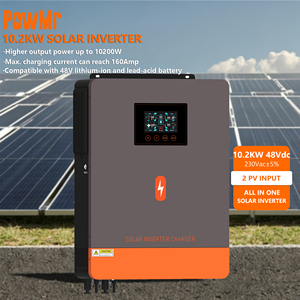
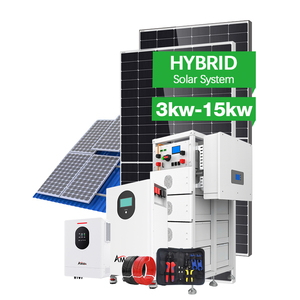
Modern industrial control cabinets, sub-station racks, rail transportation networks, and distributed renewable energy nodes require power conversion infrastructure that operates under extreme mechanical and electrical stress. DIN Rail mounting—specifically standard TS-35/7.5 and TS-35/15 top-hat profiles compliant with EN 60715—has emerged as the universal standard for modular panel layout. However, physical mounting ease represents only a fraction of the engineering equation. Enterprise buyers, systems integrators, and plant engineers must demand rigorous CE Certification (Conformité Européenne) backed by full compliance testing under the Low Voltage Directive (LVD 2014/35/EU) and Electromagnetic Compatibility Directive (EMC 2014/30/EU).
When sourcing power supplies, DC-DC step-down/boost converters, and pure sine wave off-grid/hybrid inverters from global manufacturing exporters, evaluating information gain—such as verified mean time between failures (MTBF), component derating margins, transformer isolation topologies, and thermal dissipation metrics—is paramount. Uncertified or poorly filtered power convertors introduce high-frequency conducted emissions into industrial control loops, corrupting sensitive programmable logic controllers (PLCs), triggering false telemetry readings in sensor networks, and inducing thermal runaway within high-density switchgear cabinets.
Technical Information Gain Note: True industrial-grade CE compliance requires rigorous harmonic attenuation, active Power Factor Correction (PFC > 0.98), immunity to surge transients per IEC 61000-4-5 (up to 4kV line-to-ground), and zero-optocoupler feedback loops to guarantee decades of uninterrupted service across severe ambient temperature fluctuations (-40°C to +70°C).
A high-performance CE certified DIN rail factory must maintain complete control over magnetics design, surface-mount technology (SMT) component placement, vacuum impregnation of inductors, and electrical testing routines. In mission-critical environments, power conversion units are exposed to heavy electromagnetic interference (EMI) caused by variable-frequency motor drives (VFDs), switching relays, and lightning strikes on long DC bus cables.
Industrial power converters must restrict radiated emissions across broad radio-frequency spectrums. Advanced primary-side filtering using multi-stage common-mode chokes, metallized polypropylene X2/Y1 suppression capacitors, and continuous double-shielded aluminum enclosures ensure compliance with CISPR 32 / EN 55032 Class B standards. This low EMI signature prevents crosstalk between adjacent communication modules, CANbus industrial networks, and RS485 Modbus remote telemetry units.
Industrial factory floors experience frequent voltage sags, brownouts, and inductive kickback surges. Standard commercial power supplies often shut down or burn out their input bridge rectifiers under such transients. OEM-grade DIN rail power systems incorporate active inrush current limiters (using NTC thermistors or relay-bypassed power resistors), transient voltage suppression (TVS) diodes, and heavy-duty metal oxide varistors (MOVs) capable of absorbing high energy pulses without degrading baseline operating parameters.
Integrated PFC topologies achieve power factors above 0.98, drastically reducing harmonic distortion (THD < 3%) and meeting stringent EN 61000-3-2 Class D efficiency standards across wide AC input spectrums.
By eliminating optocouplers—which suffer from aging and current transfer ratio (CTR) degradation—feedback loops utilize magnetic or primary-side sensing to guarantee an operational lifespan exceeding 30 years.
Built-in ORing diodes and MOSFET control circuits allow seamless parallel connection of DIN Rail modules, delivering active load-sharing and fault isolation for zero-downtime maintenance access.
To assist procurement managers, consulting engineers, and system integrators in evaluating equipment options, the matrix below details the mechanical, electrical, and thermal parameters across our major product families:
| System Category | Nominal Ratings | Input Voltage Envelopes | Efficiency & THD | Cooling & Protection Class | Primary Industrial Applications |
|---|---|---|---|---|---|
| Industrial DIN Rail Converters | 15W – 1000W Modular | 85–264Vac / 12–250Vdc Wide Range | >94% Efficiency, THD < 2% | Natural Convection / IP20 to IP66 Die-Cast | Automation cabinets, PLC supply, rail signaling, telemetry |
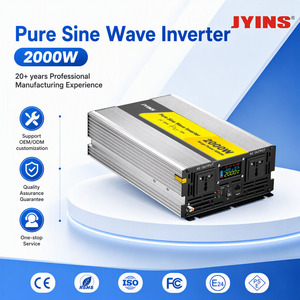
| Pure Sine Wave Inverters | 300W – 13.2kW Output | 12V / 24V / 48V / 125Vdc Direct Input | >92% Peak, Pure Sine Wave | Heatsink Fins / Thermally Controlled Fan | Off-grid backup, remote telecom, mobile service vehicles |
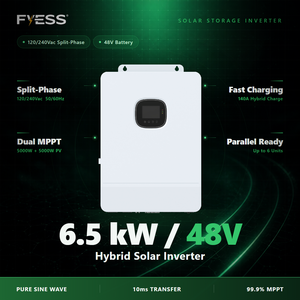
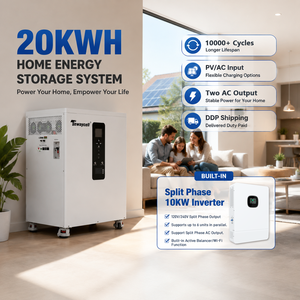
| Split-Phase Hybrid Solar ESS | 6.5kW – 15kW Continuous | 48Vdc Battery / 120-240Vac Grid-Interactive | >97.5% MPPT Tracking Efficiency | Intelligent Forced Air / NEMA 3R / IP65 Enclosure | Commercial peak-shaving, residential solar, microgrid storage |
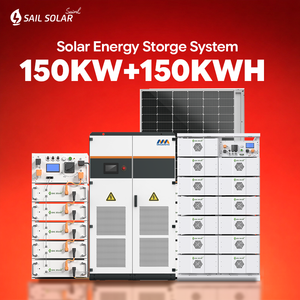
| Utility-Scale Megawatt ESS | 150kW – 250kW Heavy Nodes | 500V–1000V High Voltage DC Bus | >98.8% System Efficiency | Liquid-Cooled / Internal Heat Exchangers | Factory peak cutting, industrial parks, utility substations |
Rooted in four decades of power electronics innovation (tracing back to OEM foundation in 1982), our centralized engineering and manufacturing footprint spans an state-of-the-art 80,000 square foot facility in Ottawa, Canada. Unlike generic assembly operations that outsource critical processes, our fully integrated plant retains absolute control over every stage of production:
Every single power unit undergoes thorough electrical characterization, thermal imaging under full load conditions, high-potential (Hi-Pot) dielectric withstand testing up to 4300Vdc, and extended burn-in testing inside temperature-controlled environmental chambers before dispatch. Our in-house custom coil winding capability allows us to adapt core geometries, copper foil windings, and triple-insulated wire configurations to meet complex isolation requirements (e.g., meeting EN 50155 railway standards or IEC 60601 medical isolation levels).
Furthermore, where harsh operating environments expose power modules to conductive dust, metallic filings, chemical fumes, salt spray, or jet washdown, we supply fully potted encapsulated designs and IP66-rated die-cast aluminum enclosures. By eliminating internal air movement and relying on conduction or heavy-duty heatsink assembly (HSA) surface cooling, these units operate reliably in sub-zero mining shafts, marine vessel engine rooms, and offshore oil platforms where standard fan-cooled supplies fail rapidly.
As global industries accelerate electrification, smart grid adoption, and automation, the requirements placed on DIN Rail power manufacturers are rapidly evolving. Procurement leaders must align with suppliers capable of anticipating three major technical paradigm shifts over the coming decade:
The transition from silicon MOSFETs to Gallium Nitride (GaN) and Silicon Carbide (SiC) switches represents a step-change in power density. Operating at switching frequencies upwards of 500kHz to 1MHz allows dramatic reductions in the physical volume of magnetics and smoothing capacitors. For DIN rail applications, this yields power density increases exceeding 40%, enabling a 480W power supply to occupy the footprint historically required by a 120W unit, while cutting internal heat dissipation by more than half.
Modern DIN Rail power supplies are no longer passive black boxes. The integration of IO-Link, Modbus RTU, and PMBus telemetry protocols enables real-time monitoring of output current, input line ripple, internal hot-spot temperatures, and operating hours. Predictive algorithms embedded within internal microcontrollers can calculate capacitor ESR degradation, alerting maintenance staff via edge gateway networks prior to an unscheduled system shutdown.
With the rapid growth of distributed solar PV, battery energy storage systems (BESS), and regenerative braking recovery systems in automation plants, facility infrastructure is migrating toward unified 380V DC microgrid backbones. Next-generation DIN Rail converters must feature bidirectional power flow capabilities, allowing excess DC energy generated by kinetic or solar sources to back-feed directly into regional battery banks or localized inverter channels with zero latency.
Our industrial DIN rail power supplies utilize high-efficiency topologies (up to 95%+) combined with premium-grade 105°C long-life electrolytic or solid polymer capacitors and high thermal conductivity aluminum chassis structures. Units operate at 100% continuous rated load up to +50°C or +60°C without forced-air cooling, and experience minimal, linear derating up to +70°C. For totally unventilated or washdown enclosures, fully encapsulated or heatsink-assembly (HSA) conduction-cooled units are deployed to dissipate heat directly through the cabinet wall.
Our pure sine wave inverters and hybrid energy storage systems feature multi-layered microprocessor-controlled protection suites. These include input reverse-polarity protection, input over-voltage and under-voltage lockout (UVLO), output short-circuit protection with auto-recovery/hiccup modes, over-temperature thermal shutdown, active surge limiting for high inductive motor startup loads (up to 300% surge capacity), and dual galvanic isolation between primary DC inputs, internal control circuits, and secondary AC output rails.
Yes. As a direct original equipment manufacturer (OEM), custom and semi-custom power conversion is our core specialty. Our engineering team routinely adapts proven baseline topologies to non-standard input rails (e.g., 72Vdc railway, 125Vdc substation, or 600Vdc industrial buses), custom output voltage combinations, specialized terminal blocks or MIL-spec circular connectors, custom mechanical chassis shapes, conformal coatings, and custom mechanical mounting brackets.
Every standard and custom order is delivered with comprehensive technical documentation packages. This includes official CE Certificates of Conformity, full LVD and EMC test reports (verified by accredited laboratories), individualized Factory Acceptance Test (FAT) datasheets, Certificate of Origin documents, Material Safety Data Sheets (MSDS/UN38.3 for integrated ESS battery systems), and complete operating and maintenance manuals.
Standard DIN rail modules and inverter platforms are maintained in stocked factory inventory or available with short assembly lead times (typically 2 to 4 weeks). Custom OEM design projects follow a structured prototype-to-production schedule (typically 6 to 10 weeks depending on modification complexity). We offer global logistic solutions including DDP (Delivered Duty Paid), FOB, CIF, or direct air/sea freight forwarding to all major international ports and warehousing hubs.