
Engineering Support +1-613-836-3511
Explore our high-performance standard and custom battery chargers engineered for industrial automation, motive power, lithium/lead-acid maintenance, and heavy-duty field deployment.
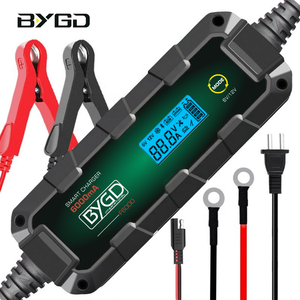
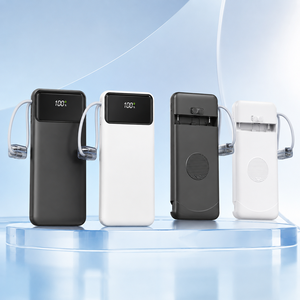
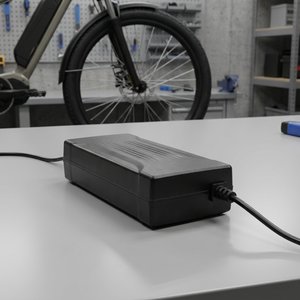
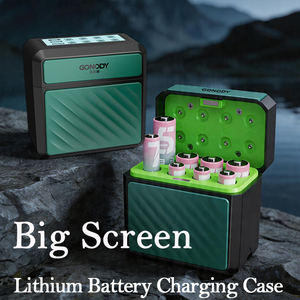
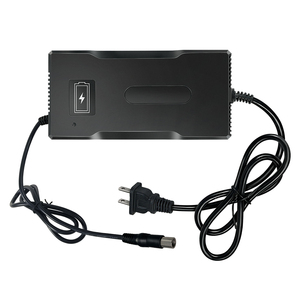
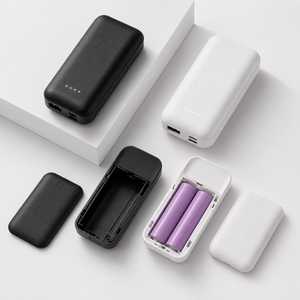
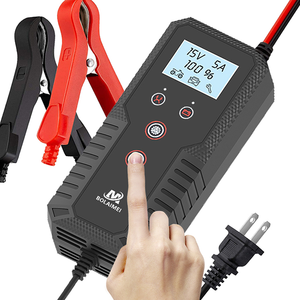
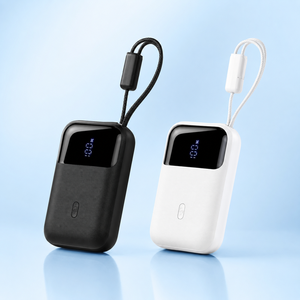
In modern industrial operations, electrical utility substations, telecommunications infrastructure, and heavy motive transportation systems, the reliability of DC power backup systems depends entirely on the design integrity of the battery charger. A CE (Conformité Européenne) certified battery charger is not merely a power supply unit with a compliance mark; it is a meticulously engineered system compliant with the European Union’s Low Voltage Directive (LVD 2014/35/EU), Electromagnetic Compatibility Directive (EMC 2014/30/EU), and the Restriction of Hazardous Substances Directive (RoHS 2011/65/EU). OEM procurement teams must evaluate manufacturers based on circuit topology, thermal management, component derating, and long-term compliance verification.
Achieving authentic CE certification requires rigorous compliance testing across multiple harmonized standards. Industrial battery chargers manufactured at our facility adhere strictly to international safety and performance benchmarks:
Ensures reinforced insulation barrier parameters, primary-to-secondary galvanic isolation (>3000Vac withstand voltage), proper creepage and clearance distances, and fail-safe overvoltage protection mechanisms under fault conditions.
Incorporate two-stage input EMI filtering to mitigate conducted and radiated emissions. Units pass stringent surge immunity (IEC 61000-4-5 Level 4) and electrostatic discharge (ESD) testing for noise-heavy industrial sites.
Smart multi-stage charging algorithms tailored for Lithium-Ion (NMC, LiFePO4), Sealed Lead-Acid (AGM, Gel), and NiCd cell configurations, extending battery pack cycle life by up to 40% while preventing thermal runaway.
From standard wall-mount maintenance chargers to custom high-power 10kW+ rack-mounted industrial power systems, our vertically integrated Canadian manufacturing facility provides end-to-end operational control.
Unlike standard commercial-grade power supply importers, our manufacturing operations operate out of an 80,000 sq ft purpose-built facility. Every step—including transformer magnetic winding, PCB surface-mount assembly, mechanical metal fabrication, potting encapsulation, and high-temperature full-load burn-in—is performed in-house. This centralized topology allows us to deliver custom input/output voltages, extreme temperature derating, and long production lifecycles without supply chain vulnerability.
For washdown industrial plants, subsea operations, and underground mining rigs, we manufacture die-cast aluminum fully encapsulated chargers rated up to IP66/IP67. They withstand airborne conductive dust, corrosive salt fog, high humidity, and severe mechanical vibration.
To achieve target operating lifespans of up to 30 years, our engineering designs eliminate single-point-of-failure optocouplers from feedback loops wherever possible and use high-temperature semiconductor elements running conservatively at 50-60% of rated capacity.
We adapt base platform topologies to unique spatial envelopes, including 19-inch rack-mount sub-racks, DIN-rail automation enclosures, open-frame chassis modules, vehicle-mounted cold-plate conduction systems, and portable ruggedized transit cases.
Technical overview of platform capabilities available for bulk OEM ordering and custom design adaptation.
| Platform Category | Input Voltage Range | Nominal Output DC | Efficiency | Protection Topologies | Target Applications |
|---|---|---|---|---|---|
| Smart Micro-Process Maintenance Chargers | 90–264 Vac (Universal AC) | 12V / 24V (0–10A) | > 88% | Short Circuit, Reverse Polarity, Over-Temp, Auto-Pulse Repair | Vehicle fleet maintenance, workshop battery recovery, AGM/Gel repair |
| Motive & E-Bike Fast Chargers | 100–240 Vac (50/60 Hz) | 25.2V / 54.6V (3A–7A) | > 92% | CC/CV Auto-Cutoff, Over-Voltage, Thermal Cutoff, Timer Protection | E-bikes, mopeds, unicycles, AGVs, warehouse robotics |
| Modular Swappable Power Systems | 5V DC / 9V DC / 12V DC Input | Integrated Li-ion Pack | > 94% (PD 3.0) | Battery Management System (BMS), Cell Balancing, Over-Charge | Field communications, inspection electronics, portable equipment |
| Industrial Heavy-Duty Chargers (Rack/IP66) | 115/230Vac or 110V/250Vdc | 12V–125Vdc (Up to 10kW+) | > 93% | N+1 Redundancy, Form-C Alarm Contacts, Galvanic Isolation, Active PFC | Power utility substations, railway rolling stock, marine/subsea rigs |
The transition from traditional silicon MOSFETs to Gallium Nitride (GaN) and Silicon Carbide (SiC) semiconductors is revolutionizing industrial battery charger design. Switching frequencies exceeding 500kHz allow for drastic reductions in passive magnetic components (transformers and inductors). For buyers, this translates to 40% reduction in mechanical enclosure volumes, higher power densities (>15W/in³), and diminished heat dissipation requirements, enabling fan-free, completely convection-cooled operating profiles.
Modern factory automation and motive fleet equipment require real-time state-of-health (SoH) monitoring. Next-generation CE certified chargers feature integrated CAN-Bus 2.0B, RS485 Modbus, or Ethernet communication interfaces. Sourcing managers are increasingly prioritizing smart chargers capable of broadcasting real-time cell temperatures, internal impedance, cumulative charge cycles, and predictive maintenance alarms directly to centralized SCADA dashboards.
As industrial facilities deploy decentralized renewable power generation (solar PV and wind) combined with localized stationary energy storage systems (BESS), battery chargers are evolving into bidirectional power conversion nodes. Future procurement specs demand chargers that not only draw AC grid power to charge battery banks, but can also feed stored DC power back into the facility AC grid (Vehicle-to-Grid / Vehicle-to-Building) during peak utility pricing periods.
High-volume B2B procurement decisions are shifting away from low initial purchase price toward Total Cost of Ownership (TCO). Commercial-grade chargers often exhibit high failure rates when subjected to thermal stress, voltage spikes, or ambient dust, resulting in catastrophic battery bank degradation and unscheduled downtime. Selecting heavy-duty, CE-certified chargers with conservative component derating reduces long-term field failures and lowers operational expenditures over a 15 to 30-year plant lifecycle.
Speak directly with our power application engineers to review your input/output requirements, compliance specifications, or custom OEM design targets. We provide rapid technical proposals and sample evaluations.