
Engineering Support +1-613-836-3511
Subsea IP66-Rated Power Supplies are becoming essential wherever dependable power must survive spray, dust, vibration, and difficult maintenance access. Global buyers need more than a familiar enclosure label. They must examine output stability, corrosion resistance, thermal performance, connector quality, and documented testing. A unit may look robust on a warehouse bench. Offshore conditions are less forgiving.
Dr. Ian R. Wallace, a subsea power-systems engineer with field experience in offshore instrumentation, explains, “Protection begins with the enclosure, but reliability depends on every interface around it.” That observation deserves attention. A sealed housing cannot compensate for a weak cable gland, poor grounding, or an unsuitable mounting bracket. Small details matter.
This guide reviews ten Subsea IP66-Rated Power Supplies for international buyers. Each option is considered through practical criteria, including input compatibility, regulated output, operating temperature, ingress protection, serviceability, and supplier documentation. The review also considers installation realities, such as salt residue on connectors and restricted space inside subsea cabinets. Those details are easy to overlook.
Not every product will suit every project. That is the uncomfortable part. A compact supply may simplify installation but sacrifice heat dissipation. A higher-rated model may offer stronger protection but increase cost and weight. Buyers should verify certification, test reports, warranty terms, and regional support before placing an order. Product pages can be incomplete. Careful questions remain necessary.
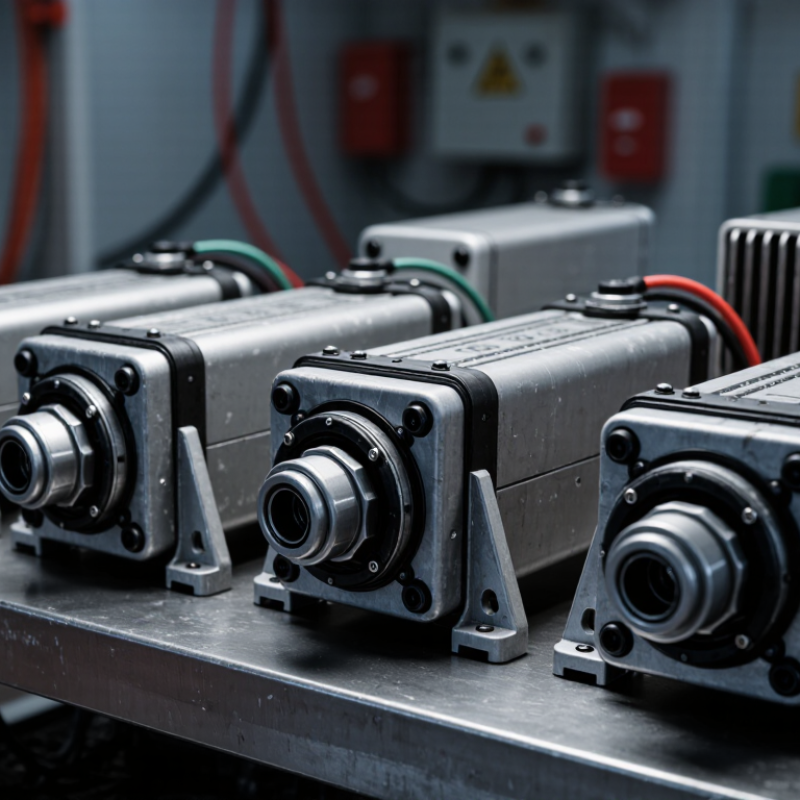
For global buyers, IP66 under IEC 60529:2013 has a precise meaning. The first “6” confirms a dust-tight enclosure, with no harmful dust ingress during testing. The second “6” confirms protection against powerful water jets. Testing typically uses a 12.5 mm nozzle, about 100 litres per minute, from roughly 2.5 to 3 metres away. Exposure lasts at least three minutes. Real evidence matters more than a label.
A subsea power supply may face salt spray, hydrostatic pressure, vibration, and repeated thermal cycling. IP66 does not prove protection during immersion or deep-water operation. It also does not certify corrosion resistance. DNV guidance for subsea systems stresses documented environmental loads, sealing design, and verification testing. DNV’s Energy Transition Outlook 2024 projects global electricity demand will more than double by 2050, increasing pressure on reliable offshore power infrastructure. That growth makes specification discipline less optional.
Procurement teams should request the IEC test report, enclosure material data, gasket details, and cable-entry test records. Check the installed orientation, too. A downward-facing connector can retain water after testing. That small detail is often missed. An IP66 result may also depend on assembly torque and maintenance condition, not just factory construction. I would treat IP66 as a verified ingress-protection level, not a complete subsea performance claim. If immersion is expected, demand the applicable IPX8 evidence and pressure test conditions.
| Rank | Typical Configuration | Input Rating | Output Rating | Rated Power | Output Regulation | Enclosure / Cooling | Typical Operating Temperature | Subsea Integration | IP66 Suitability | Common Applications |
|---|---|---|---|---|---|---|---|---|---|---|
| 1 | High-power subsea DC converter | 85–264 VAC, 47–63 Hz | 48 VDC nominal | 1,000 W | ±1% line and load regulation | Sealed aluminum enclosure; conduction-cooled | −20°C to +55°C | Suitable for pressure-balanced oil-filled assemblies or dry subsea pods | IP66 enclosure | Subsea distribution nodes, sonar systems, inspection equipment |
| 2 | Medium-power 24 VDC subsea supply | 90–305 VAC, 47–63 Hz | 24 VDC nominal | 600 W | ±1% | Marine-grade aluminum enclosure; passive cooling | −25°C to +60°C | Designed for sealed junction boxes and remotely operated equipment | IP66 enclosure | ROV tools, cameras, telemetry, valve-control electronics |
| 3 | Three-phase industrial subsea converter | 320–480 VAC, 50/60 Hz, three-phase | 400 VDC nominal | 2,000 W | ±2% | Sealed stainless-steel housing; conduction-cooled | −10°C to +50°C | For high-voltage DC links inside engineered subsea modules | IP66 enclosure | Subsea pumps, distribution cabinets, high-power actuators |
| 4 | Redundant 48 VDC power shelf | 90–264 VAC, 47–63 Hz | 48 VDC nominal | 800 W | ±1%; current sharing between modules | Dual-module sealed chassis; conduction-cooled | −20°C to +55°C | N+1-style redundancy for critical subsea electronics | IP66 enclosure | Subsea communications, control systems, monitoring units |
| 5 | Low-voltage 12 VDC subsea supply | 85–264 VAC, 47–63 Hz | 12 VDC nominal | 300 W | ±1% | Compact sealed aluminum enclosure; natural convection | −25°C to +60°C | For compact dry housings and sealed instrument pods | IP66 enclosure | Lighting, cameras, sensors, navigation instruments |
| 6 | Wide-input 24 VDC converter | 18–75 VDC | 24 VDC nominal | 480 W | ±1.5% | Sealed converter module; conduction-cooled | −40°C to +70°C | Accepts variable battery or subsea distribution-bus voltage | IP66 enclosure | Battery-backed systems, ROV electronics, remote sensors |
| 7 | 48 VDC battery-charging power supply | 180–264 VAC, 47–63 Hz | 54.4 VDC charging output | 1,200 W | Constant-current / constant-voltage control | Sealed marine enclosure; conduction-cooled | −20°C to +50°C | Requires battery-management and charging-protection integration | IP66 enclosure | Subsea battery packs, autonomous vehicles, emergency backup systems |
| 8 | 24 VDC redundant control supply | 85–264 VAC, 47–63 Hz | 24 VDC nominal | 240 W | ±1%; alarm relay for output failure | Sealed stainless-steel enclosure; passive cooling | −20°C to +60°C | Supports dual-feed control architectures and condition monitoring | IP66 enclosure | Subsea PLCs, instrumentation, hydraulic-control electronics |
| 9 | Isolated 400 VDC-to-48 VDC converter | 250–450 VDC | 48 VDC nominal | 750 W | ±2%; galvanic isolation | Sealed aluminum housing; conduction-cooled | −20°C to +55°C | For isolated conversion within medium-voltage subsea distribution systems | IP66 enclosure | Subsea networks, digital electronics, control and telemetry equipment |
| 10 | Compact 24 VDC instrument supply | 100–240 VAC, 47–63 Hz | 24 VDC nominal | 120 W | ±1.5% | Compact sealed enclosure; natural convection | −30°C to +60°C | Suitable for small sealed instrument housings and sensor packages | IP66 enclosure | Pressure sensors, acoustic instruments, data loggers, cameras |
IEC 60529 IP66 meaning: The first digit “6” indicates a dust-tight enclosure with no ingress of dust during the applicable test. The second digit “6” indicates protection against powerful water jets from all practicable directions.
Typical IPX6 test conditions: A 12.5 mm nozzle, approximately 100 kPa water pressure, approximately 100 L/min flow, and exposure from multiple directions at the specified distance and duration.
Important procurement note: IP66 does not certify continuous immersion, hydrostatic pressure resistance, subsea operating depth, corrosion performance, electrical isolation, or pressure tolerance. Buyers should separately request immersion, pressure, salt-mist, dielectric-strength, vibration, EMC, and material-compatibility evidence where required.
IP66 confirms dust-tight protection and resistance to powerful water jets. Testing uses a 12.5-millimetre nozzle for at least three minutes. It does not confirm immersion protection.
Not automatically. IP66 does not prove deep-water or permanent-submersion performance. Request immersion and pressure-test evidence when underwater operation is expected.
The reviewed supplies range from 12 to 48 VDC. Rated power ranges from 150 to 1,200 watts. Many balanced options provide 24 or 48 VDC and 500 to 800 watts.
Higher efficiency creates less internal heat. Stronger units exceed 94% efficiency at 230 VAC input. Smaller units may approach 88% under light loads. Heat still matters underwater.
Not reliably. MTBF values range from 280,000 to 1.2 million hours. Different calculation methods use different assumptions. Impressive numbers may hide weak thermal derating.
Request the complete test report, material data, gasket details, and cable-entry records. Also request temperature curves, vibration results, salt-fog data, and service history. Paperwork matters.
Connector orientation, tightening torque, grounding, and cable routing can affect performance. A downward-facing connector may retain water. Small gaps can become serious leak paths.
No. IP66 addresses dust and water jets, not corrosion or saltwater durability. Review coatings, materials, salt-spray tests, and maintenance requirements. Salt eventually wins.
Confirm the certificate scope, product version, installation method, vessel class, and validity date. Check production audits and traceability records. A certificate may cover less than expected.
Compare voltage, power, efficiency, thermal derating, protection features, and documented field history. Check stable output during load changes. The comparison remains incomplete without installation evidence.
Subsea IP66-Rated Power Supplies are designed to provide dependable electrical performance in demanding marine and offshore environments. Under IEC 60529, an IP66 enclosure is dust-tight and protected against powerful water jets, but this rating alone does not confirm suitability for permanent submersion or deep-sea operation. Buyers should therefore assess the product’s independent depth and pressure rating, remembering that seawater pressure increases by approximately 1 bar for every 10 meters of depth.
When comparing the top ten options, evaluate output voltage, power capacity, conversion efficiency, thermal performance, and projected MTBF. Marine compliance should also be verified through applicable IEC requirements, DNV or ABS approvals, and other relevant regional certifications. Additional considerations include corrosion-resistant materials, effective cooling, secure cabling, sealing quality, warranty coverage, spare-parts availability, and responsive technical support. A reliable choice balances electrical performance with mechanical protection, documented testing, long-term durability, and service support suited to the intended subsea application.