
China has become a major sourcing destination for Convection Cooled Sine Wave Inverters. These systems support telecom equipment, medical devices, solar installations, and mobile workstations. Their fanless cooling design can reduce acoustic noise and simplify maintenance.
However, choosing a reliable supplier requires more than comparing prices. A capable manufacturer should explain inverter topology, continuous power ratings, surge capacity, waveform quality, and thermal limits. Buyers should request load-test records, efficiency data, and protection details. Look for safeguards against overload, short circuits, overheating, and low battery voltage.
Real-world performance matters. During evaluation, observe how an inverter handles a motor startup, a sensitive control board, or several devices running together. Check the enclosure, terminal layout, ventilation path, and display clarity. Small details often reveal manufacturing discipline. Ask whether testing covers the intended battery chemistry and operating temperature.
No supplier is perfect. That matters. Some product pages use broad performance claims without supporting measurements. Independent verification remains valuable. Factory audits, sample testing, reference customers, and clear warranty terms can strengthen confidence. Relevant certifications should also be checked against the destination market’s requirements.
This guide examines leading Chinese suppliers through practical criteria, including engineering capability, customization, production consistency, communication, and after-sales support. It does not treat the lowest quotation as the best choice. A dependable partnership depends on documented performance and honest technical discussion. Even experienced buyers can overlook thermal derating. Careful comparison reduces that risk.
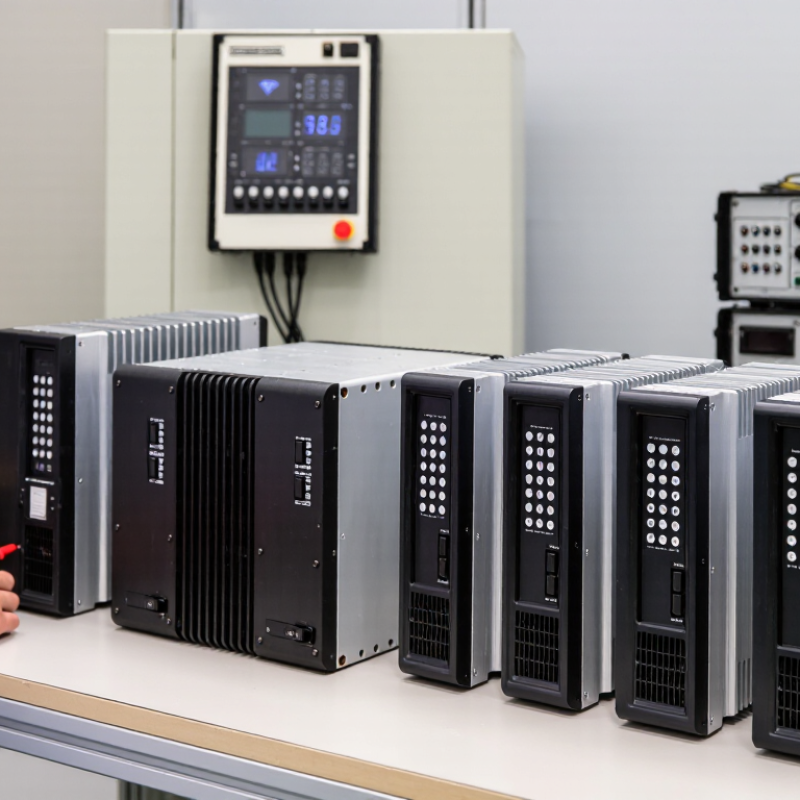
A convection-cooled sine wave inverter converts direct current into clean alternating current without using a powered cooling fan.
It relies on natural airflow and heat movement through vents, heat sinks, and the outer cabinet. The output waveform closely matches utility electricity. This helps protect sensitive equipment such as medical monitors, communication devices, and variable-speed motors.
In practical installations, heat management matters as much as electrical performance. Mount the inverter upright, leave space around its vents, and avoid sealed cabinets. Dust can reduce airflow. High ambient temperatures can also lower continuous output.
Load testing should include startup surges from pumps, compressors, or power tools. A quiet inverter is useful in offices, cabins, and monitoring stations.
However, convection cooling is not perfect. It may require a larger heat sink and careful derating under heavy loads. Some buyers overlook this detail.
Reliable suppliers should provide clear efficiency curves, overload behavior, protection settings, and tested thermal limits.
Request documentation for input voltage range, waveform quality, standby consumption, and operating temperature. Independent testing adds credibility. Supplier support also matters when installation conditions change.
A product can look efficient on paper but perform differently inside a hot enclosure. That gap deserves attention.
China Top Convection Cooled Sine Wave Inverters Suppliers?
China’s convection-cooled inverter suppliers increasingly focus on silent, low-maintenance power conversion. These units use natural airflow instead of cooling fans, reducing moving parts and possible failure points. This design suits cabins, telecom cabinets, mobile workstations, and backup systems with limited servicing access.
Experienced suppliers usually provide pure sine wave output, stable voltage regulation, and protection against overload, short circuits, overheating, and low battery conditions. Look for tested efficiency figures under realistic loads, not only peak laboratory results. Aluminum heat sinks, insulated terminals, and clear airflow channels can improve thermal performance. Reliable manufacturers should share electrical specifications, test procedures, warranty terms, and traceable quality records. Certifications matter, but documentation must match the exact model.
Tips: Ask for a thermal test report. Check output performance at 50%, 80%, and full load. Confirm noise levels in a quiet room. Review the supplier’s response to failure claims. Do not judge quality from price alone.
Convection cooling is not automatically better. Dust, blocked vents, high ambient temperatures, and poor cabinet spacing can reduce its benefits. I would request a sample before placing a large order. A supplier may describe an inverter as “industrial,” yet provide limited evidence. That gap deserves attention. Even good designs need careful installation and periodic inspection.
| Evaluation Dimension | Typical Market Specification | Common Supplier Offering | Why It Matters | Buyer Verification Point |
|---|---|---|---|---|
| Cooling Method | Natural convection using a finned aluminum heat sink; no continuously running cooling fan. | Compact low- and medium-power designs commonly use fanless thermal management. | Reduces fan noise, moving parts, dust intake, and routine maintenance requirements. | Confirm the rated output is achievable at the stated ambient temperature without forced airflow. |
| Rated Output Power | Approximately 300 W to 5 kW for many convection-cooled models. | Higher-power units may require larger heat sinks, derating, or supplementary airflow. | Determines whether the inverter can continuously operate the intended load. | Compare continuous power with surge power; do not size the system using surge power alone. |
| Output Waveform | Pure sine wave output with low total harmonic distortion, commonly specified at below 5%. | Models are available for sensitive electronics, motors, pumps, telecommunications equipment, and household loads. | Produces power closer to utility electricity and helps reduce motor noise and equipment heating. | Request the measured THD value at different load levels rather than relying only on the term “pure sine wave.” |
| Input Voltage Options | Common battery-system classes include 12 V, 24 V, 36 V, and 48 V DC. | Higher-voltage battery systems are generally used for higher power because they reduce DC current. | Lower current can reduce cable size, voltage drop, connector heating, and installation losses. | Verify the allowable input-voltage range, low-voltage shutdown point, and battery chemistry compatibility. |
| AC Output Configuration | Single-phase output is typical; regional versions commonly support approximately 110–120 V or 220–240 V AC at 50 or 60 Hz. | Export-oriented suppliers often provide configurable voltage and frequency combinations. | Ensures compatibility with local appliances, distribution systems, and electrical regulations. | Check the exact nominal voltage, frequency tolerance, outlet type, and hard-wiring options. |
| Efficiency | Typical peak efficiency is approximately 85% to 95%, depending on power level and topology. | Efficiency normally varies with input voltage, load percentage, temperature, and standby mode. | Higher efficiency reduces battery consumption and heat generation. | Request an efficiency curve or test data at 10%, 25%, 50%, 75%, and 100% load. |
| Surge Capability | Short-duration surge ratings commonly range from approximately 1.5 to 3 times rated power. | Higher surge capacity is often offered for motor-starting and compressor applications. | Allows the inverter to handle temporary starting currents from inductive loads. | Confirm surge duration, waveform during surge, and the number of permitted start attempts. |
| Thermal Operating Range | Many industrial designs specify operation from approximately −10 °C to 50 °C, with output derating at higher temperatures. | Large heat sinks and temperature monitoring are common features in convection-cooled products. | Ambient temperature directly affects available continuous power and component life. | Ask for the temperature-derating curve and required installation clearance around the heat sink. |
| Protection Functions | Common protections include over-temperature, overload, short circuit, low input voltage, high input voltage, and reverse polarity. | More advanced units may add output over-voltage, ground-fault monitoring, and alarm contacts. | Protection reduces the risk of damage caused by abnormal operating conditions. | Request protection thresholds, response times, automatic-recovery behavior, and fault codes. |
| Enclosure and Installation | Aluminum or coated metal enclosures are common; indoor models often use vented construction for passive heat dissipation. | Suppliers may provide desktop, wall-mounted, rack-mounted, and vehicle-installation formats. | Mechanical design affects heat transfer, safety, service access, and installation space. | Verify enclosure dimensions, mounting points, minimum clearance, cable-entry method, and ingress rating. |
| Acoustic Performance | Fanless operation can produce very low inverter-generated noise, although electrical hum may still be present. | Convection-cooled models are often selected for residential, medical-support, laboratory, and office environments. | Lower acoustic output improves comfort where continuous fan noise is undesirable. | Request an acoustic measurement method and test distance if a noise limit is required. |
| Standby Consumption | Low-power standby consumption is commonly specified below approximately 10–20 W, depending on model and control functions. | Some units include remote on/off control, sleep mode, or load-sensing operation. | Lower idle consumption extends battery runtime when the connected load is small. | Compare no-load consumption, sleep-mode consumption, wake-up threshold, and remote-control behavior. |
| Manufacturing and Quality Documentation | Professional suppliers commonly provide datasheets, wiring diagrams, inspection records, and electrical safety documentation. | Export-focused production may include batch testing, traceability, and customized inspection procedures. | Consistent documentation supports installation, compliance review, and after-sales troubleshooting. | Request product drawings, test reports, serial-number traceability, and a documented quality-control process. |
| Compliance Considerations | Applicable requirements depend on the destination market and may cover electrical safety, electromagnetic compatibility, and environmental restrictions. | Suppliers may prepare different documentation packages for domestic and international projects. | Compliance affects customs clearance, system acceptance, insurance, and legal installation. | Identify the destination-market requirements before purchase and verify that certificates apply to the exact model. |
| Customization Capability | Common options include DC input voltage, AC output voltage, frequency, connectors, display language, enclosure format, and communication interface. | OEM and project-based suppliers may support modified firmware, labels, packaging, and cable assemblies. | Customization can simplify integration into renewable-energy, mobile-power, marine, and industrial systems. | Obtain a written specification sheet showing which options are standard, optional, or subject to minimum order quantities. |
| Warranty and Support | Commercial warranty periods commonly range from 12 to 36 months, subject to the sales contract and operating conditions. | Support may include remote diagnostics, replacement parts, repair guidance, and installation documentation. | Clear service terms reduce downtime and lifecycle cost. | Confirm warranty scope, exclusions, response time, replacement procedure, spare-part availability, and technical support channels. |
Evaluating a China-based convection-cooled sine wave inverter supplier requires more than comparing prices. Start with measured performance, not brochure claims. Request output waveform data, total harmonic distortion, efficiency curves, and overload behavior at different temperatures. A reliable supplier should provide recent test records with model numbers and test conditions.
Look closely at thermal design. Convection cooling depends on heat sinks, airflow paths, component spacing, and installation position. Ask for endurance tests under continuous load, especially in warm workshops or enclosed cabinets. Inspect terminal strength, insulation quality, fanless noise levels, and protection against short circuits and excessive temperature. Small details matter.
Supplier capability is equally important. Review engineering staff, production equipment, incoming inspection, calibration records, and batch traceability. A sample unit may perform well while mass production varies. Request several units from one production batch. Compare their idle power, waveform stability, and temperature rise. Factory audits and clear warranty procedures add confidence. Communication speed also reveals practical experience. One weakness remains: laboratory results may not match field conditions. Dust, loose wiring, and poor ventilation can change outcomes. Leave room for independent testing before large orders.
Choosing a top convection cooled sine wave inverter supplier starts with the application, not the catalog price. A cabin, mobile workstation, and factory motor require different designs. Check continuous power, surge capacity, startup current, and waveform distortion. Sensitive instruments may need low total harmonic distortion. Pumps and compressors need stronger short-term overload performance.
For residential or mobile use, choose suppliers offering quiet passive cooling, compact enclosures, and clear battery-voltage protection. Inspect the stated output at high ambient temperatures, not only at room temperature. In field testing, poor derating often appears beside a hot battery cabinet. Small details matter. Ask for thermal test records, efficiency curves, and protection-response data. For industrial installations, prioritize terminal strength, enclosure ratings, isolation design, and replaceable components. A supplier should explain maintenance intervals in practical terms.
Supplier credibility depends on evidence. Request factory quality procedures, production traceability, electrical safety documentation, and samples from regular production. Confirm whether engineers support load analysis before ordering. Warranty length alone proves little. Response time does. One weakness in my own checklist is giving too much weight to published efficiency. Real performance also depends on cable length, ventilation space, battery condition, and installation skill. Compare these factors through a witnessed test. Ask the supplier to test your actual load profile, record temperatures, and disclose any output reduction. A reliable partner will discuss limitations openly, even when the answer is inconvenient.
Indicative priority weights (%) for common applications. Higher values represent greater importance when evaluating inverter suppliers; figures are engineering benchmarks and do not represent any specific company or brand.
Industrial control systems typically prioritize overload capability and thermal performance, while medical and laboratory equipment places greater emphasis on waveform quality and low acoustic noise. Telecom and backup-power applications usually require strong efficiency, reliability, and serviceability.
Comparing suppliers requires more than reading the lowest quotation. Request a line-by-line price for the inverter, packaging, delivery, testing, and spare parts. Check the rated output, surge capacity, cooling method, and performance at high ambient temperatures. A convection-cooled unit may need power derating in a hot enclosure. That detail can change the real cost.
Certification needs careful verification. Ask for test reports, certificate numbers, issuing laboratories, and the exact model covered. A document for a similar product is not enough. Confirm relevant safety, electromagnetic compatibility, and market-entry requirements for your destination. Review dates and scope. A polished scan can still hide missing evidence. This is where many comparisons become too optimistic.
After-sales support often separates a dependable supplier from a cheap one. Request the warranty period, response target, repair process, and spare-parts availability in writing. Ask whether engineers can support wiring, fault codes, and thermal installation questions. Short videos of the service process may reveal more than broad promises. Try a technical question before ordering. The reply speed matters. So does its accuracy.
Keep one comparison sheet. Record every assumption, including shipping terms and warranty exclusions. I would not judge suppliers from price alone. Some low offers omit essential testing or support. That mistake is easy to make, and expensive to correct.
It changes direct current into clean alternating current without a powered cooling fan. Natural airflow removes heat. Its waveform resembles utility power.
Heat moves through internal components, heat sinks, vents, and the outer cabinet. No fan noise. The design has fewer moving parts.
It suits cabins, offices, communication cabinets, monitoring stations, and mobile work areas. Quiet environments benefit most. It may support sensitive electronics and variable-speed motors.
Mount it upright with clear space around every ventilation opening. Avoid sealed cabinets. Keep dust away from the vents and heat sinks.
Yes, high ambient temperatures can reduce continuous output. A hot enclosure creates extra thermal stress. Do not trust room-temperature test results alone.
Test normal loads and startup surges from pumps, compressors, and power tools. Starting current can be much higher. A small test may miss this problem.
Request efficiency curves, waveform data, overload behavior, protection settings, and thermal limits. Check input voltage range and standby consumption. Documents should identify the exact model.
Compare samples from one production batch. Measure idle power, waveform stability, temperature rise, and output under different loads. Independent testing adds confidence. Brochures are not enough.
No, not automatically. It can require larger heat sinks and careful load derating. Blocked vents or dust may cancel its benefits. I would request a sample before ordering many units.
Convection Cooled Sine Wave Inverters use natural airflow and heat dissipation to maintain stable operation without relying on fans, making them quieter, easier to maintain, and suitable for demanding environments. China’s suppliers commonly focus on efficient circuit design, reliable components, compact structures, wide input ranges, and customizable voltage, frequency, and power options. Their product capabilities should be evaluated through output waveform quality, conversion efficiency, thermal performance, protection functions, load adaptability, production consistency, and testing procedures.
When selecting a supplier, buyers should match inverter capacity and cooling performance to the application, whether for residential backup, renewable energy systems, transportation, communication equipment, or industrial use. A complete comparison should consider total pricing, minimum order requirements, certification compliance, delivery reliability, warranty terms, technical support, spare parts availability, and after-sales responsiveness. The best supplier is not always the lowest-priced option, but the one that offers a balanced combination of verified quality, application suitability, transparent service, and long-term cooperation potential.